
Some Indigenous tribes used the fibers to make floor mats, blankets, rope and other items, according to the U.S. Department of Agriculture.
Today, Spanish moss is most commonly used to make wreaths and other crafts or to add a decorative flair to backyard landscapes.
McNulty said Spanish moss can hang along fences or be used in floral arrangements. She’s fond of positioning the epiphytes so that they fill in unwanted gaps in planters and cascade over the sides. That can be useful to cover a planter that isn’t visually appealing, she said.
“You can tuck the Spanish moss around, cover any soil, and gently, you know, drape (it) over the edge,” she said.
Plus, Spanish moss blooms with blue or pale green flowers and exudes a sweet perfume.
Some gardeners suggest using Spanish moss as mulch, but McNulty and Fowler said there are better alternatives, such as pine straw. Mulch should break down easily to return organic matter to the soil, which Spanish moss doesn’t do. So it’s best used for embellishment purposes.

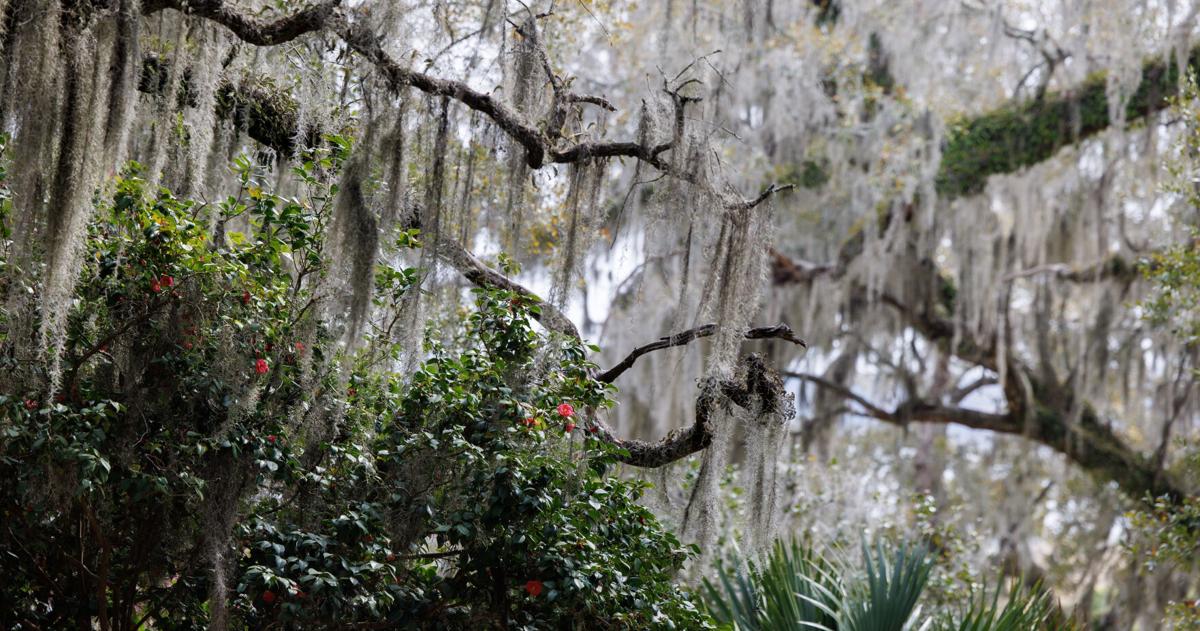
The oak trees at Ramsey Grove Plantation in Georgetown County are laden with Spanish moss.
Janet Morgan/Staff
Gardeners looking to add Spanish moss to their yards should be aware of the conditions the plant needs to grow, McNulty said. It’s widely agreed that Spanish moss needs moderate to high humidity levels and is more likely to grow where the air quality is good. McNulty added that it’s usually found near bodies of water.
If a backyard landscape naturally includes Spanish moss, it’s up to the homeowner to decide if they’d like to keep it, Fowler said.
Although Spanish moss doesn’t directly harm the trees it grows on, large quantities of it can weigh down branches when it becomes wet. In some cases, the weight can cause limbs to snap, he said.
Although its practical use has waned overtime, McNulty and Fowler said Spanish moss remains a great native plant for decorating yards.
Comments are closed.