
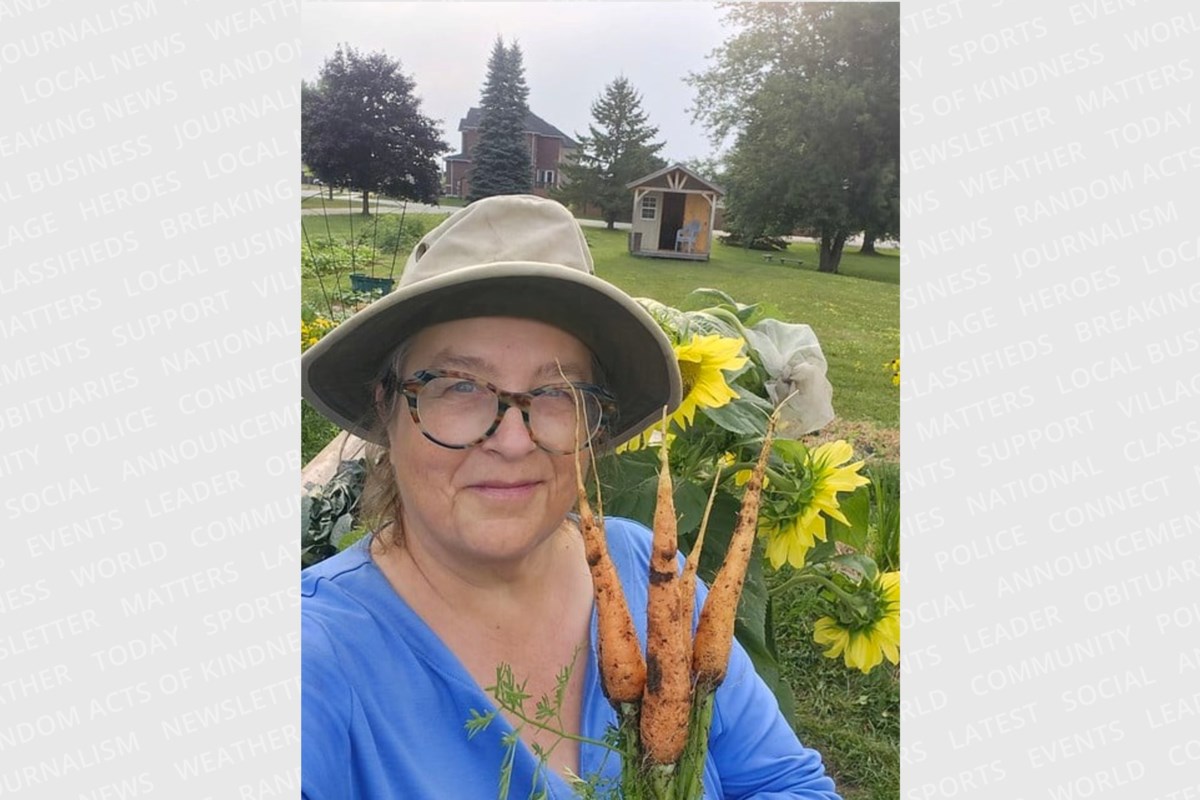
Master gardener Marianne Lepa provides some ideas for winter prep, and a tribute to the late Jane Goodall
News about the death of Jane Goodall hit hard.
Early in her career as a primatologist, Goodall observed chimpanzees behaving in ways that were previously believed to be uniquely human behaviours.
Her 1960s research was groundbreaking because it showed that humans are not all that different from other animals and Goodall spent the rest of her life trying to make humanity understand that we are part of a greater web of life and that peaceful coexistence is the only way forward.
If we accept that wisdom, how we garden has to fundamentally change. We are no longer “at war” with the insects, weeds and creatures that inhabit our property. Instead, we learn to co-exist with other living things and we understand that all creatures have a right to their lives as much as we have a right to ours.
Winter is coming
We’ve had a few frosts and the nighttime temperatures have been hovering around freezing here in many parts of Simcoe County. Slowly but surely, winter is creeping up on us.
On Nov. 5, the number of daylight hours fell below 10 and it will be early February before daylight hours are greater than 10 again. Fewer than ten hours of daylight triggers dormancy in nearly all growing plants. Dormancy is a survival strategy that plants have evolved to survive harsh winter conditions.
As the sun gets lower in the sky and daylight begins to dwindle in late September, plants start preparing for dormancy. Like bears feeding heavily to prepare for hibernation, perennial plants have been feeding their roots and storage organs with enough energy to see them through the long winter and to start growing again when conditions are right.
Plant hormones signal that it is time to slow photosynthesis and respiration, causing growth to slow and then stop all together. Leaves are no longer needed, so the green chlorophyll cells stop producing, causing leaves to change colour then drop.
The hormone signal also prompts plants to accumulate sugars and salts in their cells and to release water. This creates a kind of antifreeze that will protect tissues during prolonged freezing temperatures.
Protect Shrubs and Small Trees
After the leaves have fallen and the nighttime temperatures are close to, or below, freezing, place protection around deciduous shrubs and small trees to prevent rabbits from damaging the stems or trunks through winter. Remembering last winter’s snow levels, make sure the protection is tall enough to keep the rabbits out. The temperatures of the Great Lakes are, again, very warm for this time of year, so we are likely to see a similar amount of snow this winter.
Any shrubs that might be damaged by high winds, snowblowers or road salt should be wrapped in a material that breathes, burlap or something similar, once freezing temperatures have arrived – but not before. Wrapping them too early will trap too much moisture and can lead to disease.
Evergreen trees
Conifers with their evergreen needles have a slightly different strategy for winter temperatures. They don’t drop their leaves, but conifer needles are coated with a waxy substance that reduces evaporation.
Lower light signals evergreen trees to reduce water in their cells and to replace fatty acids for unsaturated acids that don’t freeze as easily. However, conifers run the risk of moisture loss during the winter months, so make sure your evergreen trees are well watered before the ground freezes.
Prune or cut oak trees now
Oak Wilt is a fungal disease affecting all oak varieties, but Red Oak is especially vulnerable. The disease affects the oak tree’s ability to transport food and water between its leaves and roots. Some trees can die in a matter of weeks, others will die within a year or two, while White Oaks can survive for 20 years with the disease. Once infected, the disease can be managed but there is no cure.
Oak Wilt was found in Ontario in 2023 and efforts are underway to limit its spread. The fungal spores are carried by sap beetles that are attracted to the oozing wounds caused by the disease.
The beetles are also attracted to the sap of oak trees that have been cut or pruned and they may carry the disease spores to healthy trees.
These sap beetles are dormant between November and April, so to keep the disease in check, prune or cut oak trees only during the winter months when the insect is not feeding. Do not move oak wood to other locations at any time of year because it may contain the fungal spores.
You can learn more about Oak Wilt from the Canadian Invasive Species Centre.
Getting fruit trees ready for winter
Proper care of fruit trees at this time of year means better fruit next summer.
To help your trees through uneven winter temperatures, mulch the roots with leaves, wood chips or straw.
Orchard People recommends that you don’t mulch fruit trees with compost or rotted manure in fall because it can delay dormancy. Be sure that any mulch you apply isn’t piled against the tree trunk, otherwise you risk rotting the bark.
Fruit trees need to be protected from nibbling rabbits and sun damage.
Winter sunshine can cause the south side of fruit trees, or any tree for that matter, to thaw and swell only to be frozen again when the sun sets. Repeated freezing and thawing will cause the bark to crack leaving the tree vulnerable to disease and insects.
Protect tree trunks either by wrapping them in burlap or ventilated tree wrap. You can also paint the trunks with a white latex paint, thinned with an equal amount of water. The white colour will not absorb the heat from the sunshine.
Final preparation for winter
As we close down our garden for the season, don’t forget to take care of your tools. Drain hoses and empty bird baths before the temperatures fall below freezing. Clean your bird bath with a water and vinegar mixture and rinse well. Let it dry fully before storing or covering.
Wash hand tools to get rid of any lingering organic material. Sharpen hoes, secateurs or any other cutting tool. Wipe blades and handles with a cloth that has been dampened with mineral oil to protect metal from rust and wood from drying out.
And finally, sit back with a steaming cup of tea and reflect on a gardening year well spent.
Marianne Lepa is a Master Gardener based in Collingwood and member of the board for the Collingwood Garden Club.
Comments are closed.