
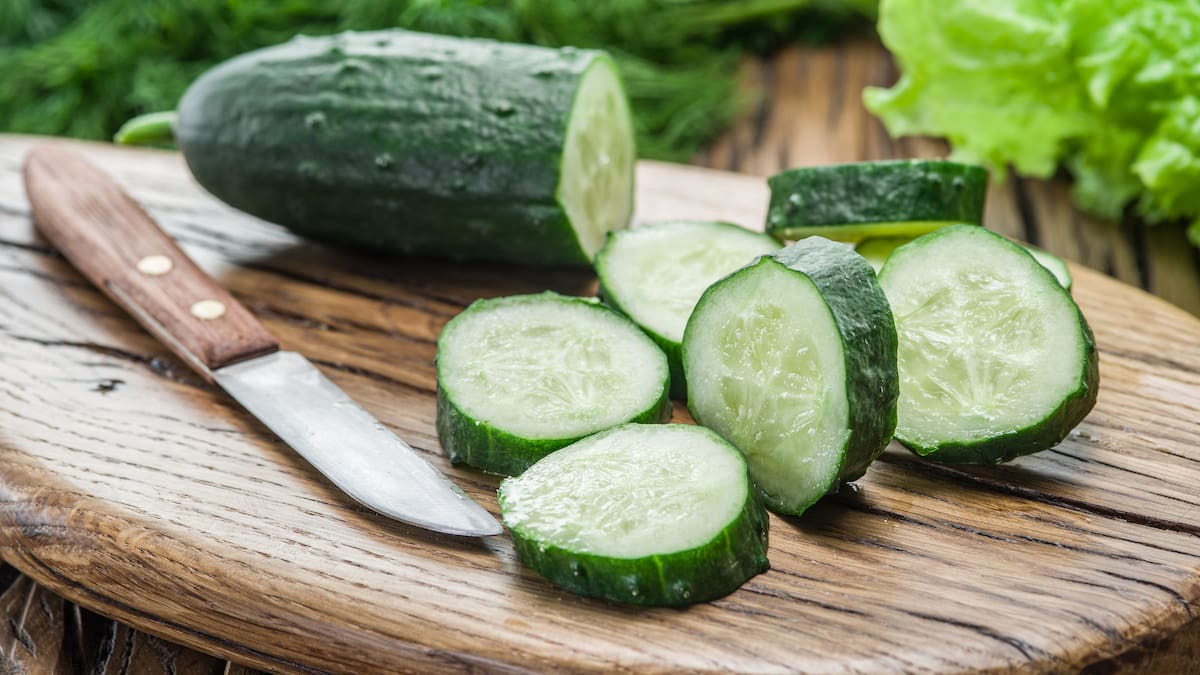
This clever, high-yielding, bushy variety takes up less space, making it ideal for smaller gardens.
I have also grown the small Japanese cucumber, which is perfect for lunchboxes and is crisp and crunchy.
The Lebanese cucumbers are a firm favourite with me, because I don’t end up wasting any.
You need to create a support structure or frame for your cucumbers to grow.
This can be a bamboo teepee, a garden arch or an old bean fence.
Cucumbers like to be planted in a warm, sunny spot.
Spring and summer are the best times to plant cucumbers when the chance of frost is no longer around.
You will need to prepare your soil with organic matter such as compost and sheep pellets, and dig it in well.
Water well and feed your cucumbers regularly as they grow in spring and summer, and you need to ensure good ventilation to avoid powdery mildew.
Harvest regularly and maybe make some bread and butter pickles with any surplus, delish on crackers with a slice of cheese.
November in my garden
With summer just around the corner, activity in the vegetable garden is ramping up.
Every spare moment is spent weeding, planting, and preparing for the season ahead.
While it’s always a little difficult to dig in the borage to make way for sunflowers and sweetcorn, it’s a necessary part of the seasonal transition.
The calendulas are in full bloom, creating a vibrant sea of orange.
I’m already enjoying my early crop of new potatoes, while the Christmas potatoes are progressing well.
Spring onions are ready for harvest, and the red onions should be ready just in time for the festive season.
Beetroot seedlings have emerged, brassicas are in the ground, and the tomatoes are growing at an impressive pace.
This year’s plantings also include basil, chilli, zucchini, and peppers.
I’ve added watermelon and cucumber to the mix, both of which promise a refreshing summer yield.
The grapevine has had its first of the two-summer pruning it receives, timed for when the tendrils begin to tangle.
Already, there are masses of bunches of grapes forming, a promising sign of the harvest to come.
Beans are in, and the sweet peas are climbing steadily up their frames, a clear sign summer is well on its way.
Elderflowers
Kem Ormond collected a basketful of elderflowers, ready for elderflower cordial. Photo / Phil Thomsen
This weekend, I’ll be foraging for elderflowers to make cordial.
Although I’ve shared my elderflower cordial recipe before, I’ll include it again for anyone keen to give it a try.
If you’re fortunate enough to know someone with an elderberry tree, or happen upon one while driving through the countryside, it’s well worth stopping to gather a few blooms.
Recipe: Elderflower cordial
Ingredients
1kg white sugar (Don’t freak out about the amount of sugar, remember you are only putting a small amount of this cordial into a glass each time).3 lemons4 limes50 elderflower heads65g citric acid
Method
Put the sugar in an enamel, glass or ceramic bowl with 1.75 litres of boiling water. Stir to dissolve the sugar, cover with a clean tea towel, and leave to cool completely.
Zest and slice the lemons and thinly slice the limes.
Add the zest and fruit slices to the cold sugar solution.
Shake the flowers to displace any hidden insects and remove the stalks.
Add the flowers to the bowl with the citric acid, then stir.
Cover with cling film and leave for 36 hours in a cool, dark place.
Strain through a fine sieve, then strain again, this time through a sieve lined with a fine muslin cloth.
Decant into sterilised glass bottles and keep in a cool, dark place for up to two months.
Once opened, refrigerate and use within a month.
To serve, just add a small amount of the cordial into a glass and add soda water.
I like to add a couple of teaspoons of lemon juice and a slice of lime.
Comments are closed.