
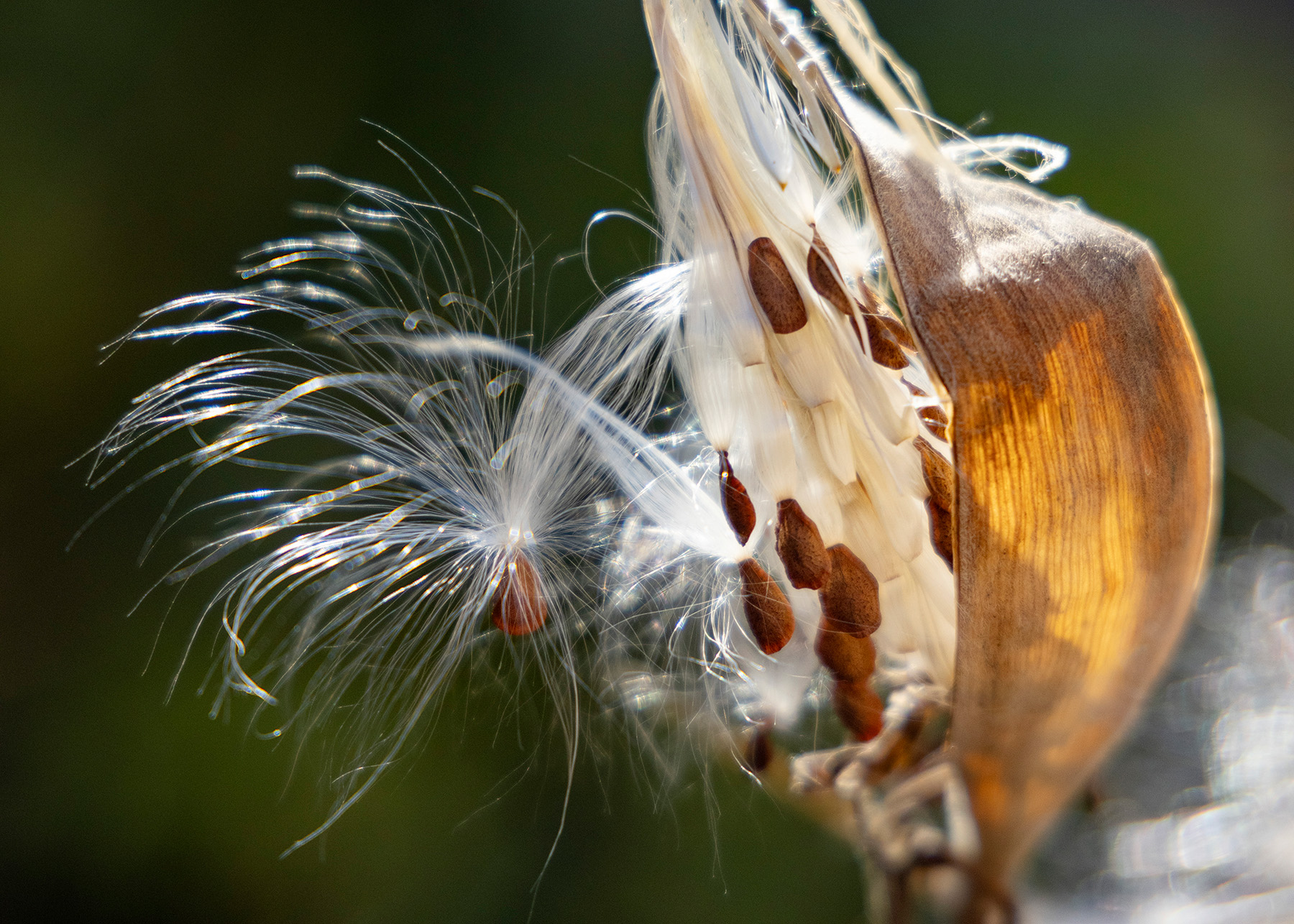
All good things must come to an end, and I don’t just mean the Brewers’ season. Let’s face facts: winter is a-coming. My last garden sighting of a Monarch was Oct. 12, despite the Mexican sunflowers, sneezeweed and zinnias blooming into November. I miss my daily plunge outside to check my bee-to-plant ratio (and this year’s bug-to-bite ratio as well). Despite the sun I know I’ll need a jacket and closed-toed shoes to check my covered lettuce, chard and kale, which are still doing well. My garden looks radically different now; the native plants have shifted from showy to snowy, releasing seeds in a puff for next year, a firm sign that nature is wrapping up the season.
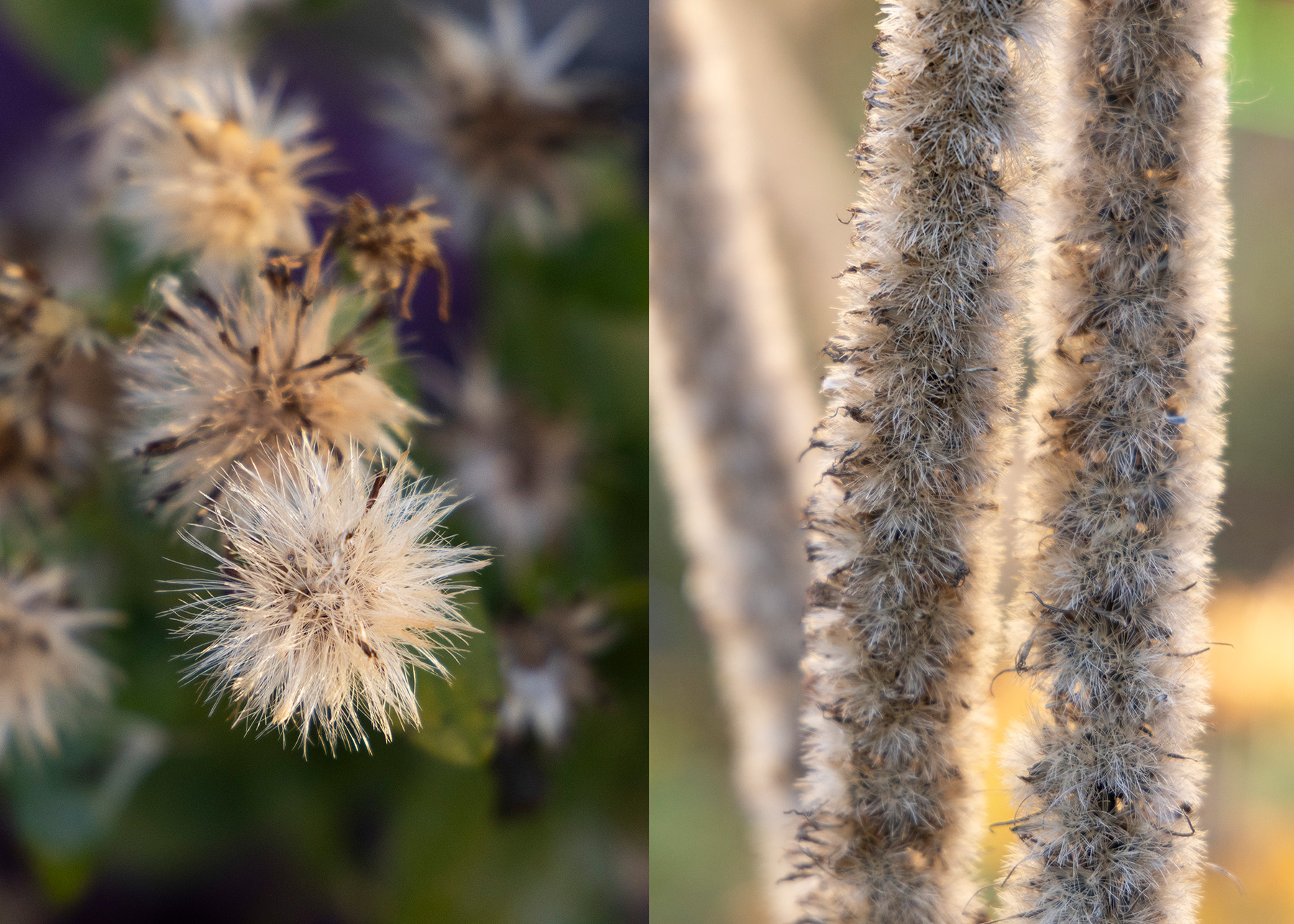 Aster and liatris flowers going to seed. Photo by Kevin J. Miyazaki
But never fear, we gardeners still have work to do before cooking turkey or cleaning snowshoes. Your outside tasks this month include gathering seeds, drying them and perhaps most important, labeling them, because unless you’re a pro, they are hard to tell apart. You’ll want to protect your soil. Don’t leave your vegetable beds bare, use nitrogen-fixing legumes to enrich the earth while you sleep. If the weather allows, toss down soybean, Leadplant, various colors of wild indigo and purple prairie clover (my favorite) seeds to slurp up nice minerals over the winter. These beauties will provide you with some good green to jumpstart your compost or your perennial garden in the spring.
READ MORE “FOR THE LOVE OF DIRT” COLUMNS HERE
Protect your pot empire by moving them towards a sheltered part of your yard or nest them safely in raised beds with mounded mulch for insulation. I recommend this with some reservations – last year none of the tulip bulbs in my nested pots came up, a few pots cracked and one lost its paint. Maybe you’ll have better luck than I did!

Join us for an afternoon of inspiration and fellowship as we honor six incredible women leading Milwaukee forward in the spirit of our longtime publisher, Betty Quadracci.
Along with mulching your beds, mulch your trees too, but don’t create “volcanoes” aka heaps of organic matter slumped against the trunk. Garden gurus mock this for good reason: critters can get inside the trunks to damage living tissue, and diseases can hitch a watery ride to spread disease. (My aesthetic editorial comment: it also looks dopey. For proof, check out these images.)
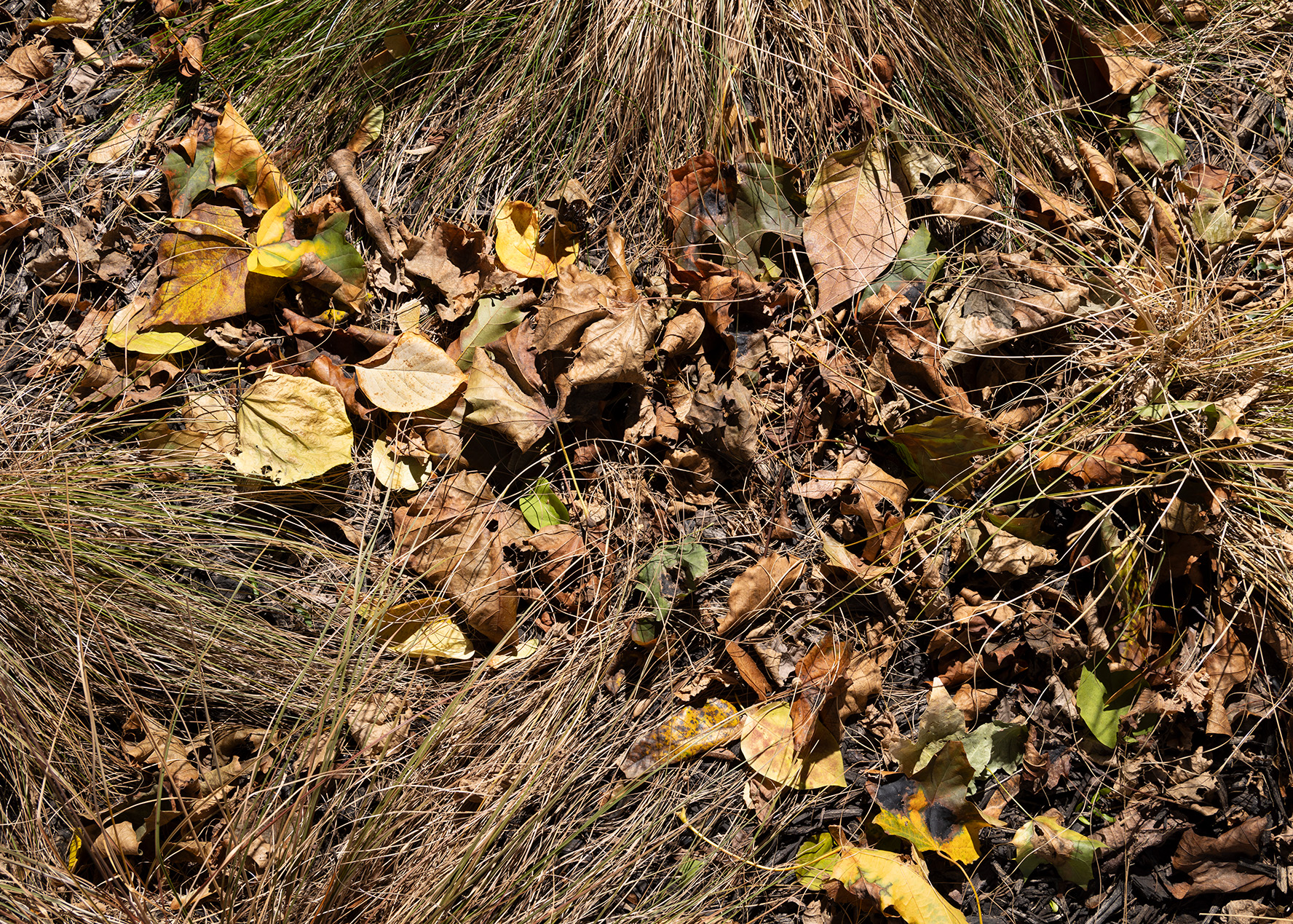 Leaves in park strip between prairie dropseed plants. Photo by Kevin J. Miyazaki
I am enjoying my third season of free leaves tumbling onto my puny park strip and covering my gridded prairie dropseed array. Neighbors with unexamined grass fixations will see this as messy – I see it as a cost-effective way to preserve organic material on site while reducing my mulch expenses. Leaves insulate roots and shelter the bugs that are burrowing in for winter. We humans need a nice solid house over our heads for winter, and so do the other creatures of this land.
I had Hoppe Tree Service remove a sucker tree blocking light in my shady garden, cut up the spring limbs that crashed down in May for another Lincoln log structure for the bugs, and evaluate buttonbush No. 2, which fell hard to chlorosis. August Hoppe said my buttonbush will come back next year; I’ll restart my iron chelate application then. He recommended cutting off the dead limbs caused by wind burn and last year’s fungus on one of our small pine trees. I’ll experiment with nylon strapping to protect its limbs from snow weight, too. If I lose this non-native tree, I’ll be sad, but I’ll gain space and sun for more milkweed. Once you get reliably below 40 degrees outside, it’s time to hang up your hoses and turn off the outside water. This is the surest sign of fall’s garden work stoppage.
Do you have a garage or shed for storage? Lucky you (and quit bragging!). Our back hallway is my overwintering space where I keep two supply bins, my outdoor bucket of tools, hanging implements and miscellaneous organic amendments. I’ve rolled up my twine, stashed used plant tags and wrestled wood stakes back into their bag.
Remember to clean your tools before you store them for the winter – that hard-working, crusty shovel needs love too. I use rubbing alcohol to remove germs and dirt, scrape steel wool across the surface and sharpen them if I can. Put your tools/toys away in good shape so you can cut again with sharp confidence in the spring. But I have left my seed-starting supplies (yogurt tubs, potting soil, brown seed saving bags) on top for quick winter action and already have seeds for indoor greens.
 Saved seeds for planting next year, including Mexican sunflowers and gerber daisy seeds, center. Photo by Kevin J. Miyazaki
One thing this column has prompted me to do is track my garden expenses. Gasp! Plants were not my biggest expense – buying and saving seeds have helped drive my green costs down – nor were educational classes and books. It turns out supplies take the prize.
For example, this year I purchased new light fixtures for my indoor greenhouse, potting soil, organic fertilizer, a new watering wand, yard clippings bags, snappy green clippers, fencing to protect my plants from damage, and metal edging so I can start planting green mulch. And lots of bark mulch, of course, to prevent evaporation, suppress weeds, reduce runoff and disease spread. I won’t reveal my cost-per-tomato expense (eek!), but this is a simple reminder to cherish the Wisconsin farmers who keep us fed in a way that is cost-effective for them and us.
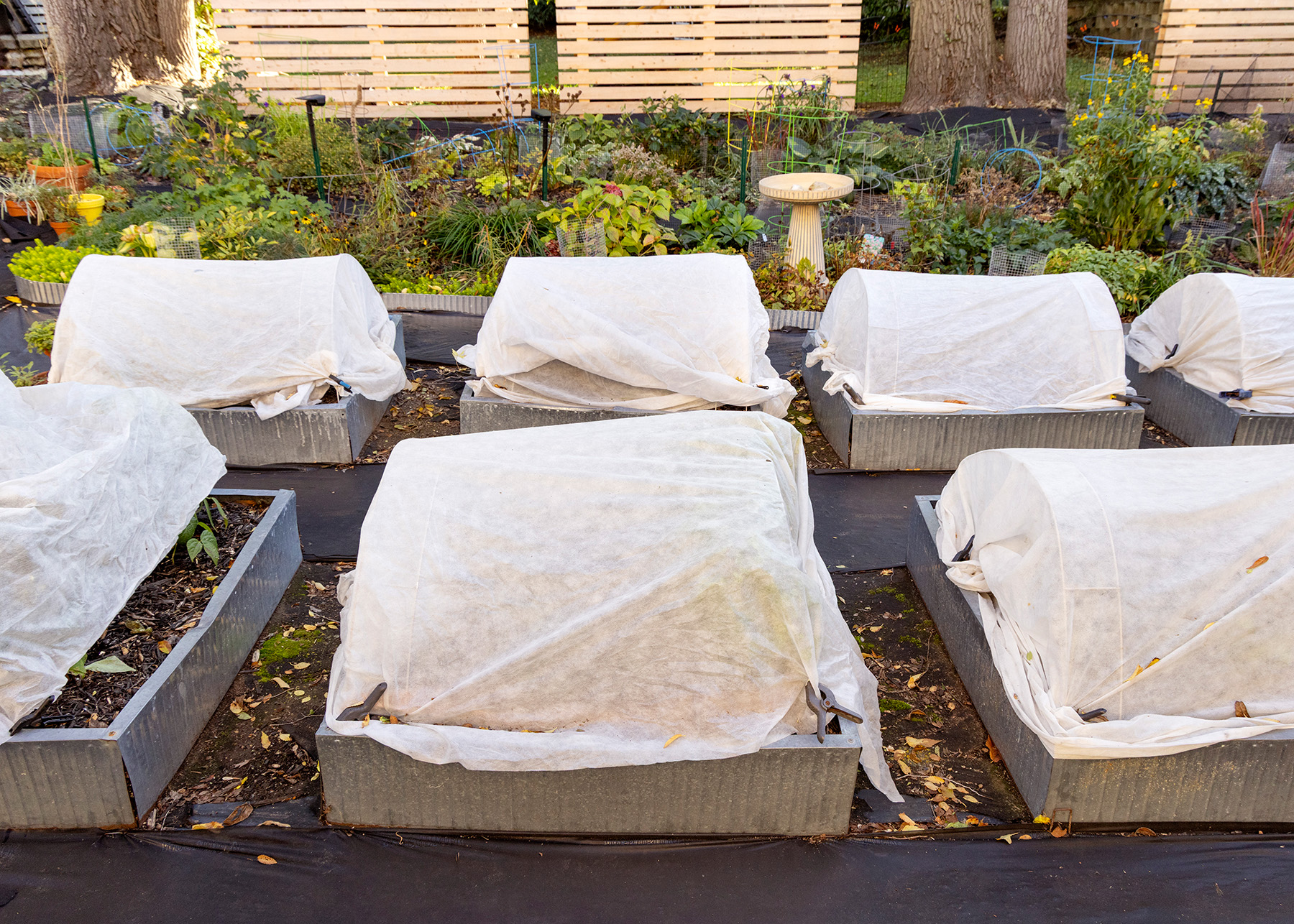 Covered fall beds in Marilu Knode’s Wauwatosa garden. Photo by Kevin J. Miyazaki
I just read about a newly released study from Cornell University that proves that having a purpose, and taking small steps towards it, increases our “latent well-being, sense of purpose, sense of belonging, sense of feeling needed and useful, and affective balance (a measure of positive and negative emotions).” Gardening fits this positive purpose bill perfectly.
More from author Dana Milbank: “Research in recent years has found that a greater sense of purpose is associated with reduced inflammation under stress, lower risk of cardiovascular disease and stroke, slower age-related cognitive decline and greater longevity, as well as improved perseverance, resilience and mood, and the ability to face stressful situations with less negative emotion. Purposeful people aren’t necessarily successful, but they are more adaptable during setbacks.”
The irrefutable, life-saving joy of gardening can turn even the most frost-bitten, warm-weather-preferring, desk-bound curator into a cheery Wisconsinite. I take great pleasure from the tasks needed to be a good steward of my patch of land, even when faced with adverse conditions (Limbs down! Powdery mildew disease! Itchy mosquito bites!) and failures due to human error – almost always mine. My gardening habit gives me a “purposeful pursuit” that includes improving the landscape for every creature in the environment, sharing produce with neighbors and friends, producing and eating more nutritious food and basking in the beauty of Vitamin Nature. By focusing on your purpose as a gardener, you contribute to your well-being as well as everyone else’s. And though our accountant might tut-tut my gardening habit, isn’t the happiness we get from gardening priceless? (Calculate that, number cruncher!)
Here’s to our collective commitment to something bigger than our daily human fuss. Keep your good habits going this winter, continue your lifelong learning online or in books, attend as many in-person events as you can, and keep dreaming green. And despite my beds going to bed, there is always more to talk about – I’ll see you in December!
A Few Gardening Resources
Education
Sustainable Garden Information
National Wildlife Federation: How to create and certify gardens for wildlife
Wild Ones Milwaukee: Download the Wild Ones’ landscape design specific to Milwaukee by landscape architect Danielle Bell of Native Roots, Milwaukee. This template describes all the ecosystems that can exist in one yard, and gives you a plant list to start your native plant journey
Milwaukee Metropolitan Sewer District, in partnership with Fresh Coast Guardians, provides resources and references for anyone wanting to help protect our waterways, create a livelier landscape and entertain the bees, bugs and other creatures that co-evolved in our region. Download their natural landscaping plan here.
See the Wisconsin Wildlife Action Plan, from the Wisconsin Department of Natural Resources, for information on conservation and protection of species and their habitats. I’ve gotten the names of a few rare native species from this list!
Comments are closed.