
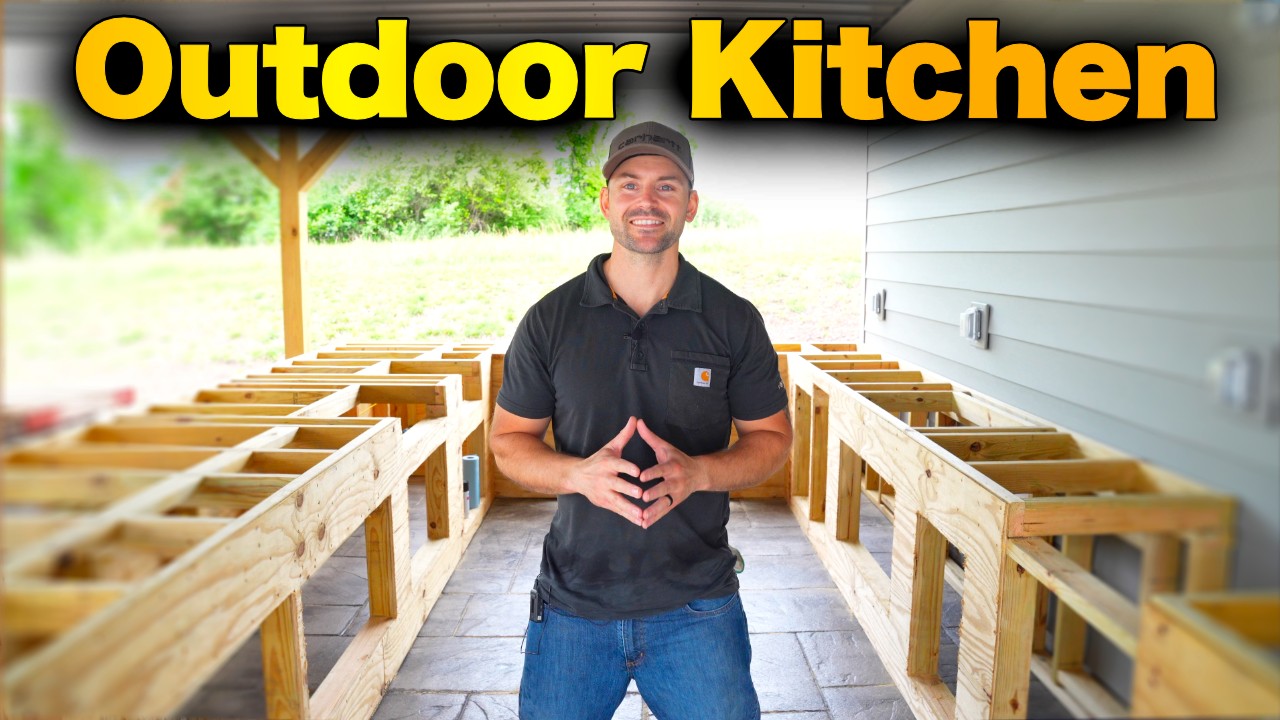
In this video, I show how to build an outdoor kitchen. This is my DIY project and I decided to show you step-by-step how I did it. I go over how to layout for the outdoor kitchen, frame the structure out of pressure-treated lumber, place the kitchen sink and much more!
My Favorite Tools And Supplies 👉 https://amzlink.to/az0KsA48iJTo2
Tools And Supplies Used In This Video👇
ALL OUTDOOR KITCHENS ITEMS LIST https://amzlink.to/az0JR9SpyeSAN
Napoleon 700 44” Grill Head https://amzlink.to/az0BmYT39BVGY
Napoleon Zero Clearance Liner For 44” Grill https://amzlink.to/az0zaO3CMOjXm
Napoleon 700 18” Side Burner https://amzlink.to/az0Mzl2WB55cE
Napoleon Zero Clearance Liner For 18” Side Burner https://amzlink.to/az0GW7t01MMiF
Le Griddle 30” https://amzlink.to/az02ZeFASKZZY
Le Griddle Liner For 30” Griddle https://amzlink.to/az0GKwYpsrkI2
Le Griddle Lid https://amzlink.to/az0vrQNNQjMvl
Klein Laser Level https://amzlink.to/az0rMCc748cDc
Composite Shims https://amzlink.to/az0814HYRwyjv
Ramset HammerShot https://amzlink.to/az0EZiUzSbYAB
3” Nails For Ramset https://amzlink.to/az03C7XJkxS3T
Loads For Ramset https://amzlink.to/az0CyjG8OCBjx
More Helpful Related Videos👇
Build An Outdoor Kitchen Playlist https://www.youtube.com/playlist?list=PLS7MTj0ntoKu0t6hH_f2NEhy3raZgE3uH
How To Build Concrete Countertops – Outdoor Kitchen Z Counterform DIY! https://youtu.be/7Z8FYD8_6pI
Build A Garage https://www.youtube.com/playlist?list=PLS7MTj0ntoKscT77MC00BBlymD7GsAG-7
🟢 Become a channel member:
https://www.youtube.com/channel/UCUJXaEduMHGB3Iap3DusmAA/join
🔴 Subscribe to this DIY channel: http://youtube.com/theexcellentlaborer?sub_confirmation=1
🟡 Check out my Amazon store: https://amzlink.to/az0KsA48iJTo2 . Here you will find tools and supplies used in my videos. (DISCLAIMER- I am an Amazon affiliate. I get a small commission that helps support the channel at no extra cost to you)
Timestamps
Intro 00:00
Chalking Layout 06:53
Framing Kitchen 08:19
Measuring For Drawer and Doors 09:07
Layout For Drawer and Doors 10:54
Framing Height Explained 14:13
Framing Kitchen Walls 15:22
Anchoring Framing To Concrete 18:28
Framing Griddle And Side Burner Wall 20:31
Framing Grill Walls 25:03
Framing Peninsula Wall 26:02
Installing Plywood 28:50
Running Gas Lines 33:05
Wiring Outdoor Kitchen 36:45
Plumbing Outdoor Kitchen 37:44
Framing The Countertop 38:49
Sink Framing 48:29
Leveling Countertop Framing 52:11
Additional Information 55:59
Disclaimer: This video is all based on my personal opinion and is for entertainment purposes ONLY. I am not a financial advisor, CPA, attorney, tax advisor, electrician, plumber, housing contractor, designer, or any type of profession to give advice. I am just a consumer sharing my experiences and research. If you do need knowledge for those types of things, I will advise you to seek help for those professionals.
in this video I’m going to show you how to build an outdoor kitchen so if you’re new to this channel my name’s Josh this channel is all about DIY to save a ton of money so be sure to subscribe ring that Bell so you get notification every time release new video and Hammer that like button for me that’s all ask for return for making this video so we got a lot of great information to go over today so let’s get started this is part one of a four-part series from the how to build an outdoor kitchen playist in this series we will be building an outdoor kitchen in this space using the material that you see here to the left and everything will be pressure treated lumber before starting any DIY project be sure to check your local building codes to see if you need to comply with any specific building codes in your area and also always plan thoroughly before starting any project as you can see here I drew up all the elevations of this outdoor kitchen before purchasing any material and this would be one side of the outdoor kitchen this is the other and then this is the other along with my material list and also I drew how I’m going to frame the top and the gas lines that I’ll need to supply the outdoor appliances with propane so that being said you may want to build your outdoor kitchen using metal studs or pressure treated framing material I went with pressure treated framing material but there’s a little Nuance I’m going to mention later in this video that you’re going to have to do if you do go with wood as a framing material so now that I got the outdoor kitchen sketched up I got the appliances delivered so I’m going to show you what I’m going to install for appliances now that you got your outdoor kitchen planned your drawings done your layout done next you’re going to want to order your appliances and framing material and all material to complete your project and the reason why I think that’s important is because you’re going to need the dimensions of your outdoor kitchen appliances access doors and drawers before framing up your outdoor kitchen without those on site you could go off the installation guides that are available online before getting your appliances but it’s best just to take a tape measure and measure out the cutouts in which you’re going to need to have done before you have the installation of your appliances complete but you can go off the installation guide as well that’s totally up to you another important reason to get your appliances ordered ahead of time and on site is that if there’s any dents or scrap scratches on your appliances you’re going to want to address that with the manufacturer of those appliances so you can get new ones and replacement parts so you’re not waiting for that after your outdoor kitchen is built because you’re going to need those appliances before the outdoor kitchen’s fully functional so that’s something you need to think about before starting your outdoor kitchen if you’re going to be using pressure treated material as a frame for your outdoor kitchen which that’s what I’m doing in this video it is considered combustible because it is a wood product and most post outdoor kitchen appliance manufacturers sell what are called liners that you see here to my left this will be where my 44in Napoleon Grill is going to set and the reason why this liner is important is because it’s going to protect the pressure treated material from any kind of heat so because of that I got to use the liner with all my appliances so my griddle my side burner my 44in grill all have liners that are going to be installed first now if I was not using combustible material such as metal framing of some kind then I would not have to use the liners so that’s something you need to consider because these liners are not cheap and if you want to purchase any of these things that you see in this video I’ll put a link in the description below so you can check them out for yourself something else about these zero clearance liners is that they do have holes already cutting them for your electric and your gas lines and I thought that’s important to point out because you need to make sure you have your orientation for your gas lines electric and whatnot in line with those holes because that’s ultimately where they’re going to enter and exit the appliance I’m now going to begin framing for the outdoor kitchen and just so you get a general sense of the layout here we’re going to have 24in framing width going right against this wall and then it’s going to run back here to a 6t section that’s 24 in framing as well and then it’s going to come over to this peninsula that’s going to have my side burner and griddle and then it’s going to have a little bar top here that’s going to run just about up to that post so as you can see it’s a very large outdoor kitchen so as I’m framing this I just wanted to give you a general idea of what I’m doing because I’m framing directly on top of this stamp concrete there is some variation and some slope away from the building which if you’re building on a patio area you most likely are going to have a slope as well so consider that if you’re going to be doing a concrete countertop like I’m going to be doing for this outdoor kitchen so I want my top to be as level as possible but if my base is not level I’m going to have to build this in a sense to where I can adjust my top to make it perfectly level and I want my framing to be secured tightly to the concrete so keep that in mind so I got a laser level here I’m going to go ahead and turn that on and we’re going to check how level this area really is so now that that’s on we’re going to check with our tape measure and get the difference from this side of the outdoor kitchen and Each corner to see how much of a slope there is so if there’s an exaggerated slope we can take some of that out with the framing so I’m going to pull this up here and right now our laser is heading right at 54 and 3/4 as you can see here on the tape so I’m going to check back here on this corner I got 53 and 3/4 here let me check over here here I got 53 and 3/4 so I’m level across the back here but there is an inch difference between here and that edge so we’re going to measure here and this back corner we got about 50 four as you can see there so as a general sense we’re level across the back and then it starts sloping down here and then it has just a little dip in here so we’re going to take some of that out as we frame up the top so it’s enough I can get away with framing everything right to the concrete then I’ll adjust the top once I get to that point to make it level I’m going to take my chalk line and I’m going to chalk the layout onto the stamped concrete and which the outdoor kitchen is going to be framed up to and this is going to be the outside of the 2×4 framing not the sheathing because we need a layout to actually secure our wall to directly so I’m going to measure 25 in off the bottom of this block wall to compensate for the thickness of this siding to give me the outside of my 2×4 and I’m going to snap the line and I’m now going to put the same chalk lines around for the whole outdoor kitchen I recommend using blue chalk here because red chalk is considered permanent and we don’t want anything permanent on our conrete as you can see I now have chalked lines to the edge of the 2×4 framing around the whole layout of the outdoor kitchen now let me show you what I did change after seeing how this layout turned out after placing the layout on the concrete I noticed that the drain line for the plumbing pipe will work out better if I move the sink down more this way so because of that I’m going to shift the trash can the drawers on this side and then the one drawer to the right of the sink so that way it’s going to work out better for the layout for this first section on the outdoor kitchen I’m going to grab four 16t long 2x4s that are pressure treated and I want to make sure they’re rela ly straight anytime I put a layout for a wall I need to make sure my plates are straight in order to check to see how straight they are we’re going to eyeball down the pressure treated 2×4 like so and that way you can eye and see how straight they are before using them very important so I’m going to grab four of these and lay them out on my layout to mark them I’m now going to line the edges of all four of these 2x4s right to the the edge of where I want my framing to stop on this side of the outdoor kitchen I’m now going to show you how to measure for your rough openings for your doors and drawers so right here are two drawers that are going to go together this is actually for a trash can and this is actually a set of drawers but if we measure across the front we got 17 in as you can see here we don’t make our rough framing 17 inches wide because this is actually the face we want our rough framing just to be a little wider than this part of the drawers so we got 14 1/2 in on this back and we’re going to add a/4 inch to each side so we’re going to make our rough opening 15 in wide now these two are actually going to go right beside each other like so so we’re going to make our actual width from back to back to house both of these and I’m going to put a 2×4 here to have a place of screw two in the center the same also applies to our height if I get a measurement here for the height I got 25 and 3/4 in so I’m going to make my opening 26 and 1/4 in so that way we have a little bit of room for adjusting there as well here are my access doors for the outdoor kitchen and right here the same idea as the drawer if you take a look back here we got this lip that is actually going to be in the rough opening and we take a measurement here we got 33 and a/4 so going add a half so 33 and 3/4 should be plenty width for that opening then we take measurement of the height we got 18 in it looks like 18 and 1/4 so 18 and 3/4 in is when I’m going to make the rough height for this door so just so you know that’s all you got to do to frame out for your doors and drawers I’m going to begin at the sink with the layout the reason why I like to start at the sink is because the sink is the one you you really can’t move that much because of your drain line and with that being said I’m going to start here and marking where this drain line is going to hit right here and that’s going to be the center of my sink I’m then going to take my framing square and square right off the edge of my 2x4s once they’re tight together and then I’m going to make a line here across all of them and we’re going to mark that as the center of the sink and because that center of the sink that’s also the center of our 36 inch door the access door below the sink for the plumbing so now I got to get my rough opening for the 36in door that’s going to be placed here back here on this wall we don’t have to mark where our access doors are just the front plates that’s going to be for the front face of the outdoor kitchen layout and it’s smart to put your rough measurements on a piece of cardboard paper so that way you have them for reference when you’re doing your layout now I’m going to Mark the rough opening of each one of those now after I marked the inside measurements of the rough opening I’m going to take my Square make a square line up both sides of these and then I’m going to put an x on the side we want our stud to be on and then you can just scribble through here so you know not to put any full studs here when we’re framing now we just repeat that process for the drawers on each side of the sink and the rough opening for the refrigerator something else you want to think about like in this corner I’m going to have stone veneer that’s going to be 2 in out and a/ in for the sheathing that’s on the wall first so it’s going to put me at 2 and 1/2 in off this corner before the start so that’s where I’m going to have the key off of to get my Center between my sink access door and the center where I want to place the center of the drawers that are going to be placed [Music] here I like to point out that I did put the layout on the back wall as well because the drawers are going to go back to here which will put me into that wall so I need to frame that out the house the drawer unlike the sink access door now that my layout is on my plates there’s a couple things I’d like to mention one thing is right here I need to keep this open on this back wall for obvious reasons so I place the stud right here on each side of this on the back wall and then with that being said any open spans need to have a twoot on Center at least layout for a stud but right here I have so many things coming across this opening or this section of the outdoor kitchen that I didn’t really have to add any more additional studs now here later we have some open runs where I’ll show you how to do a 24 in on Center layout or a 16-in on Center layout just so you see both so that being said we’re going to go ahead and cut this to length because I want my finished framing height to be 35 in just like base cabinets in a house if we measure up 35 in that puts us right here off the concrete so we then got to subtract for the two plates so we take that 35 in that puts us at 32 in and then if we subtract the 3 and A2 inch top that I’m going to build and I’m going to build this so where the 2x4s are placed upright like floor joist because that’s going to give us a stronger finish and the ability to level up the top because I’m going to be doing concrete countertops so being level is important to me so because of that we subtract another 3 and 1/2 in for that so now that puts us at 28 1/2 in is what we need to make our stud height I need to cut 24 studs and because there’s so many I set up my miter saw with a stop so that way I can feed my pressure treated 2×4 through and cut multiple Cuts using the stop quickly this method is only used where the concrete is fairly level I will show you later on how to cut the studs where the concrete is not fairly level I’m going to build the back wall first so I’m going to use these first two plates as something to Pat it up off the concrete because I don’t want a nail to Veer down and hit my stamped concrete so that’s going to work well to cushion that and then I’m going to use these plates and make the wall so I’m first going to lay all this out the nails I’ll be using to put the framing together are these three and a quar galvanized ring shank nails these are for exterior use and can be used in pressure treated very important to [Music] note in order to f in the studs we simply line our stud up on the X that indicated the side of the line the stud was to be placed we’re going to line it right up on that line and nail it together so I like to put three Nails in with each stud then again go to the next one do the same we go down this side then we’ll go to the other side and do the same [Music] thing for each set of drawers in the trash can holder I need to put a support in the bottom and a nailer or some place to screw to at the top so I’m going to come up 4 in off the bottom and make a Mark and that’s where I want the top of the support going and then over here I got to do the same thing on these drawers cuz they’re going to actually come back in here so I’m going to do that and now for the access doors I’m going to come up 8 in so instead of 4 in it’s going to be 8 in on those just to make them more centered with the height of the outdoor kitchen so I’m going to cut these blocks now and go in between and these measurements are going to be the same as the rough measurements when I laid this out so I’m going to cut those [Music] now I’m now going to stand these short walls up into place and I would like to mention that right here I’m going to cut this top plate off once it stood up because this needs taken out cuz this is where the refrigerator is going and there can’t be anything the way cuz that’s going to go right up to the bottom of the concrete countertop now with that being said I’m going to leave the rest of them on for now cuz we can cut them easily later because it won’t be up against the side in like this one will be so we’re going to stand these up now I’m now going to Anchor the bottom plate to the concrete and I’m going to do so using what’s called a ram set the ram set will just be placed right up against this plate then once it’s loaded we hit it with a hammer and it uses a 22 caliber charge in order to power these 3in galvanized nails right down into the conrete and it’s going to keep it from shifting left or right or whatnot so you could also use what’s called a con where you drill it out then it drives right into the concrete you can do that as well whatever you have that will work use it so I’m going to go ah and load this up and secure it and I’m also going to make sure I’m nice and Plum where I’m sitting when I’m tight up against the siding which right there looks really good so it’s going to be anchored right where it’s at and I’m also flushed up with the line that’s the one we made earlier to indicate the end of the outdoor kitchen so I’m going to do that now in order to to load this we’re going to place the nail right at the top and then we’re going to open it up and that’s where we place our charge so we’re going to slide it right down in here and then shut it and I always use ear and eye protection with these because they’re really loud and now going to just push it tight against that wood and hold it and hit right on top of the ram set so as you just heard that’s really loud but I’m going to do that every couple feet down the wall I could have attached a ledger board against the structure instead of building this wall but the reason why I did that is so I did not have holes in the sighting if I ever decided to remove the outdoor kitchen for whatever reason so it’s future proof in order to finish up the ends of this run I got to build a little wall on this side and the other side to cap it off [Music] I’m now going to begin building this section of the outdoor kitchen now this is what I’m going to do to avoid having a bunch of shim to level up this top is I got my laser level on here now and it’s casting a level line to the highest point that I found on this elevation the laser is just touching the point here then the rest of lasers cast around to where this is definitely the highest point so now that I know my laser is at the highest point I’m going to measure up onto this double plate because this going to represent the two plates of this wall so if I measure up my laser right here is hitting right at 29 and A4 a laser level is essential for this process if you want to see the exact one I got check out the links in the description below the wall that I’m about to build is going to hold the griddle and the side burner now there’s two important measurements we need to get the width just like we did for the drawers and access doors and also we need to allow room for this to drop down into the wall so we need to think of how thick our countertops going to be and how thick the support is that’s going to hold the countertop in this case and remember that I’m going to be framing with 2x4s up on the side so that’s 3 and 1/2 in then my countertop is going to be an inch and 5/8 stick with the concrete countertop so if you add those two together we got 5 and 1/8 so now we need to measure how much distance that we have here that needs to sit down into the wall so if we take a measurement here we got 7even and about a eighth we need to allow for this to sit comfortably on top of the countertop so that being said we take the seven and eigh and subtract the 5 and an eighth and that gives us 2 in that we got to drop down when we frame this wall to compensate for this to go in and if you’re not framing the top with the 2×4 up on its side like I am then you would just allow for the countertop thickness so it all depends on how you’re doing your framing so on the side burner if we take a measurement here we got 10 and 3/8 so if we subtract the 5 and E that gives us 5 and a/4 in we need to drop down into our wall to compensate for this so we need to make sure we do that when we frame this wall I’m now going to use my plans to lay out this wall then after I lay it out I’m just going to cut the studs and build it in a similar fashion to which we did this elevation so I’m just going to timelapse this little portion of it here I’m cutting each stud custom to the height of the concrete because it is not level and when I’m doing this I’m stepping on the two plates together so that they’re sandwich tight below so when I get the measurement to the laser it’s going to be very accurate also the laser is set at the same exact height as the first elevation of the outdoor kitchen that we already have [Music] built once I set up the wall that’s going to house The Griddle and the side burner I’m now going to frame out the opening to support the front of them before I get any further I’m going to check to make sure I’m running level from here to here because as you just seen I custom cut all these studs across this wall because again the concrete’s not perfectly flat or level I’m going to take a 10t 2×4 with my 4T level on top just to double check and if we take a look across here from this point to this point as you can see it’s perfectly level using this 10t 2×4 from this side of the outdoor kitchen to this side which again is critical for me since I’m doing the concrete countertops now if you’re not doing concrete countertops a little more forgiving so then we’re going to check going down this whole run so I just want to illustrate to you that custom cutting the studs is actually a really good idea because it’s important to get this nice and level looking good looking good looking good and everything checks out really well so we’re nice and level across here now I’m going to use this as a straight Edge to custom cut my studs to fit in for this wall where the 44in grill is going to sit I got my two plates that’s going to be for this wall I’m going to lay this right here on the exact area where it’s going to set I’m now going to get my stud height simply measuring between here and the two plates put together and that’s going to be the same idea that we used earlier with the level so we got about 29 in there 29 and a quarter there 28 and 78 so as you can see it’s going to take that slope out as we go essentially the 2×4 going from elevation to Elevation works as if it was a laser level to measure up to [Music] I’m now going to build the wall that’s going to correspond with this wall to support the countertop now with this wall it’s very easy because we’re just going to do a twoot on Center layout so the first thing we need to do is get the total length of this wall to match it and this from the last one is 15 8 and 5/8 so I just got to cut my plates 15′ 8 and 58 then put my twoot on Center layout on it I got my two 16t pressure treated plates here I’m going to pull off this end and come down here and Mark 15 and 5 8 and 5/8 I’m going to Mark 15′ 8 and 5/8 in right here and something important to note these plates are flush with each other at the other end of the boards very important cuz when we cut these we to make sure they’re both the exact same length then take my speed square I’m going to Mark both of the these at the same time and we’re going to cut on that side we’re now going to put our layout on these boards in order to do the twoot on center layout we lay our tape hooked to the end of the plates and we got the twoot Mark here so we simply just come back 3/4 of an inch and then make it X right on 2T cuz that’s where our stud’s going to sit so that gives us 2T on Center so now at the 4T Mark come back 3/4 of an inch so it’s 47 and a quarter put a x right on 4T and repeat that process down the whole wall now with my plates pressed tightly together I’m simply going to take my speed square and make a line across both of the 2×4 plates at the same time so now we do that across all those marks we’re now going to stack these plates together and then set them right on the line and get our laser level out to get our stud height so we can mark them so everything’s level with the other part of the outdoor kitchen if you do not have a battery powered framing nailer a pneumatic framing nailer or just a simple Hammer can be used to sink the nails if you’re going to use a hammer I recommend 16 penny fully galvanized nails ring shank is a plus if you can get them but not totally necessary the last thing I need to do for the stud framing of the walls is ADD supports in between these 36in access door openings that’s because the weight of the countertops going to transfer down to these little 2×4 headers it’s just going to add a little bit extra strength not a significant amount but something that I should do if I see that now how I will be framing the countertops later on in this video will hold most of the weight this is just nice additional support this is a special plywood this is pressure treated plywood just like the pressure treated frame material we been using and the thing that this is going to do is give us a place to screw our stoon veneer to and it’s also going to square up and secure this framing as you can see you can rock this right now that’s because there’s no sheathing on it to hold it square and it’s also something that we’re going to have to do before we get any further to secure this framing I’m now going to switch my framing nails to the 2 and 38 in galvanized ring shank nails and these are more suitable for nailing on plywood I’m going to install the/ in plywood on this section first so I’m going to have my countertop overhang here for a bar so because of that I’m going to stop my sheathing flush with the top all I’m going to do is take a measurement right up to the top of that plate and I got 32 and 5/8 here so I’m going to subtract about a/ inch because I don’t want my plywood coming in cont with the concrete just because the plywood is susceptible to wicking the water up off the concrete so we’re going to leave a little Gap there so air can go under there smoothly so we’re going to cut these 32 Ines should be sufficient for this application to rip down the plywood I’m simply going to measure up 32 in off this Edge and make a mark and then do the same on this side I’m now going to take my chalk line and hook it onto that edge of the plywood at that Mark then I’m going to strike from point to point now that’s going to be what we need to rip it down to I’m now going to slide a 2×4 under this side of the plywood to elevate this so I don’t cut into the plywood underneath and now simply going to rip right down that chalked line something else to note about the pressure tree plywood you have a side that does not have writing on it then you have this side that does have writing on it as you can see down below I always put the writing towards the inside of the structure just so you know right and like I mentioned this plywood is going to be used to square this up because this is not setting perfectly square at the moment so first thing we need to do is nail just right at the top of this plate cuz that’s going to give us our first straight edge and then we’re going to have to shift it to get it Plum and then nail The Edge so I first need to get it flush with this top and elevated off the concrete that looks good there we’ll tack it now we’ll come down here and do the same and because we did the two foot on Center layout this is breaking right in the center of this stud now we’re going to nail this off every 6 in across this top I’m now going to take my 4ft level hold it against this Edge and then shift it to where it’s Plumb so right there as you can see the level’s nice and Plum and then we’re going to secure this edge here and that’s going to hold it Square as we nail it off and now we just nail every 6 to8 in in the fields of the plywood in every 6 in around the perimeter like I just showed you and now we just continue that same process around this edge here the stone veneer that we’ll be installing later on in this video series requires plywood as a substrate to screw to that is why I’m using this type of material for a substrate but you could also use cement board if you’re using something such as tile or even some stone veneer to attach it to the grill the sideb burner and The Griddle all require natural gas or propane and because of that I could just use propane tanks below each one behind the access door but I’m going to do how I did my house is I’m going to run black iron pipe to each Appliance I’m just going to use a trunk and Branch system a three 3/4 in trunk and then Branch to the/ in TAS and this is going to be a reducing te at each Appliance and then going to have a shut off valve ultimately there going to each Appliance with a regulator at the beginning of the whole system so it’s going to come out of 100 lb propane tank go to a regulator that’s going to drop it down to about a half pound of uh pressure and then it’s going to feed the system to all the appliances at at that half pound of pressure now that being said do not do any type of running your own gas lines or anything of that nature definitely get a professional for that in my jurisdiction I got the building permit for this building and I can do it myself and I have a lot of experience working with black iron pipe for gas lines so definitely hire professional for this part now I’m going to do a time lapse of doing it so I’m not going to get into too much detail then I’ll give you a walk through of it when it’s done black iron pipe is typically meant to be used indoors because because this outdoor kitchen is under a roof and also this black iron pipe will be underneath the countertop obviously so I do not have to worry about a lot of weather getting to it and I’m also going to treat it later on in this video so withstands the elements a little bit better any type of moisture that may hit it so that’s something to keep in mind when watching this black iron pipe installation to give you some context of what I’m doing here I’m putting together two different runs of the black iron pipe on top of this 4 bait sheet of plywood it’s going to be much easier to pre-build as much as I could before getting between the two walls of the outdoor kitchen because it’s very tight in that space so doing that will let me work much more efficiently and much better and get better fittings that way as well so after I got the two runs put together I plac the one run in the one side of the outdoor kitchen then put the other one and threaded it into place and then I tightened that up all the way then after I got that put together I drill a pull out through the side and place the one end that’s going to exit the outdoor kitchen that’s going to ultimately get to propane tank and then I leveled up the black iron pipe and anchored it using strapping so that it’s held into place for when it needs to be used after I rough in my gas lines I always make sure I pressure test the rough in and I do that by placing this gauge with the valve stem here and then I fill it up with 100 lb of pressure and this only gets a half pound of pressure ultimately in these lines but I figured if I test them at 100 they can surely handle a half pound so to make sure this system passes I got to pressure test it as you can see we got 100 lbs of pressure here and I let that set for at least overnight to make sure our lines are good to go I have a stub out right here that’s going to be for The Griddle and I put that in position so it’s about where it comes out of the griddle and then the same here for the side burner I stubb the gas line up here cuz it’s about where it comes out of the side burner then it goes back in elbows onto this elevation and then the next stop is right here up to the 44 in Grill and then we’re going to stub out where we’re going to put our 100 lb tank and regulator so that’s all there was to roughing in the gas lines I’m now going to install two receptacles again don’t do electrical if you’re not qualified or don’t have the proper permits I got the proper permits here to do this so I’m going to jump out of the receptacle and run it over to power the next two receptacles around this outdoor kitchen in order to power the two receptacles for this outdoor kitchen I am jumping out of an outlet that’s directly above the outdoor kitchen as you see here that circuit is protected using a 20 amp GFCI breaker so I do not have a GFCI receptacle because it’s protected via the breaker coming out of the panel box and also this is 122 wire the 122 wire is meant to handle 20 [Music] amps the last thing I’m going to do before I frame the top is address these Plumbing pipes there’s two things I got to do here one is install a stoter vent here this works as a one-way valve because my nearest pipe that’s going up to the roof is too far away for me and I want to place this here so that way we siphon air in and it’ll let the sink drain properly so we’re going to install that and then we’re going to install an adapter here that’s going to get the P trap that’s coming from the sink here and again all this is much easier to do now before this Tops on so I’m going to do that now all right the rough Plumbing’s done here and if you’d like to see how I wired and Plumb this whole garage check out the video link in the top right hand corner of the screen I’ll walk you step by step how actually built this whole garage as well before framing the top I’m going to clean up as much as I can Behind the Walls because it’s going to be easier now than later it’s now time to begin the framing process for the concrete countertops and this framing process can be used also for granite countertops or any countertop you’re doing but I just wanted to illustrate that it’s important to have it really level if you’re going to be going with the concrete countertops because we’re going to form this in the next video so that being said I’m going to bring the edge of my framing out flush with the sheathing because I’m going to be doing ston veneer and I want it to run up the same plane and if I do that it avoids me from having to put pieces of plywood around the outside edge of the overhang for the bar area so now what I’m going to do is get my layout just like I have for these openings here for the griddle and side burner in this case and also something else I got to think about is I’m going to be using halfin cement board and it comes in 5T long sheets and because of that I need to make sure I have a nailer at 5T to be able to secure the edge of the cement board too so if those things in mind I’m going to begin cutting these studs or joist to hold the concrete countertops and again these are going to be 2×4 pressure treated studs just like we did with the walls except we’re going to be going 16 on Center or closer in some cases because I want to make sure I have a nice sturdy top so I’m going to begin laying out for this concrete countertop if I’m coming off the edge I’m going to be coming out 5T and then coming back 3/4 of an inch so I know I need a stud right there and then we’re going to do the 16 on Center layout here so we find our 16 Mark then we’re going to come back 3/4 of an inch so now I’m going to come off this 5T Mark to continue the layout because the 16 on Center works great for 4T and 8T material but 5T is a little abnormal in the frame streaming world so because of that I have to do this kind of odd layout so if you’re going to be using halfin pressure treated plywood you could just continue your 16 on Center layout and the/ inch plywood is great for strength but I think durability and longevity being outdoors cement board is superior yeah it doesn’t have the near the strength for the overhangs like the platwood but again long term it really doesn’t matter cuz I’m going to have concrete that’s going to be supporting the countertop ultimately now my next piece of cement board brakes here so I’m going to make sure to mark it here all right I’m now going to cut a plate to length just like we did on this wall here we’re going to lay it here to put our layout and to cut our other plates that go [Music] here I now need to calculate the length of the supporting 2x4s for the countertop and again this is going to have an overhang for a bar area and because of that I need to compensate for my overhangs and with that being said I want a 3-in overhang on each side because I got stone veneer going around this which it has a 2in thickness because it has a built-in rain screen but I’ll show you that in the following videos but because of that I need to allow the overhang as well over that so I got a 3-in overhang because I want a 1 in overhang over the stone and then I got to think about the sheathing I got to put on this side of the wall yet and this side will not have sheathing on this 2×4 support because like I said earlier I want it to come out flush and not have to Pat it with sheathing around the parameter so this side will still get it yet so that being said I need to subtract the 6 in for the 3 in ever hang on each side then a half in for the thickness of the sheathing here so that gives me 41 1/2 in that I need to cut these supports that go in between so ultimately after this is finished I’ll have a 51in wide countertop a concrete countertop that I will be doing in the next video can can of lever 12 in without support but I will be supporting this concrete countertop with the 2×4 so it technically is not can of levered at all because of that before nailing the countertop supports together I must first decide how deep I want to install this Grill and that goes for all the grills the big grill the side burner and The Griddle I need to determine how far I want this part to stick out like I mentioned before I got 2in thick Stone and I still have sheathing going on the wall yet so I got to take 2 and 1/2 Ines back if I want this flush another thing about these liners you can install this counter sunk down into the countertop or in my case I’m installing it right on top of the countertop on top of the finished countertop like I measured for earlier just so you know so now I’m going to measure Back 2 and 1/2 in and make a mark and then that’s how deep the pocket needs to be for this top framing to this Mark is How deep the framing has to be for the countertop so I’m going to measure up to that Mark I got 19 and 3/4 so if I make it 20 in that’s going to be perfect for this and again all of the appliances are going to have their own measurements the width of the block to support the backside of The Griddle side burner and Grill is the same width as the rough openings that we did here earlier that’s for the liner so I’m simply just going to get those measurements and cut blocks and then nail these back to the correct distance to give me the finished measurement that I want after discussing the placement of the liner further with my wife she decided she did not want the liner flush with the stone and wanted it flushed with the end of the countertop which actually probably would be a better look so I did end up padding out the block a little bit further I’m going to finish studing this in where the appliances are going to be and I’m just going to continue my 16 on Center layout off this near stud or joist I should say so I’m going to measure over 16 to the edge now and continue that layout on this section and then we got to cut them to the length also want to let you know to shoot this together I switched to the 3 and A4 framing nails like we had when we framed up the [Music] walls because I’m want to remove the tapered edge off the cement board when I install it in the next video I got to allow to subtract 2 in off the cement board on this side because of that and now if I measure up to 34 in going to mark that right here so right off the edge I’m at 31 then I’m going to put blocking across here to catch the lip of the cement board but what I could have done was just break these on 3 foot on Center so I could have laid my cement board long ways but hindsight’s better than foresight so I just got to add some blocks in between these 16in spans the tight spans I don’t have to worry about it just just so you [Music] know I’m going to take my framing nailer and nail up from under here into this in order to hold it into place and make sure we’re flush right along the face of this wall on this side where the overhang is going to make sure I get this flush with the edge of this wall and I’m also going to get the measurement that’s from the inside of this countertop to the edge of the wall right here is 29 in now we know this is where it should be because we already put the sheeting on and got it Plum so as we go across here we’re just going to toenail down into this knee wall in order to hold this top where it belongs and get our 29 in measurement along the way so we know this wall is setting to correct distance away from the wall here all right as you can see that’s nice and secure and nice and strong I like that so before I try to find to leveling this with shims or anything of that nature I know it’s really close where it’s at but I’m going to finish framing the rest of the countertop before I start adjusting anything just cuz I need to find the highest point of all the countertops so now I’m going to go ahead and continue framing this in a time lapse here is a construction tip that I learned from framing houses if you have a wall that is racked and hard to get Plum if you hook a ratchet strap and Pull It in the direction that you need to Plum the wall you can tighten that up and unrack the wall fairly easy using a ratchet strap like you seen here on this section of countertop I got a sink and this is a under mount sink and it’s technically supported by the framing that’s underneath of the countertop it ain’t going to be sitting right on the wall like this I still got a frame like the other countertop so there’s something to consider on the back end is going to be the faucet and because of that I need to be able to reach in to tighten up the faucet and install it so therefore I’m going to have to cut part of this wall off right here to give me some room to reach up in and install the faucet so I’m going to cut out this back section here and that’s going to allow me to install it properly when it comes to building the frame for this it’s the same idea as the appliances we got to cut a frame to support this lip of the sink [Music] something else I’m going to do is I’m going to rip down this wall to about an inch in this section here because after getting some measurements my sink might be too far back if I go off this because of the thickness of the stone and then the overhang so I don’t want to have to reach in into the sink like that so I’m actually want to rip all this down to compensate for the sink just in the section where the sink is going to hit so I’m going to do that and then frame out ripping the wall down like you see here to make it thinner does not hurt the structural Integrity simply because of the design of the framing and also whenever I frame the countertops it’s going to take the weight and distribute it on each side of this opening anyway so there’s nothing to worry about there and also I could have got a smaller sink and not have cut that wall down if I really wanted to but again it does not hurt anything so I did not mind doing that [Music] now since I cut that down a little thinner I brought this out more closer to our body whenever we are working at the sink if we sit this in here as you can see that’s ultimately about where it’s going to be setting after it’s installed so once we get all this installed we’ll set the sink in the next video along with the cement board so for now I’m going to finish up the little piece of countertop that’s at the end and then sheet all around this outdoor kitchen if you’re wondering why I chose to use pressure treated lumber over metal studs or anything else is because the price of prated lumber is so affordable I built this whole outdoor kitchen frame with only $1,500 in material so you can’t really beat that for the amount of square footage of this outdoor kitchen but the only drawback to using pressure treated material is like I mentioned before is you have to use those zero clearance liners with the appliances so depending on how many appliances you have it might get costly I have about $1,500 in liners so that’s something to consider if you want to use pressure treated material for framing [Music] I’m going to fine-tune the leveling of the countertop Framing and to do so I have my laser level here and I’m going to turn it on and then whenever I find the highest point I’m going to key off that in order to get the countertop framing nice and level I had the laser set approximately 2 in above the countertop framing all I have to do now is go through with my tape measure and measure off the top of the framing and right here I got a roughly 2 in and now I’m going to see what my smallest measurement is because that’s going to be the highest point for instance if I have 2 in here then back here I have 1 and 7/8 in then that means that’s the highest point so I’m going to go around the parameter of this countertop Framing and find that if you don’t have a laser level you could always use a 4T level and just check around the edges it does the same thing except it’s much easier to use the laser so after checking around for the countertop height my highest point is right here so it’s within an eighth around this whole framing job so that’s actually really good I could probably just leave it where it’s at and be totally fine here are the shims I’ll be using these are what are called composite shims these will not rot or be destroyed by moisture by any means underneath of here will not get much moisture at all this is a little bit Overkill to be honest with you Cedar shims would probably work just fine but figured I’d be extra precautious so I’m going to be using these shims so all we have to do here is measure up and as you can see we got 2 in there then then over here we got about 2 and8 so we need to shim this side up just a little bit so in order to get this lifted up all we have to do is pry this up with our pry bar because we did nail it but we needed it secured and I’d like for you to know I did not nail the sheathing into this side of the frame yet because I knew I’d have to level this up so let me pry this up just a little bit so I’m just going to place my pry bar right here underneath of this 2×4 so I simply just got to go up until my 2in Mark is achieved now I’m going to come back here and pry up on this one a little bit because this whole front needs rais up just a little bit okay now as you can see we got 2 in here 2 in here now we just got to secure underneath of here using the composite shims this part’s very straightforward you simply Slide the shim in until it becomes tight and as you can see it really didn’t need shimmed up that much but right there is where we need it and all we have to do is break the shim all right so we’re secured there and do the same on this side now we are level in this area so I can simply shoot the outside of the sheathing now to hold it even more securely and then we do that around the whole parameter of the framing as you will notice in this time lapse I used the 4ot level in conjunction with the laser that way I could get everything almost exact ly level also around the sink the grill the sideburner and The Griddle I made sure to take a little extra time there because that’s where my appliances are sitting so it’s very crucial to have that perfectly level we now have all of the framing perfectly level so we can now secure it and move forward I’m now going to finish nailing off the last 3 Ines of the sheathing around the outdoor kitchen [Music] when I was framing this garage and wiring it I always plan to build this outdoor kitchen so I predetermined where to place my receptacles up here is going to be for the TV over here are for receptacles for obvious reasons at the countertop then I have a receptacle down here that’s going to be for the refrigerator so planning ahead of time is very crucial to having a nice final product another thing I’d like to mention in this video is that I will be installing these two vents one on this side and then one on this side more than likely but I’m not going to cut them out of the sheathing yet because I want to keep the water out as much as possible until I’m ready to put the stone up so I will be doing that later and the reason why you should have vents is because if there is some kind of little propane leak or even gases just in general it gives you a vent so the air can Wick through outdoor kitchen and even remove some moisture that type of thing so it’s important to vent your outdoor kitchen I’m now going to cut out for the doors and drawers and it’s always helpful to use a half inch bit to drill out at a corner first before using your saw all to cut around it’s just easier to start that way I’ll be the first to admit a Salo does not leave the cleanest cut around these openings so if you really want a nice clean cut I recommend you punching a nail from the inside out to Mark the corners of the openings and then hook that chalk line to those nails and then snap the inside edges of the opening and then use your circular saw to cut it out that way it’ll be a nice clean [Music] cut when I was cutting out for the doors and drawers I realized that this drawer still needed the top cut out of it because I could not frame it up until I had the top on because of that I do have to cut about an inch out of that 2×4 framing that is for the countertops no big deal but I just thought I’d let you know how to do [Music] that I’d like to point out that this has been sitting for 3 days and as you can see it has not moved at all I would say that pressure test has passed like I mentioned earlier in this video I’m going to add a layer of protection onto the black iron pipe using rust stop this again is just a little extra protection I’m not expecting it to do Miracles under extreme weather but under this outdoor kitchen countertop I think it’s going to do just fine so I’m going to wipe it off really good and get all the grease and debris off the pipes with shop rags and then I’m going to go through and apply two coats of rust stop to it I think it’s going to give me some long lasting [Music] protection if you would like to see how I’m going to do this massive concrete countertop poure check out this video it’ll help you out oh
24 Comments
To help you better navigate this video I placed timestamps below! Thanks for watching!
Timestamps
Intro 00:00
Chalking Layout 06:53
Framing Kitchen 08:19
Measuring For Drawer and Doors 09:07
Layout For Drawer and Doors 10:54
Framing Height Explained 14:13
Framing Kitchen Walls 15:22
Anchoring Framing To Concrete 18:28
Framing Griddle And Side Burner Wall 20:31
Framing Grill Walls 25:03
Framing Peninsula Wall 26:02
Installing Plywood 28:50
Running Gas Lines 33:05
Wiring Outdoor Kitchen 36:45
Plumbing Outdoor Kitchen 37:44
Framing The Countertop 38:49
Sink Framing 48:29
Leveling Countertop Framing 52:11
Additional Information 55:59
no glue or screws?
Aren't you worried having the wood directly on the floor when water gets there and causes dry rot? Would you need some metal legs to lift it off the surface a bit?
Kitchen Designer here. Great tutorial, great craftsmanship and thoughtful layout…. But, I believe you have a missed opportunity concering use and maintenance. Elevating the bottom plate with water-resistant feet by 2-3 inches would have allowed the use of a hose and/or weed blower to easily clean debris, water from rain and snow, dirt and dust off and out your patio. The cabinets would stay dry and there would be access for cables etc. for any future changes.
nice clean cut with router
I built the same kit at daughter's house last summer . Nice kit with 3 people it went up in 1 afternoon. I would recommend it to anyone.
Why not frame it out with metal studs?
Great video
why wouldnt you use a router to cut the holes perfectly?
WoodPrix is full of awesome tips. Very helpful to me.
I made it with WoodPrix instructions !
Hi fellows. I think you need to take some time and take a fast tour on WoodPrix
I am pretty sure you can find good solutions for all your ideas on WoodPrix page 🙂
Do you have this kitchen plan for sale?
This is such a great quality video!!!! I can’t wait to see more videos!!!! I subscribed and turned on your post notifications so I don’t miss a video!!!!
This is the best how to on YouTube thus far! Thank you for being so clear and concise!
so my question, in this video you are building a kitchen under an outside roof. What if i am building my kitchen out in the open but still on stamped concrete. do i need to allow for drainage at the foot of my framing? Thank you
Hey Josh
What was the final height of the back bar and front bar?
Carhartt……
Fanboi or sponsored?
What do you suggest if our concrete patio is a dramatic pitch?
Any reason you went with the LeGriddle vs. staying with the Napolean brand for a griddle?
Isn’t wood combustible?
اللهم صلي وسلم على محمد وآل محمد 🌟
Mood instantly lifted. Thank you for this