
Helen Vanella, Master Gardeners of Greene County
| Special to the News-Leader
I have had trouble with watermelon mosaic virus in the past. Is there a way to cure this or at least control the problem?
Watermelon mosaic virus is related to other mosaic virus such as tobacco mosaic virus. Once a plant is infected, there is no cure; the best approach is to control the plants to help prevent the diseases. Although fruit from a plant affected by watermelon mosaic virus is safe to eat, the best approach is to remove the plant as soon as signs of disease appear. The disease mainly affects the outward appearance of the fruit, although there may be a slight change in texture and color of the flesh inside.
The virus is primarily spread by aphids, therefore control of aphids is key to preventing spread of the virus. Contact with other plants with a similar virus, such as tobacco with tobacco mosaic virus, even contact with tobacco products should be avoided. It is also important to disinfect both tools and hands before working with these plants to help prevent any cross-contamination. Removing weeds, particularly chickweed and Lamb’s quarters which can harbor the virus, can also reduce the risk of spreading. Rotating crops and making sure your seed source is clean are both important as well.
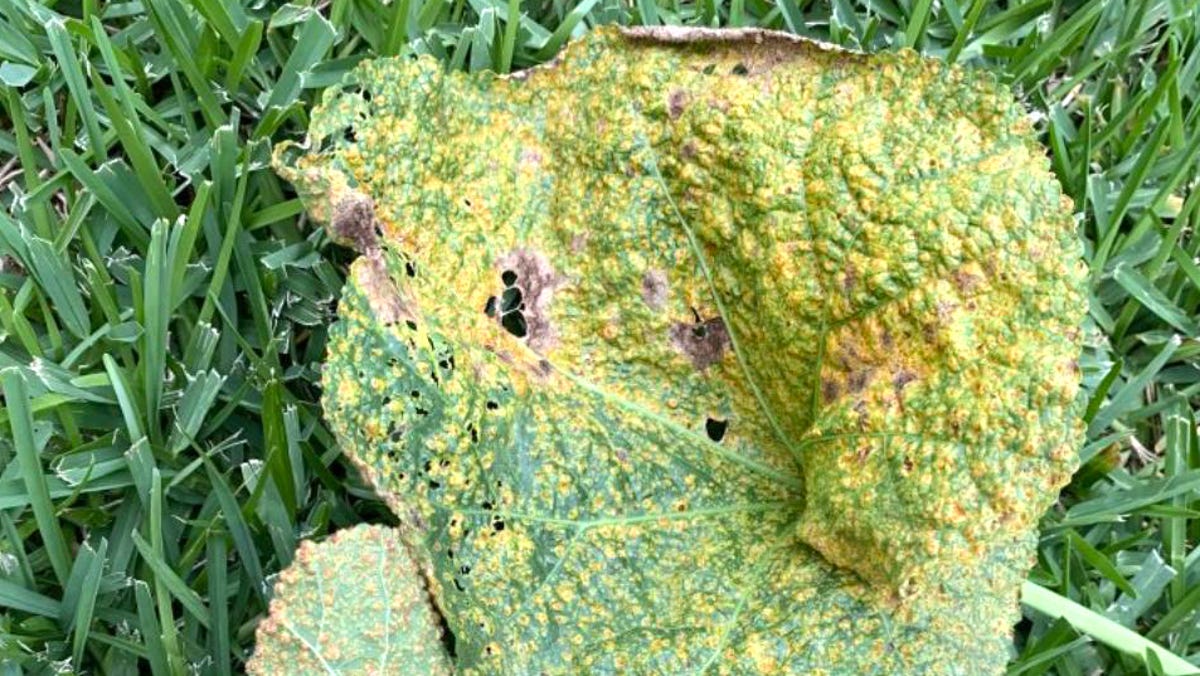
How can I prevent hollyhock rust? This seems to be getting worse year by year.
Hollyhock rust, a fungal disease, is a very persistent and common problem with hollyhocks. Although it is difficult to completely eradicate the disease, it is possible to keep it under control using various cultural practices, as well as consistent and judicial use of fungicide. Cultural practices should include removing infected leaves and sometimes entire plants if the disease is widespread, disposing of the infected plant matter in the trash or burning. Plants may need to be thinned to provide good air circulation, overhead watering should be avoided, and applying mulch around the plants may also be useful. Various fungicides are available commercially and should be applied at intervals throughout the season, even before disease appears. Other products such as neem oil or a homemade spray of baking soda and water may be effective. In addition, rust resistant varieties of hollyhocks are now available and might be worth trying to get around the problem of this fungal disease.
What can I do about scale insects on my houseplants?
The first step should be to isolate the affected plant, removing it from other plants to help control spread of the “crawlers.” Adult scale insects do not move and remain fixed to the plant. Next, as much of the insects should be removed as possible, either by scraping with a fingernail and/or using a cotton swab dipped in 70% isopropyl alcohol. Areas with especially heavy infestations may need to be pruned away. Further control may require spraying with either horticultural oil, neem oil or insecticidal soap, repeating spraying every few days to weeks to catch any new “crawlers” as they hatch. Lastly, continued monitoring of the plants is very important.
Readers can pose questions or get more information by calling 417-874-2963 and talking to one of the trained volunteers staffing the Master Gardener Hotline at the University of Missouri Extension Center in Greene County located inside the Botanical Center, 2400 S. Scenic Ave., Springfield, MO 65807.
Comments are closed.