
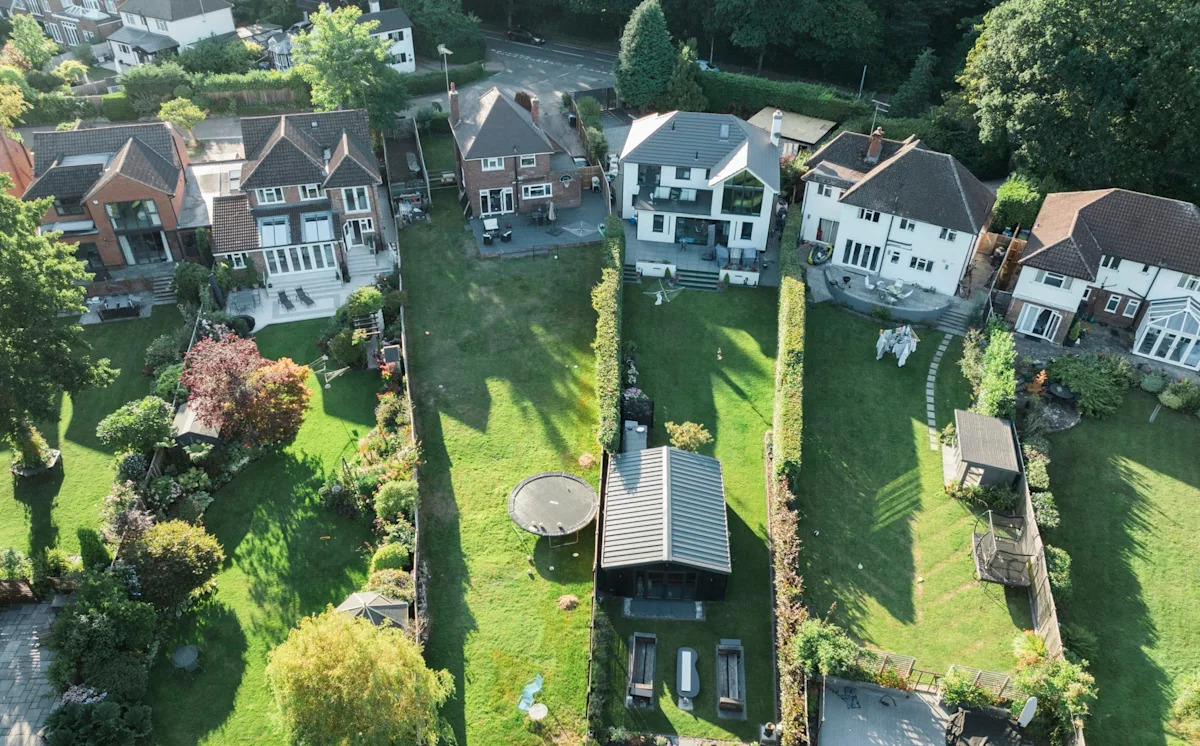
Britain is a nation of gardeners and garden lovers. According to a Royal Horticultural Society’s (RHS) State of Gardening report, the first of its kind, 41 million people in the UK engage in gardening at least once a month.
Those who garden say that it makes them feel better. About 77 per cent report positive impacts on their mental health, and 76 per cent on their physical health.
Yet the benefits of gardens go far beyond personal wellbeing. “For too long the reach, impact and potential of gardens has been largely overlooked,” says Clare Matterson, Director General at the RHS.
“Gardens are the most important touchstone to nature, fostering an active engagement in and understanding of plants and wildlife.”
The report also mapped British gardens for the first time. It found that there are 25.8m gardens in Great Britain amounting to 959,800 hectares. This is equal to 4.6 per cent of total land area of Great Britain and equal to 3.1 times the area of Great Britain’s National Nature Reserves.
b’

2310 Britain land use
‘
With that amount of space and land, what happens in gardens has a direct impact on the nation’s biodiversity.
Garden spaces are at the forefront of biodiversity, supporting over 50 per cent of the nation’s butterflies. They provide habitats for over 40 per cent of bird and mammal species and 62 per cent of amphibians and reptiles.
British gardens are also a major reservoir of plant diversity. According to RHS, they’re home to more than 308,000 cultivated plant types, a variety that far exceeds the number of species grown for food or medicine. But most of them are at risk from the changing climate.
“When people talk about the biodiversity crisis or nature loss they [generally] think about loss of wild plants or wildlife. They rarely think how cultivated plants and trees are also at risk and make a significant positive impact to our lives and our damaged planet,” says Professor Alistair Griffiths, RHS Director of Science and Collections.
“Without urgent action, we risk losing irreplaceable plants, which are not just ornamental, but are also vital for climate resilience, biodiversity, and human wellbeing.”
Many of these plants help purify air and water, regulate temperature, prevent erosion, support wildlife and improve mental and physical wellbeing. But not all gardens are fulfilling this potential; their design and use can either help or hinder these vital functions.
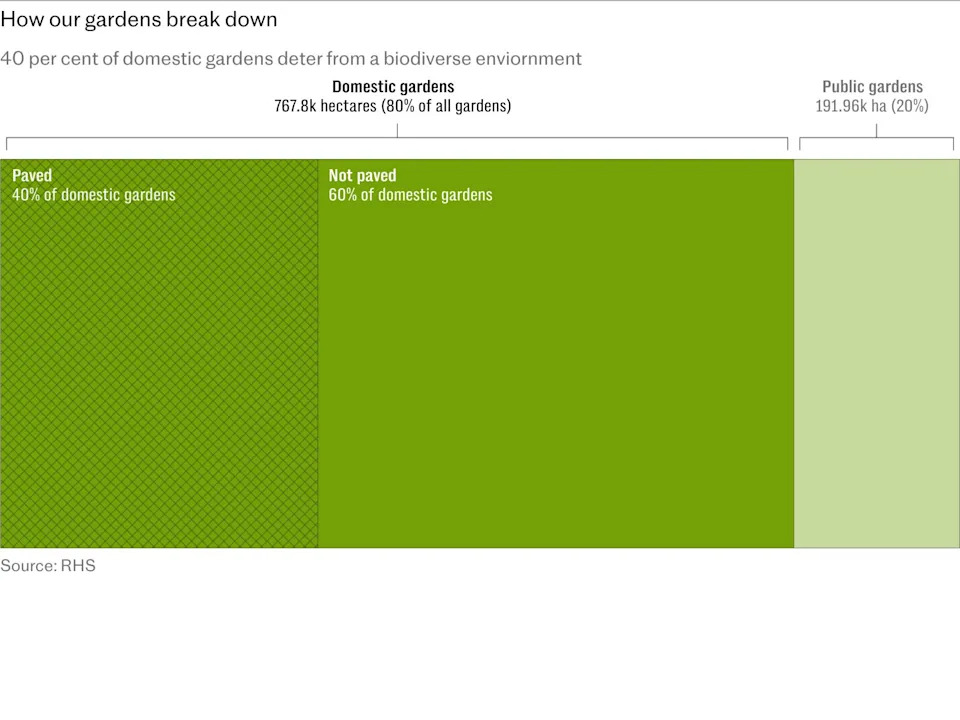
About 20.6m of the aforementioned 25.8m gardens are domestic. Two fifths of these domestic gardens are paved over, typically to accommodate driveways. Another 757 hectares of private gardens contain artificial grass. Not only does this deter plants from growing, it also reduces the potential of gardens to cool and it restricts rainwater absorption, thereby exacerbating flood risks.
b’
2210 Britain gardens
‘
Moreover, it limits the garden’s ability to capture pollution and store carbon. With atmospheric levels of carbon dioxide hitting new records last year – according to a recent report from the World Meteorological Organisation (WMO) – this is particularly worrying.
But there are good signs. Between 2022 and 2025, around 1.8m more people planted trees than cut them down in their main gardening space. In 2024, 70 per cent of compost purchases were peat-free and 40 per cent of gardeners sent plastic, metal or glass waste resulting from gardening to be recycled.
More than half of gardeners altered their practices with the aim of supporting local wildlife, realising it makes a real difference to the animals and plants that share their space.
“Just get up and get out at 4am and listen [to the birds singing],” Chris Baines, one of the UK’s leading environmentalists, says. “Remind yourself of what we risk losing.”
b’
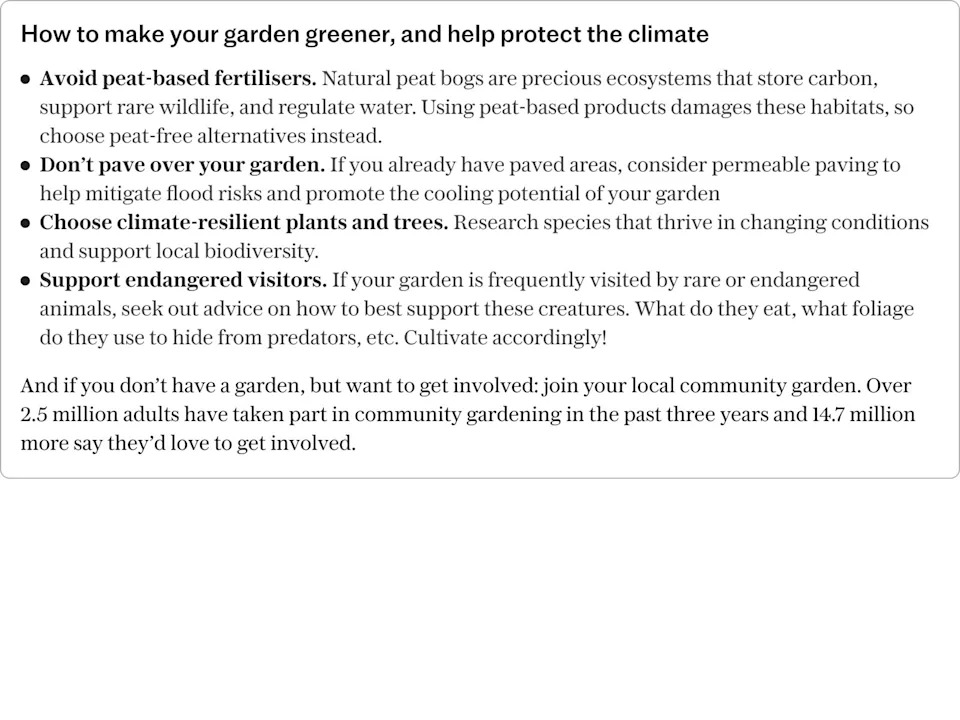
How to make your garden greener, and help protect the climate
‘
Broaden your horizons with award-winning British journalism. Try The Telegraph free for 1 month with unlimited access to our award-winning website, exclusive app, money-saving offers and more.
Comments are closed.