
Sterile Japanese Barberry Bush Cultivars for Gardens
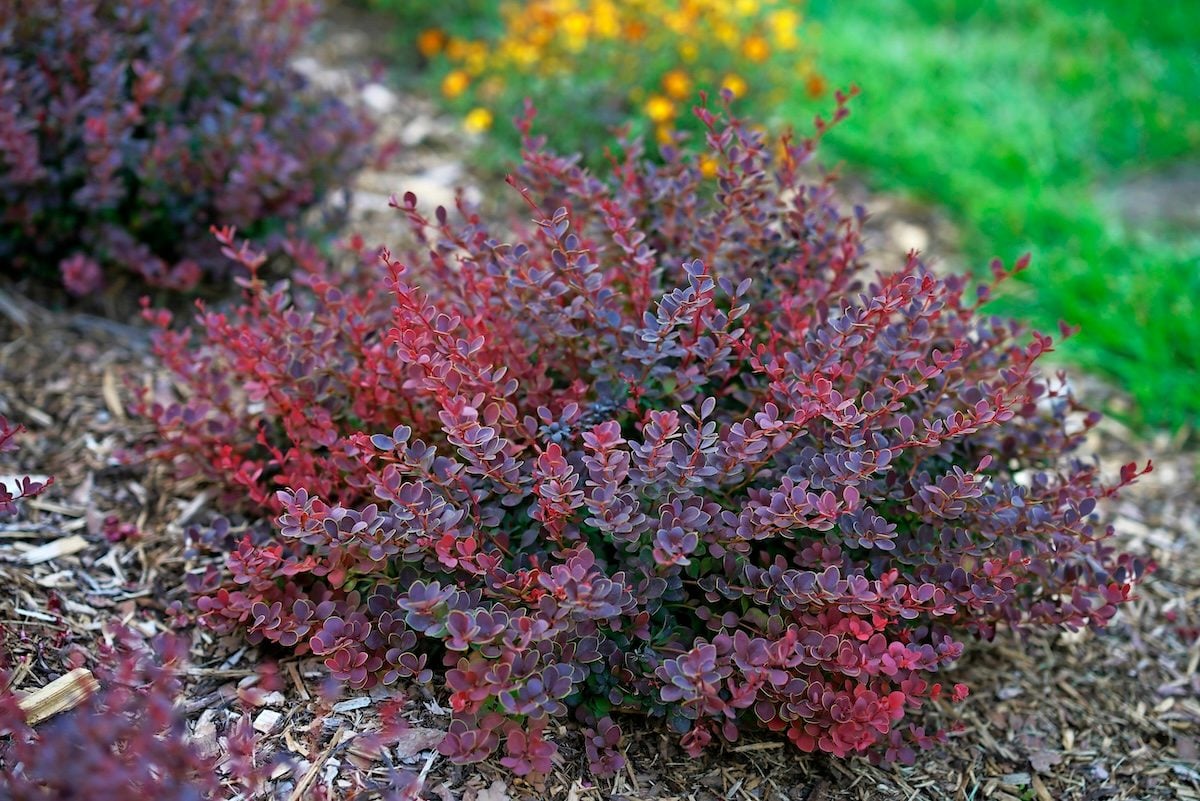
 Sunjoy Mini Maroon barberry is noninvasive
Common name: Japanese barberry
Scientific name: Berberis thunbergii
Zones: 4 to 8
Attracts: birds
Light needs: Full sun
Grown for: Attractive foliage and dense, mounded shape
Like other Japanese barberry bushes, Sunjoy Mini Maroon is a strong, self- sufficient performer not prone to deer or rabbit browsing. Gardeners who long for and admire barberry’s toughness but worry about invasiveness will love this sterile cultivar. The plant doesn’t produce seeds, so it won’t become invasive. Also, it is relatively maintenance free, requiring no trimming.
Mini Maroon tops out at 2 to 3 feet tall and wide. Enjoy deep purple-red foliage that adds color from spring through the first frost.
Also consider other cultivars in the Sunjoy series. Mini Saffron offers orange-tipped yellow leaves and Mini Salsa is green with red new growth.
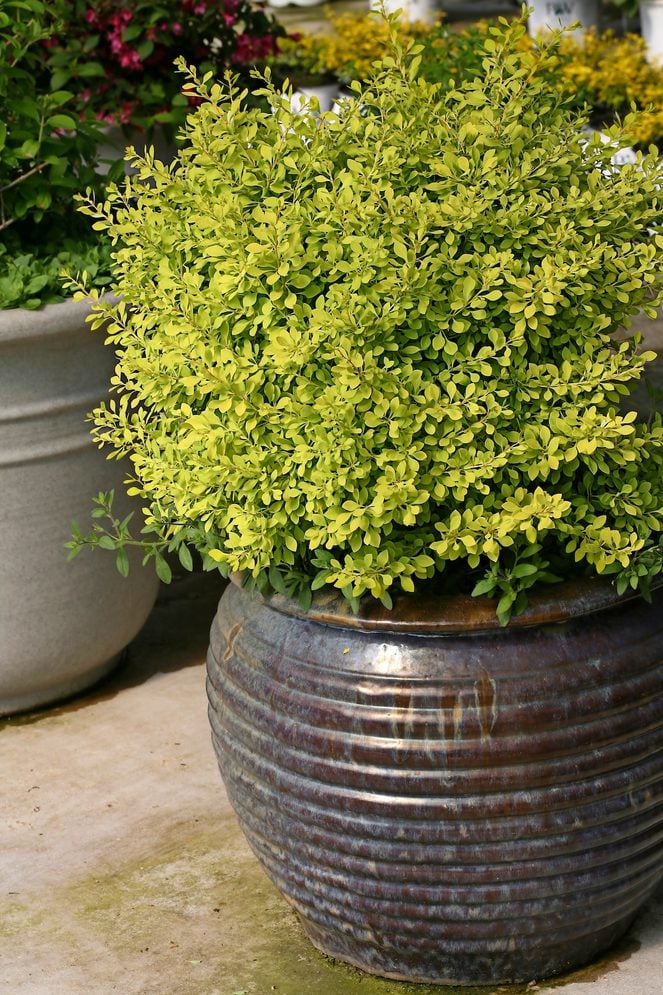 Sunjoy Citrus barberry maintains a neat, round shape with golden yellow leaves.
If you want to grow barberry in containers year-round, horticultural expert Melinda Myers says, “make sure the container is weatherproof, and insulate the roots by surrounding the pots with mulch, bales of straw or bags of leaves. Also, be sure to water the plants any time the soil is thawed and dry.”
Love gorgeous autumn colors? Check out the best fall bushes and shrubs to grow.
Why Gardeners Avoid Barberry Bush
Certain invasive shrubs, such as barberry, were once popular landscape plants due to their vigor and adaptability. Unfortunately, these qualities allow them to outcompete and displace native plants.
Barberry is invasive in the Northeast, the Great Lakes area and parts of the Northwest. Birds eat the berries, spreading the seeds far beyond the garden. When the seeds germinate, these invasive plants aggressively take over.
If you live in an area where barberry is invasive, choose sterile cultivars without seeds or native shrub alternatives.
Learn how to get rid of invasive Japanese honeysuckle plants.
Native Shrubs to Grow Instead of Invasive Barberry
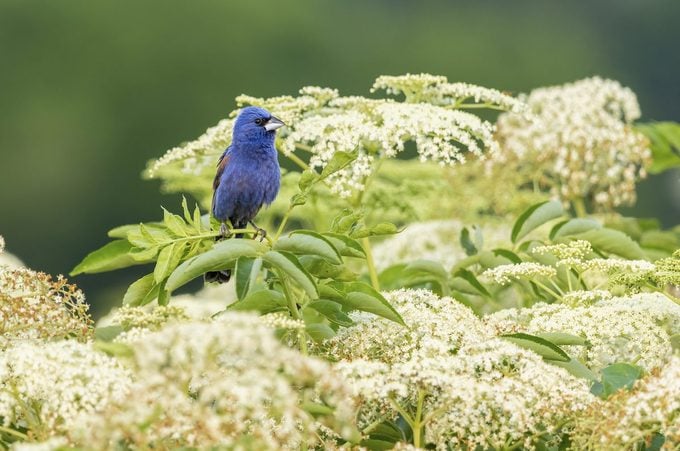 Blue grosbeak on American black elderberry
Many native berry-producing shrubs are better choices than invasive Japanese barberry bush. Here are some to consider.
Sources
Provenwinners.com
Comments are closed.