
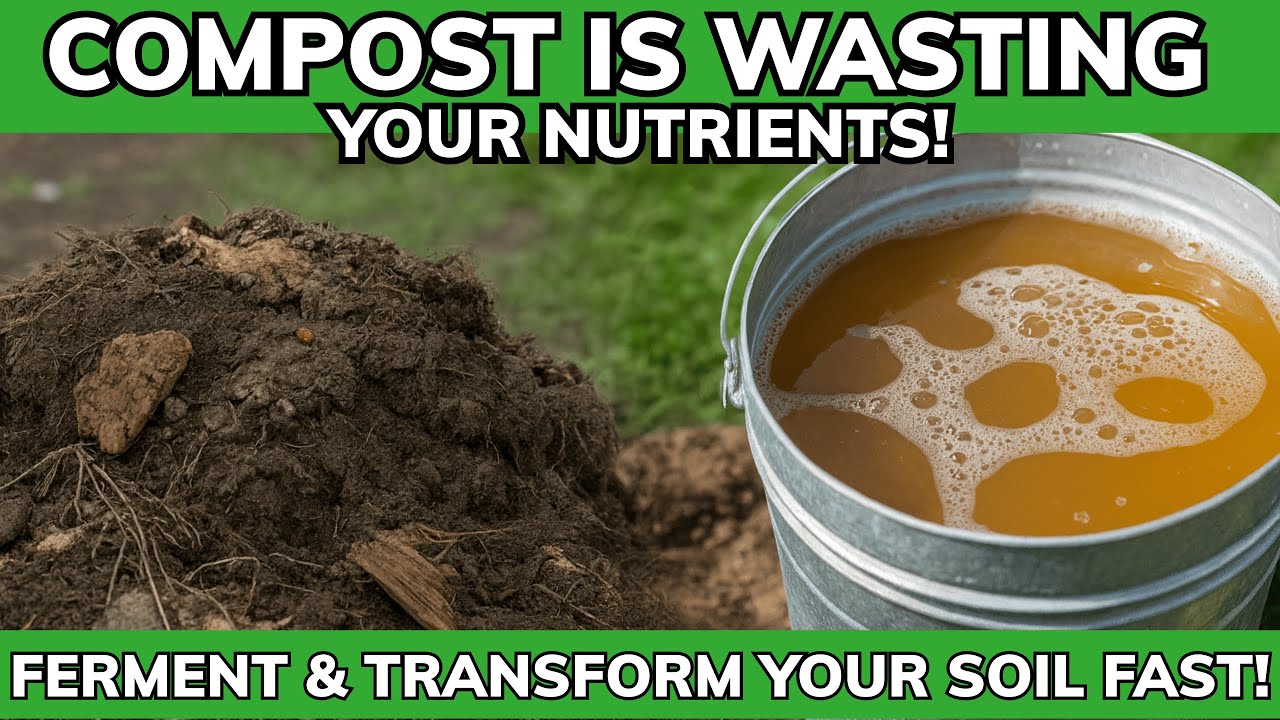
Healthy soil is the foundation of every thriving garden—but are you really getting the most from your compost pile? In this eye-opening video, we reveal why traditional composting may be wasting precious nutrients and show you how fermentation (Bokashi) can transform the way you feed your plants.
You’ll discover:
✅ The hidden nutrient losses in composting that most gardeners never talk about.
✅ How fermentation preserves nitrogen, phosphorus, and minerals your plants actually use.
✅ Step-by-step guidance to start fermenting with just a bucket, molasses, and kitchen scraps.
✅ Practical applications—soil amendment, top dressing, and the powerful “Bokashi tea.”
✅ Insider tips from experienced gardeners that take your soil health to the next level.
✅ Why fermentation is especially perfect for senior gardeners—less labor, more results.
By the end, you’ll see why fermentation isn’t just another gardening trick—it’s a smarter, faster, and more sustainable way to build living soil that keeps rewarding you year after year. 🌱
✨ Don’t forget to hit LIKE, SUBSCRIBE, and share your own experience in the comments: Are you still composting the traditional way, or ready to try fermentation?
🌿 Hashtags:
#GardeningTips #SoilHealth #Bokashi #Fermentation #OrganicGardening #Composting #SeniorGardening #SustainableGardening #HealthySoil #GrowYourOwnFood
every seasoned gardener understands this timeless truth a garden is only as strong as the soil beneath it rich living soil packed with nutrients fungi and beneficial microbes creates plants that flourish with little effort but tired soil compacted and drained of life is like an empty pantry no matter how much water or store bought fertilizer you pour on the results are disappointing for generations we’ve leaned on composting as the ultimate fix the so called black gold of gardening and yes compost has its place but what if I told you there’s a method that not only works faster but also keeps far more nutrients locked in nutrients your plants can actually use it’s a method rooted in old farming wisdom yet backed by modern science it’s called fermentation or bokashi and it may just be the biggest leap forward in home gardening since composting itself today we’ll uncover why fermentation could transform your soil your plants and your harvests far beyond what composting alone can do composting the old standard and its struggles now let’s start with the method most gardeners know best composting for decades it’s been celebrated as the gold standard for recycling organic matter by using oxygen and heat composting breaks down kitchen scraps and yard waste into a rich dark material that can suppress some pathogens return nutrients to the soil and improve overall structure on paper it sounds like the perfect solution but here’s the reality first composting takes time a lot of time depending on your setup and climate it can take six months to a year before you have a fully mature product for busy gardeners or those with limited space that long wait can feel discouraging second unless you turn the pile regularly oxygen levels drop when that happens scraps become slimy piles start to smell and worse they attract pests from flies to rodents and third perhaps the most frustrating part composting causes nutrient loss the very heat that helps break down waste also drives nitrogen into the air as ammonia gas that sharp smell you notice around a hot compost pile that’s your nitrogen your most precious plant food vanishing even when you manage the process perfectly the finished compost isn’t as nutrient rich as you’d expect in fact university studies reveal that traditional compost averages just 1.1% nitrogen well fermentation holds on to far more so while composting certainly has value it’s not the flawless system many of us once believed 2 fermentation a different path to soil health now let’s turn to fermentation a method that completely changes the way we think about garden waste instead of relying on oxygen and heat fermentation thrives in air free conditions where beneficial microbes especially lactic acid bacteria do the hard work for us and the results are nothing short of remarkable first nutrients are not lost to the air they’re preserved and even enhanced which means more nitrogen phosphorus and trace minerals stay available for your plants second the process is fast instead of waiting half a year fermentation typically finishes in just three to six weeks third the acidic environment works in your favor it naturally deters pests suppresses harmful pathogens and even destroys weed seeds so what goes in as waste comes out as a safe nutrient rich amendment and here’s something many gardeners are surprised to discover the final product doesn’t smell foul in fact it carries a pleasant slightly sweet and sour aroma more like sourdough starter or pickles than rotting trash think of it this way instead of letting your scraps rot you’re actually pickling them for your soil and here’s a hidden gem those organic acids don’t just preserve nutrients they chelate minerals in simple terms that means they lock nutrients into a form that plant roots can absorb more easily so you’re not just keeping nutrients you’re delivering them in a way plants absolutely love three science backed advantages you probably haven’t heard now let’s dig into what the science actually tells us because this is mere fermentation really pulls ahead recent studies show that bokashi fermented material holds about 3.5% nitrogen nearly three times higher than the average compost pile which hovers around just 1.1% and it doesn’t stop there fermentation also delivers more potassium Calcium magnesium and iron all minerals your plants desperately need for strong growth and fruiting next consider the climate impact traditional compost heaps can release significant amounts of greenhouse gases in fact research shows that fermentation produces up to 16 times less emissions even better it helps lock more carbon into the soil which means you’re not only feeding your garden but also practicing climate smart gardening but here’s another advantage most gardeners don’t realize fermentation is incredibly versatile meat scraps dairy products citrus peels even oily leftovers all of which can ruin a compost pile are no problem for fermentation the microbes break them down safely without creating foul odors or inviting rodents and finally let’s not overlook convenience fermentation happens in a sealed container so there are no clouds of fruit flies no raccoons digging through your bins and no embarrassing smells drifting into your neighbor’s yard that makes it perfect for people living in small homes townhouses or even apartments seniors especially appreciate this because it’s a system that’s low effort tidy and truly manageable at any stage of life 4 how to get started simple and low cost so how do you actually begin the beauty of fermentation is that you don’t need fancy tools or expensive kits in fact most gardeners can get started with items they already have at home first let’s talk about the container a simple 5 gallon food grade bucket with a tight fitting lid is all you need to allow gases to escape without letting oxygen in you can add a small airlock available at most home brewing stores or simply run a plastic tube from the lid into a jar of water this creates a one way valve that keeps the system anaerobic next let’s look at the ingredients a good ratio is about 60% fresh clippings or kitchen scraps and 40% water by volume for every gallon of this mixture add 2 tablespoons of molasses to feed the microbes plus 1/4 cup of rice rinse water to introduce natural beneficial organisms now let’s consider the conditions fermentation works best between 70 and 85 degrees Fahrenheit if it gets too hot you risk killing the microbes if it’s too cold the process slows down but the upside is that it often creates even more microbial diversity and finally the time frame within three to six weeks you’ll notice the bubbling slows the contents turn a golden brown and the pH drops to around 3.5 to four at this stage your fermentation is stable safe and ready to use in the garden simple affordable and surprisingly effective fermentation puts nutrient recycling within reach of every gardener 5 practical applications multiple ways to use it so what can you actually do with your finished fermentation the answer is quite a lot once your bucket is ready you essentially have three powerful tools at your disposal first use it as a soil amendment simply mix about 1 inch of fermented material per square foot into your garden beds in heavy clay soil it helps break up compaction while in sandy soil it dramatically improves water retention second try it as a top dressing spread the material around the base of your plants leaving a few inches of space from the stems this creates a slow release nutrient blanket that keeps feeding your crops for weeks and third don’t ever look the liquid fertilizer strain off the liquid from your bucket dilute it at a ratio of 1 part fermented liquid to 10 parts water or 1 to 20 for more delicate plants then apply it as a soil drench or even a foliar spray during cooler hours gardeners call this bokashi tea and it’s a microbe rich nutrient packed tonic that your plants can absorb almost instantly in short one process three different products and all of them strengthen your soil while nourishing your plants 6 beyond grass and scraps hidden recipes now here’s where fermentation truly shines you’re not limited to grass clippings or kitchen scraps in fact you can create custom brews tailored to your plant’s needs almost like mixing up personalized meals for your garden for instance combine banana peels with coffee grounds and you’ll get a potassium rich blend that works wonders for tomatoes roses and any plant that needs strong flowering and fruiting or try fermenting seaweed which adds a wide spectrum of trace minerals that most soils are naturally lacking need a Calcium boost soak eggshells in a splash of vinegar before fermenting and you’ll produce a solution that peppers squash and cucumbers absolutely love and don’t forget about those fall leaves instead of waiting months for them to compost fermentation breaks them down quickly releasing humic acids that rebuild and revitalize soil even garden enemies can become allies weeds pulled from your beds yes even with seeds are neutralized by the acidic process so you can recycle them safely and here’s a little known homesteader trick shred paper or cardboard mix it with nitrogen rich clippings and ferment it what was once waste transforms into organic matter your soil craves with fermentation almost anything organic becomes a potential recipe turning everyday scraps into powerful soil medicine long term benefits building a living soil here’s the real beauty of fermentation it’s magic doesn’t stop when you spread it on your garden the microbes continue working underground silently transforming your soil into a living breathing ecosystem first these beneficial organisms form symbiotic bonds with plant roots almost like trusted partners they help plants absorb more nutrients pull in extra water during dry spells and even stimulate root growth second fermentation microbes act like natural bodyguards by outcompeting harmful pathogens they reduce the risk of soil borne diseases giving your plants a stronger immune system without chemicals third fermentation builds soil organic matter faster than compost this means your soil structure improves becoming more crumbly better at holding water and less prone to erosion gardeners notice healthier beds fewer weeds and crops that bounce back faster after stress and over time something amazing happens your soil becomes self sustaining it requires fewer fertilizers fewer outside inputs and less constant care for seniors especially this translates into less bending less heavy lifting and gardens that almost seem to run themselves so with each batch of fermented matter you add you’re not just feeding plants for the season you’re building a legacy of living soil that will keep rewarding you year after year 8 little known tips from experienced gardeners now let’s dive into a few insider secrets tips I’ve Learned over the years that most guides never mention but can make a huge difference in your results first consider winter fermentation buckets left in colder weather take longer to finish sometimes double the usual time but here’s the hidden benefit the slower pace encourages a more diverse microbial community which often leads to even healthier more resilient soil second let’s talk about citrus peels many gardeners worry about adding them but the trick is simple chop them into small pieces first during fermentation their acids mellow out leaving behind nutrients without harming soil life third a practical efficiency tip use layered buckets keep two or three running at once so while one is finishing another is just starting this way you’ll always have a fresh batch ready with no downtime fourth here’s a handy storage trick finished fermented matter doesn’t have to be used immediately you can bury it right away or seal it in heavy duty bags and store it for months without losing its potency and finally one of my favorite applications tree care spreading fermented matter around fruit trees provides a slow steady nutrient release gardeners often report stronger blossoms more consistent fruit set and trees that look noticeably healthier season after season these small adjustments might sound simple but they’re the kind of fine tuning that separates good results from truly exceptional ones 9 why this matters for seniors for older gardeners the smartest methods are always the ones that save energy reduce heavy lifting and deliver results you can actually see and fermentation checks every single box there’s no need to turn heavy piles no hauling big bins across the yard and no pest headaches to deal with all it takes is a simple bucket a few scraps and a little time but fermentation isn’t just practical it’s also deeply meaningful it reconnects us with traditions that go back generations Japanese farmers have used bokashi for centuries indigenous communities practiced soil fermentation long before the word sustainability existed even early American homesteaders knew how to preserve nutrients in the soil without chemicals by fermenting today we’re continuing that wisdom and becoming part of a regenerative movement one where we give back to the soil more than we take and that’s what makes it so special for seniors it’s not only about growing healthier plants it’s about gardening with purpose with less strain and with a sense of continuity that links us to gardeners who came before conclusion a new way forward so fermentation or composting both have value but if you’re looking for real nutrients preserved instead of lost faster turnaround and healthier soil ecosystems fermentation clearly comes out on top with nothing more than a bucket a spoonful of molasses and the scraps you already have you can create a soil amendment that outperforms most fertilizers without the chemicals or the cost try it once and you’ll notice the difference not just in your plant’s growth but in how alive your soil feels if this video inspired you don’t forget to hit that like button and subscribe for more senior friendly gardening wisdom and let us know in the comments have you tried fermenting your scraps before or are you still composting the traditional way I truly love to hear your story
14 Comments
Always interesting and informative.
🤩
You should know, the fermented water has a very powerful smell. The smell fills the surrounding area including neighbours gardens.
Very informative, it may take one to two weeks to collect the organic waste in a household settings , so can this process be started after say two to three weeks. And what measures be taken during collection period.Thanks
Hi Evergreen Seniors,
Thanks for your kind n seasoned experience; i am also a senior compost producer for agriculture crops in Pakistan.
I have an ample quantity of cow dung, green market waste and ash.
Would you please help n suggest how I can ferment these materials in the liquid phase?
Regards
Can we ferment compost
Ein gut angelegter Kompost "stinkt" nicht … netter Versuch 🙄 … im übrigen ist jeder Wald eine "Komposttieranlage" und stinkt es deswegen im Wald ??
Gute Erde entsteht durch Verstoffwechslung verschiedener natürlicher Materialien seit Millionen Jahren … Fermentieren ist eine Möglichkeit, aber niemals ein Ersatz zum Kompost.
Außerdem gibt es viele verschiedene Kompost – Arten.
Kompost wird auch nicht laufend umgesetzt, was im erheblichen Maße den Verrottungsprozess stören würde … und nein, das Video hat mir nicht gefallen 🤥.
Nothing Beats Compost And Recycling Is Where It's At
I'm sii sii from Zambia , I'm grateful for the information
Can you use the bokashi tea for hydroponics?
Can you use the bokashi tea for hydroponics?
Fantastic breakdown of these two methods! The comparison of bokashi to traditional composting was really insightful. I learned a lot!
https://youtu.be/AjJ94dMhbGE?si=7QGXq1DJ9xGcNYJ1