
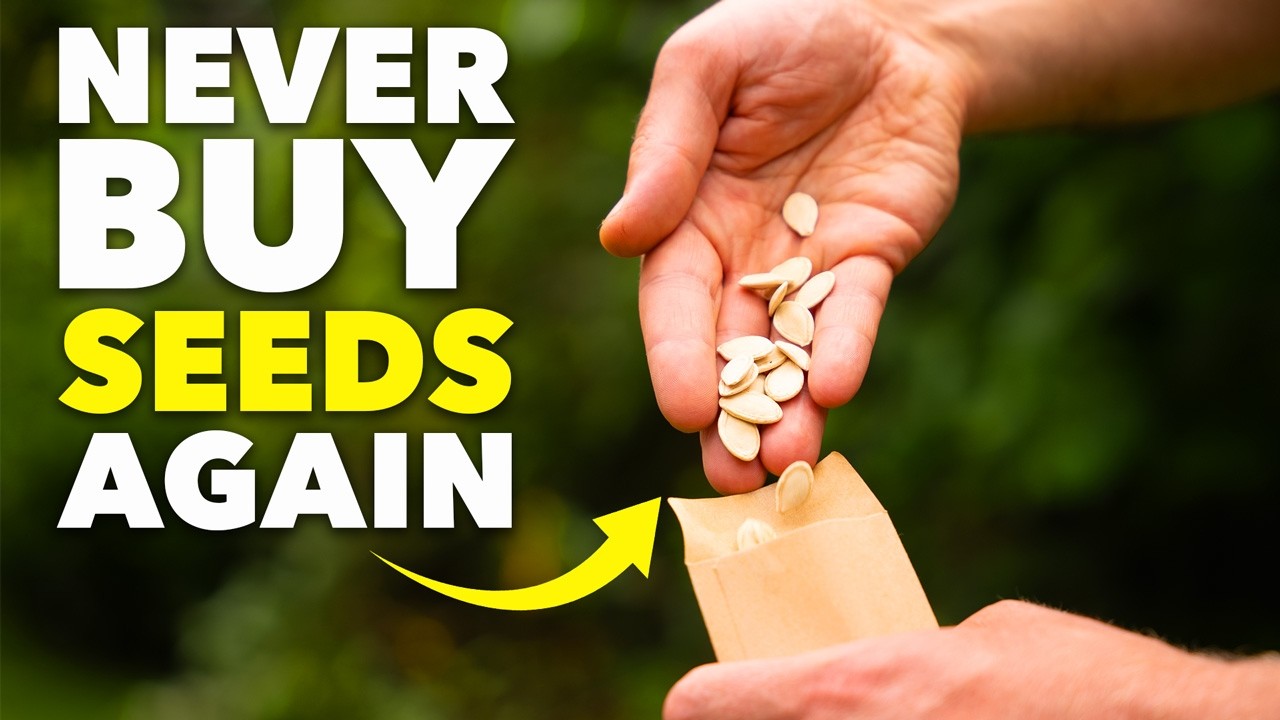
We gardeners love buying seeds… and how much do we spend on them…? We don’t like to think about it!
But what if we could collect our very own seeds all year round and get all our seeds for free? How much money would we save? We would also be guaranteeing that our seeds are pretty well organic and sustainably produced. Sounds too good to be true… until we know how. In this week’s episode Ben explains what to do to have free seeds, forever!
NB: *DO NOT EAT very bitter cross-pollinated squash*
For more or our videos on saving seeds, watch these next…
Saving Seeds from Beans, Peppers, Onions…and More!
How To Save Seeds From Your Bolting Vegetables
Up your gardening game still further with a completely free, no-obligation trial of our Garden Planner here: www.GrowVeg.com/planner
And to receive more gardening videos subscribe to our channel here: https://www.youtube.com/user/GrowVeg
If you’ve noticed any pests or beneficial insects in your garden lately please report them to us at https://BigBugHunt.com
We should be saving more of our own seeds. It’s another step on the
ladder of self-sufficiency and of course it saves on
the cost of growing our own So it’s pruners, envelopes and seed boxes at the
ready because it’s time to harvest some seeds and where better to begin than the
easiest seeds to save, peas and beans and yes we’ve leapt back to last season’s beans to bag ourselves some ripe and ready
ones. The magic of video editing! Beans and peas are so satisfying to save seed from because you can literally see
the seed swelling within the pod and then when they are ready, they will turn this kind of straw-brown
color and go sort of crisp to the touch. Now of course don’t save
seeds early on in the season, because the more you pick the
beans the more they will come and you want to enjoy as big a crop as
possible. So wait until the end of the season, once they begin to slow down and then
leave the final few pods to ripen Now these are straw to the color and
they are kind of rattling in there it’s been very, very wet so I
need to get these in I think because it’s not going to get any drier
and they can finish off drying inside. [Music] Can you hear that? Rattling nicely. As I said, it has been very wet and some
of the pods have got this kind of speckling on the outside because of that, which is why I decided to gather
them in cause they are kind of ready. Now as you go through, just inspect each bean
and check they’re all nice and healthy and firm and discard any that are very very small
or gone a bit soft or perhaps diseased or damaged in any way, because you’ve got
a lot here and you want to save the best. By the way if you’re growing fava or broad beans, well these will readily
cross-pollinate between varieties which means that if you are
growing more than one variety, then you may not get what you’re
expecting from those seeds. However, if you’re just growing one variety
like most gardeners you should be fine. You know beans are absolutely the most
satisfying things to save seed from they almost look like little embryos with
the sort of veins going through them, they’re kind of beautiful don’t you think? Once you’re done shelling you
will need to continue them drying to make sure they’re ready
for storing, and to do that just spread them out onto some
newspaper on a warm indoor window sill and they should take around 1 to
2 weeks maximum to finish drying. The beans are now dried and they’re going into
a paper envelope which is fairly breathable and I’ve put both the variety name
and the date of harvest on the front so I know how old these seeds will be
and these will go into my seed store and I will talk more about
that later on in the video. Peppers and tomatoes which
will be looking at in a minute are really handy for saving
seeds because the seeds are ready at the same time as the fruit itself is
ripe for eating, removing any guesswork. Like all the vegetables we’re
saving seeds from today, I’m only saving seeds from open
pollinated, not hybrid varieties. That’s because hybrids are produced
from two parent plants that are crossed. Two parent varieties. So by saving
the seed from their offspring we might get a seed that goes back to one of
the parents or an unpredictable mix of the two. So open pollinated varieties
avoids that kind of risk. So really it’s very simple, just slice
your pepper open like you normally would and then you can just remove the seeds here, pick them away from the pith
and then spread them out to dry. Now both sweet peppers and chili
peppers will readily cross-pollinate so if you’re growing more than one variety
you might want to grow them quite far apart so that you get just what you’re after
and don’t get any unpredictable results. And here they are a few weeks on now nicely dried and you can see that they’re beautifully
loose and they’re kind of like almost rattley not a technical term, but there you
go, beautiful and ready to store. So I’m going to store them in just
the same way as I did with my beans in a paper envelope with the
name, variety and the dates. If you have very small or especially
long and thin chili peppers then it may be easier to dry them first,
either just string them up and let them air dry or pop them into a dehydrator and then just
twizzle them between your finger and thumbs to release the seeds once they’re dry and
then of course the flesh of the chilies can go into a jar to store when a hit of heat is
needed or ground up to make your own chili powder. Tomatoes self-pollinate
rather than cross-pollinate, which means they’re highly likely
to give seeds that are true to type. Now I’ve got some lovely ripe tomatoes here. There’s one there, and it’s important
we harvest our tomatoes at peak ripeness when we’re looking to save seeds from them. To clean the seeds from the
tomato, I’m going to ferment them. Now the pulp around the seeds can inhibit
germination and it also can sometimes act as a bit of a vehicle for seedborn diseases,
so it’s best to remove it if we can. Fermenting can seem like a bit of a a technical
thing, quite scary, but really it’s very simple. I’m just going to scrape out the pulp,
here pop it into a glass of water and then pop that on a warm window sill for
somewhere between 4 and 7 days to ferment. Give them a little stir every couple of days and that will help the seeds
kind of separate from the pulp. Now here is one that’s been
fermenting for about 4 days now and you can see that the
seeds have sunk to the bottom and most of the pith and little bit of scum
is on top and that’s absolutely perfect. We can now pour off the pulp and scummy
water to leave our lovely clean seeds. There we are they’re all nice
and clean and washed off. So I’m just going to dry them off now
at room temperature in an airy place separating out the seeds to get
them all nice and evenly dry. Then once they are fully dried I’ll
again put them into my labeled envelopes. Now some people don’t bother
with this fermentation process and I’d say it’s not 100% necessary but it
does improve your chances of germination and leave super clean seeds, so I’d say
it’s only a small step, so why not do it. Squash and pumpkins readily cross-pollinate while if the pollen from a cucumber
flower lands on a squash flower it can make the fruit completely seedless and obviously if we’re trying to
save seeds we don’t want that. Now if you’re growing one
variety of squash or pumpkins then well you can just grow on and grow the
fruit and then harvest the seeds from that. If you’ve got multiple varieties growing close by, then don’t try and isolate individual
plants, isolate the flowers instead. Now the first job is to identify the females because we don’t want those
getting pollinated just yet and they are the ones with the
slight swelling behind the flower. Get them while they’re
young, before they’ve opened and then pop over a muslin
or organza bag like this, just over the top of it like
that, to keep the bees out. And just secure around it like that. Now that will stay in place until
the flower starts to crack open. There’s a flower here that’s ready to
go, the petals have started to unfurl so I’m going to go and grab a male
flower, I can just see one here. The next job is to peel back the petals so
we can see what we’re dealing with here. And here now you can see the
exposed stamen of the male flower and I’m just going to gently brush it
against the style here of the female flower and now with that done, I can put my bag
back on and then leave it to start swelling. Once the flower’s dropped off there’s no more
risk of it getting pollinated by different flowers so you can remove any bag, but to
make sure you identify the right fruit for harvesting to harvest your seeds, just tie
a little bit of ribbon or something similar onto the stalk behind the
fruit for easy identification. Squash seeds are simplicity themselves to
harvest, just scoop them out with a spoon and harvest the seeds I’d say three
weeks after you’ve picked the fruits. That will just give the seeds a little bit of
extra time to finish ripening inside the fruit, then once you’ve done all that, blast
off any pulp or pith from the seeds and then lay them out as before onto a
plate or piece of toweling or whatever and keep them drying in a lovely warm place
and just agitate the seeds every now and then, flip them over to ensure a nice even dry and
then store once again in labeled paper envelopes. As an aside, I wanted to
show you this cucumber here. This is what a ripe and ready cucumber looks
like when you’re wanting to save your own seed, it’s gone yellow and if I give it a little
squish it’s quite soft to the touch. Now this here is an all female variety of
cucumber which doesn’t produce viable seeds so I won’t actually be saving them, however,
if you’ve got a normal variety of cucumber this is what you’re looking for. [Music] Many common vegetables are biennials, which means they flower and set
seed in their second summer of life now this includes many common vegetables
like carrots, beets or beetroot, lettuce, chard, as well as
aliums like leeks and shallots, so if you want to harvest seeds from these guys just leave several plants to
grow on into their second summer so you can then get them to
flower and set those seeds. Brassicas are also biennials but
they are incredibly promiscuous, readily cross-pollinating with each other, so I would say they’re not
really worth saving seeds from especially as the seeds of these
guys usually are very cheap. Now for those vegetables
that you are overwintering to get them to grow grow into their
second year, if your winters are cold, just mulch around them to keep them nice and
snug until growth resumes again in spring. Plants in the allium family,
that’s onions, shallots and leeks, and these here are actually perennial leeks, these flowers cross-pollinate
between actual blooms so you’ll need to overwinter several plants to
ensure a good genetic mix to get that viable seed. The bonus is that the flowers are absolutely
stunning and a real boon for the bees too. Once the seeds have dried up in
the seed pods, just harvest them, dry them off for another week
or so and then just vigorously shake out the little black seeds for storing. Here I’ve got a couple of lettuce plants which I’m
letting bolt and flower and eventually set seed. Now lettuces produce seeds in absolute profusion
and they’re like little fluffy dandelion seeds, very pretty, now once they’re completely
formed I’m going to pull them up, hang them up to finish drying and then
rub the seed heads between my hands to separate out the seeds from the plants,
there, and I’ll then blow across them to remove any chaff before storing
them in my labeled envelopes. Now seeds are still living beings and
by storing them in these paper envelopes we can ensure good air flow still can continue. Now I like to keep them in a lidded container
along with a couple of packets of silica gel which act as desicant to keep
keep the air nice and dry. Now what container you use does
matter, it’s been scientifically proven that glass or metal containers like this
are best. plastic containers less so. If you want to keep your
seeds to enjoy next season then store them in a cool, dark, dry
environment, a room would be fine. But even better, to make them last even longer,
keep them in a refrigerator or a freezer. The important thing is to avoid
whip soaring temperatures. Seeds should last for at least
one season and potentially more, so long as they’re kept in a
cool dark and steady environment. Please do let me know what seeds you’ll be saving and if you’d like to check the viability
of your seeds, saved or otherwise head on over to this video
next. I’ll catch you next time.
27 Comments
First of, I agree, beans are wonderful! The Fabaceae family has some of my favourite diaspores; the shapes, colours and patterns are pretty. I am not a gardener (yet) but an archaeobotanist and I collect seeds and fruit for an reference collection. This video is a wonderful guide. Happen to be fermenting elderberry at this moment.
8:27 – "Tie a Yellow Ribbon 'round The Old Little Pumpkin"??
What if I don’t have a garden at present but want to collect seeds to grow when I’m ready to grow a garden?
Another great video class, thank you so much 👍
tip if you roll tomato seeds on a paper it will remove the polp
I have been seed saving today. Peppers and tomatoes for me.good idea for the squash.🎉🎉
Hi happy to see you doing work keep it up okay ❤
This year I didn't pay as much attention to the garden as past years. Instead we are establishing a meadow on our property. Two ten meters by ten meters near the barn if perennial wild flowers one with annuals ( zinnias).
One stretch by the road is about 8 meters by 30 meters of tithonia, cosmos and sunflowers. On the north side I put in a 20 meter by 90 stretch of mixed wildflowers native to our area, tithonia and sunflowers.
Tithonia is what we're mainly saving as the bird's love the cosmo seeds even more than the sunflower and the tithonia is a favorite of the monarch butterfly. I harvest them by putting the very dry pods in a 5 gallon bucket and beat the insides with a heavy sticks to break the pods and the seeds fall to the bottom. It's a good thing Cosmo seeds are cheap. Tithonia can be stored in ood all winter easily. Last year all I did was throw them whole into card board boxes and left them in the Barn. It rarely gets below 0° F here and the barn stays dry.
I'll need every seeds we can save as next spring I'm planting 100X100 meter section with black seed sunflowers ( super easy) and tithonia.
keep up😊
Thank you
You are amazing for all the work you do to share your knowledge and experiences via YT. For the last year plus, I have learned, and continue to learn, SO much from you. Thank you, thank you, thank you!!!
If Biden had not won, I would not be able to vote for a Trump a third time
GREAT episode! Funny that you did it as I just got the biggest kick out of havesting dill steeds from plants that I’d let bolt for the insecten. SO cool to harvest your own seeds 😊 My Sweet peas this year were from last year’s seeds. Love this YouTube channel. Learning LOTS as a new gardner👍👋
What do you use for audio? It sounds great
I love this channel❤❤
Hello, how about okra seeds from store bought okras ?
I did, tomatoes, bitter gourd, gourd, pumpkin. Thank you for sharing 🎉
If you have house cats/pets, put your seeds where your pets cannot get them.
You should not harvest pumpkin seeds yourself. The seeds could develop substances that are poisonous if pollinated by other pumpkin varieties.
potato seeds. For the challenge.
Nuts
Owsome
Thanks
How is the RAIN in your neck of the woods, in May 2025?
Can I share this video with other gardeners?
Why is getting an 'unpredictable' result such a bad thing? It adds to the excitement! Might find yourself a new variety…
I just moved to a new country and started planting, but I will be saving some tomato tigerella, choco habaneros, and foot long chillies or I believe they are also called Gaint chillies ❤❤
My grandfather used to say “the rattle of seeds in their pods are songs from the heavens” I followed his footsteps and SO wish he were here today to see all the things I’ve done with gardening.