
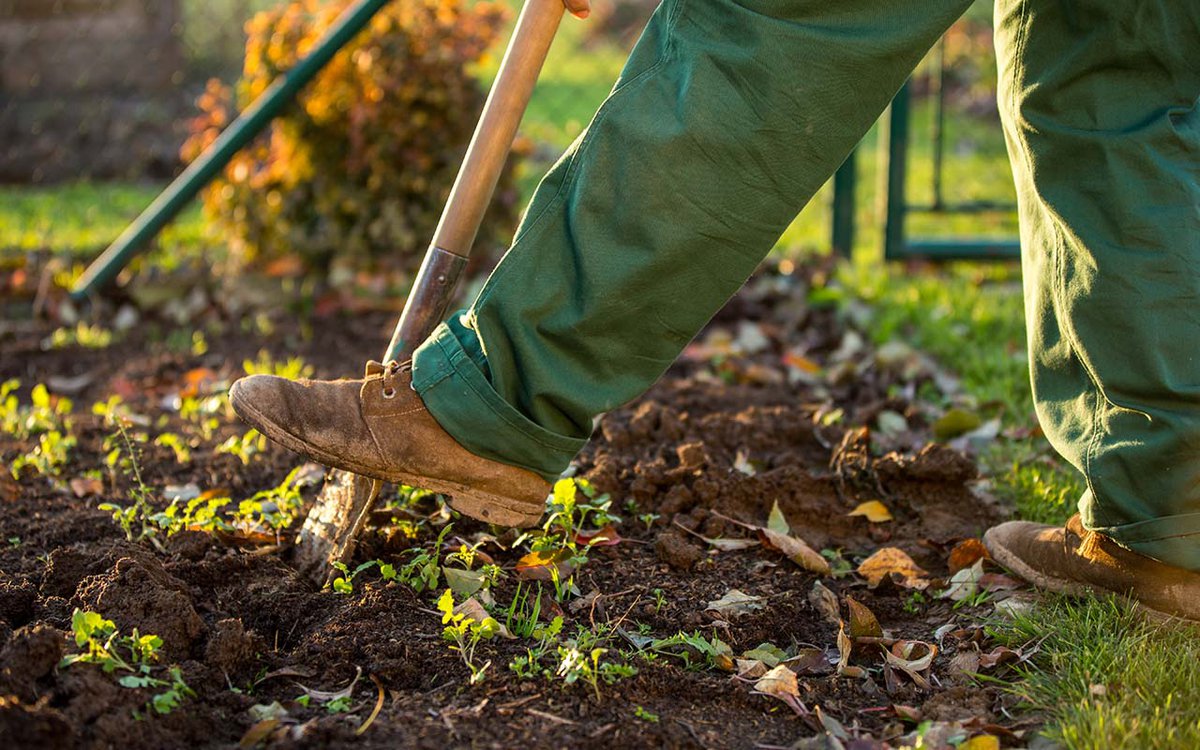
Autumn is here. After the last of the harvest has been picked and the flowers are done blooming, taking steps to winterize your garden before the first frost will protect perennials, improve soil health, and make it easier to return to the garden next spring.
Pick the last of the vegetables. Remove any green tomatoes still on the vine or those couple of zucchinis still hiding among the leaves. Frost will kill tender fruits and vegetables like tomatoes or green beans. Unripe green tomatoes will ripen on the kitchen counter or in a paper bag or box.
Pull out crop debris and annual plants that are done reproducing, especially if they are diseased (for example, tomato blight or mildewed leaves). Spent plants that are healthy can be composted; destroy any diseased plants.
Some garden pros recommend leaving annuals in the ground over winter if plants show no signs of disease. Annual flowers such as zinnias and cosmos that go to seed can provide food for wildlife during winter. Plant roots also add nutrients to the soil.
Wait until spring to cut back the seed heads on perennials such as coneflower. The seed heads provide food for wildlife during cold weather scarcity. Perennials such as bee balm and phlox should be cut back in fall to avoid the spread of powdery mildew.
Protect the soil. Add organic matter such as composted coffee grounds or eggshells, or mushroom compost, to the garden soil. Don’t rake those fallen leaves into the gutter—they are free mulch for the soil, and they also add nutrients such as nitrogen, phosphorus, and calcium.
 Stay on top of the news of the day
Subscribe to our free, daily e-newsletter to get Milwaukee’s latest local news, restaurants, music, arts and entertainment and events delivered right to your inbox every weekday, plus a bonus Week in Review email on Saturdays.
Piles of leaves can be placed into a garbage can and then shredded with a weed-whacker into fine mulch to spread onto garden beds. Some lawn mowers also have a mulching feature. Breaking down the leaves helps them decompose and break down nutrients faster, but leaves can also be simply raked onto garden beds. Mound fallen leaves around perennial plants, bushes, shrubs, and fruit crops to protect roots from harsh frosts and ground heaving.
Keep track of plantings. Keeping records or photographs of plantings helps plan for what worked—and what didn’t—when planning next year’s garden. It’s also helpful for crop rotation, a routine that changes the planting location of vegetables each season.
Crop rotation, also practiced by many farmers, reduce damages from insects and pests, limits vegetable diseases, and manages soil fertility.
Overwintering flowers. Geraniums can be brought indoors during winter to use next season. Bring the entire potted plant indoors before the first frost. Prune them back and store them in cooler areas, such as an unfinished basement, where temperatures get no higher than 65 degrees during the day. Water sparingly, when the top inch of soil feels dry. Bring the pots out again after the last spring frost.
Garden Housekeeping 101. Disconnect hoses and irrigation systems before the first frost hits, or it can lead to damage and thus pricey replacement or repairs. Allow all water to drain from hoses and store them in the basement during the winter months. Use outdoor spigot covers (some newer spigots have their own shutoff valves) to protect pipes from being damaged by harsh cold.
Scrub all garden tools and sharpen any dull blades. Put everything away where you’ll easily find it next season. Tools can be lightly oiled with vegetable oil to help prevent rust. And how are those gardening gloves holding up? Pick up a pair from a local gardening center or hardware store now so you’re ready to get into the garden next spring.
Sheila Julson
Sheila Julson is a freelance writer who enjoys capturing the stories behind Milwaukee’s happening food, beverage and urban farming scenes. She also pens articles about holistic health, green living, sustainability and human-interest features.
Read more by Sheila Julson
Oct. 19, 2025
2:28 p.m.
Comments are closed.