
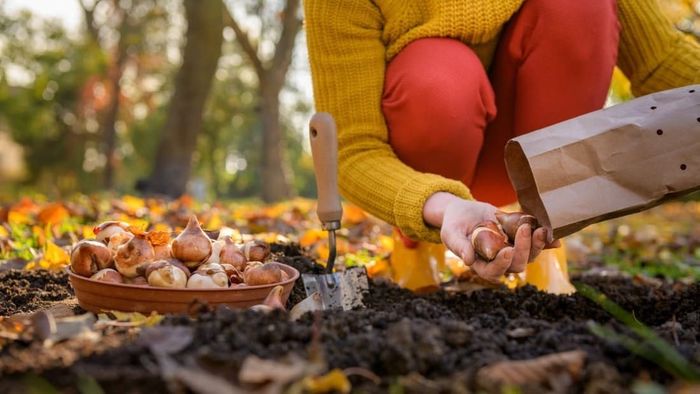
AUTUMN BULBS: Planting bulbs too shallow can make them vulnerable to frost and squirrels (Image: Andrea Obzerova/Getty)
This article contains affiliate links, we will receive a commission on any sales we generate from it. [Learn more]
As the leaves begin to fall and temperatures drop, many assume that gardens can be left to their own devices. In reality, autumn is a crucial time to prepare for the colder months and ensure plants thrive come spring.
However, there are common mistakes that can undo your efforts. “Autumn is often seen as the time when gardening winds down, but overlooking key seasonal tasks can cause problems later,” said B&Q’s horticulture expert, Mark Sage.
“From planting bulbs at the wrong depth to not thinking about local wildlife, small mistakes now can affect how healthy and vibrant a garden looks in spring.” Mark has shared the five most frequent gardening slip-ups made in the autumn months, along with simple fixes.
READ MORE
🍂 Planting bulbs too shallowly: Bulbs that are not planted deeply enough may fail to flower or risk frost damage during winter. They’ll also be more vulnerable to pests like squirrels.
What to do instead: Bulbs should be planted at a depth three times their own height. On heavier soils, such as clay, a layer of gritty sand at the base of the hole improves drainage.
The Bulb Planting Auger costs from £7.99 at Crocus and will help you get planting done more quickly, particularly in heavier soils. It comes in three sizes and two lengths.A 20kg bag of RHS Horticultural Potting Grit costs £18.99 from B&Q. Improves drainage when added to compost or dug into heavy soil. Also an excellent top dressing for potted plants.
🍂 Leaving fallen leaves to pile up: Although a sea of autumn leaves looks seasonal, letting them build up on lawns, patios and around plants can lead to yellowing grass, slippery paths and rot.
What to do instead: Leaves should be swept up regularly with a rake or garden vacuum and stored in piles or bags to create nutrient-rich leafmould. Before you do, make sure to check leaf piles for wildlife as some like to burrow in them.
The McGregor Garden Lawn Rake costs £13 at Argos. Polypropylene handle with 22 springy carbon steel tines, ideal for raking leaves and scarifying the lawn.Save £5 on the 360L VonHaus Garden Compost Bin, now £49.99 at Robert Dyas. Frost and UV resistant with with slatted sides, hinged doors and secure ground pegs.

🍂 Neglecting pruning at the right time: Many people either forget to prune or prune too harshly at the wrong stage, leaving shrubs, trees and climbers vulnerable to disease or poor growth.
What to do instead: Fruit bushes can be thinned in autumn and herbaceous perennials cut back. In winter, pruning should focus on climbing roses, apple and pear trees and wisteria. Always prune on a dry day and use sharp, clean tools to avoid spreading infection.
🍂 Abandoning the vegetable patch for winter: Once summer crops are cleared, the vegetable garden is often left bare, wasting the chance to prepare for the following season.
What to do instead: In October and November, dig over cleared plots and enrich the soil with homemade compost or soil conditioner to boost fertility. Plant overwintering crops such as onions, garlic and spring cabbages, and cover any late-season vegetables with fleece for extra protection.
A 10m roll of Abimars Garden Fleece costs £15.99 on Amazon. Made of 30gsm non-woven polypropylene fabric and 2m wide, although other sizes are available.500g of Mixed Onion Sets (for autumn planting) are half price at Thompson and Morgan, now £9.98. Contains ‘Golden Shakespeare’ (brown),’Red Winter’ (red) and ‘Snowball’ (white).

🍂 Forgetting to care for wildlife in colder months: As autumn turns into winter, gardeners often focus solely on their plants and overlook wildlife. Food becomes scarcer at this time of year, so many creatures could do with our support.
What to do instead: Set up bird tables, feeders and nest boxes, and keep them topped up with a variety of seeds, nuts and fat balls. Leaving seed heads and berries in place provides a natural food source, while log piles offer shelter for insects, frogs and even hedgehogs.
The Peckish Squirrel-proof Bird Feeder costs £17.60 at B&Q. Made of green steel with a clear internal tube, it prevents rodents and large birds accessing the seed mix.A 3kg bag of Extra Select Premium Wild Bird Food costs £5.69 on Amazon. A mix of wheat, black sunflower, cut maize, white millet, kibbled spilt peas, red millet seed, nyger seed and sunflower hearts.A box of 50 RSPB Wild Bird Food Super Suet Fat Balls cost £14.25 on Amazon. A nutritious blend of suet, wheat flour, peanut flour, millet seed, rapeseed and linseed.
Prices correct at time of publishing.
AUTUMN GARDENING
Comments are closed.