
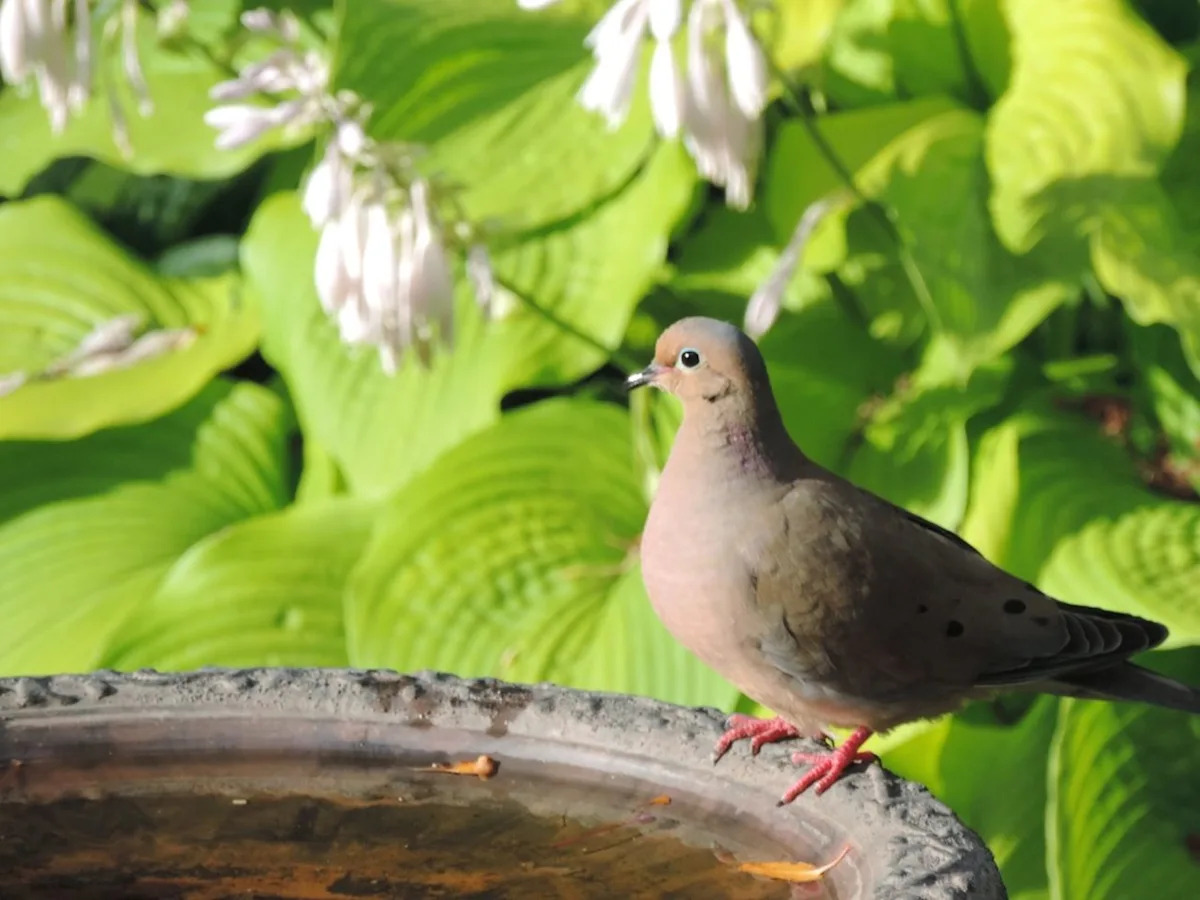
With shorter days, many songbirds are migrating south. Some bird species, such as vireos, warblers, hummingbirds and thrushes, have already started their migration. Many will travel at night, using the stars and the earth’s magnetic pull as navigational tools to guide them. It will be a long, dangerous journey.
As an Ottawa gardener who likes to garden for birds, my backyard is designed as a resting place for migrating birds, and for over-wintering birds too. Indeed, my garden is designed for birds year-round. With some songbird species threatened or in decline, my gardening goal is to provide backyard birds with food and water, as well as shelter and protection from predators.
In return, I enjoy backyard bird watching, and some bird photography too. Later, when the garden is covered in snow, birds help my garden to come alive with colour and sound.
Of course, I have well-stocked bird feeders in the backyard, as well as several bird baths, cleaned daily. I turn lights off at night to avoid bird hits, and keep my cat indoors. For added protection, some of my windows have small rows of visual marker tape – reflective dots that prevent birds from crashing into glass. I learned about the effectiveness of this product through Safe Wings, operated through the Ottawa Field Naturalists’ Club. Their volunteers work to prevent bird collisions, and rescue birds that have been injured.
Fortunately, I have not found an injured bird in my garden, but caring volunteers are available in Ottawa to assist with rescued birds at the Wild Bird Care Centre. Their rehabilitation space is expanding, with construction underway.
As a gardener, my focus is to add more plants each year that are bird-friendly. Usually, these are native plants that produce an abundance of fruits, nuts and seeds. Insects are also an important food source for birds, especially for their young that do not digest seeds or nuts. Many native plants are ideal for this purpose, because they better support biodiversity.
n ‘birdscaping’ my backyard, I think about garden design in terms of layers. Trees, shrubs, vines, grasses, perennials and groundcovers provide varying heights and dense habitat, which adds protection for nesting birds and those seeking safe shelter. I also consider what will be bird-friendly across the seasons. This calls for a different kind of garden design that makes more room for wildlife, and less lawn. Turf grass is a monoculture that offers little for birds and other wildlife, except worms for robins and crows.
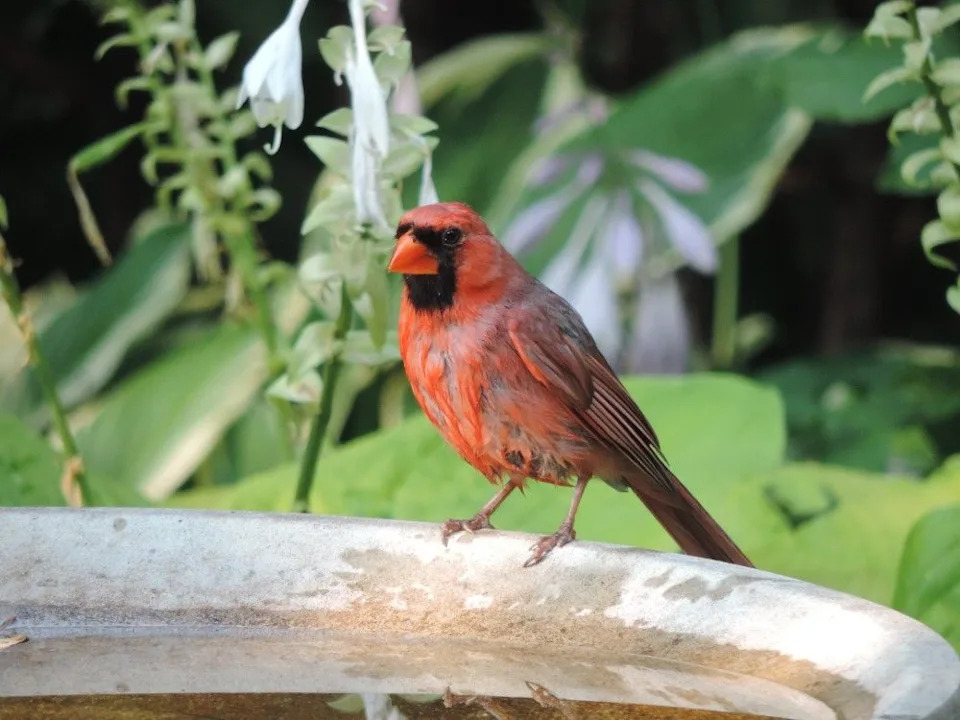
Male Northern Cardinal at the feeder.
Tall trees
Living in an older residential neighbourhood, there are many tall trees in and around the property. The fruit from my crabapple tree is a good source of food for birds, especially after repeated freezing and thawing has dried and softened the fruit. Large pines produce pinecones, which are a much needed food for chickadees, goldfinches and other birds. They also provide nesting sites for birds such as blue jays. Oak trees are considered ‘keystone plants’ because they have such a big impact on nature, attracting many different kinds of wildlife. Fortunately, there are many in my neighbourhood.
Even dead trees, called snags, help birds because they attract insects. Some birds, such as owls and some woodpecker species, create homes in them. When an old cherry tree in the backyard died a natural death a few years ago, I asked the arborist to keep the bottom half of it intact. It does no harm, looks interesting and the birds like it.
Shrubs and bushes
The old cedar hedge that surrounds the back property is a perfect place for birds to hide and find protection. In one corner of the backyard, I created a dense thicket of berry bushes. There are currants, elderberries, dogwoods and viburnums. Like people, birds love cherries, so the fruit from my shrub cherry disappears quickly. Birds are also fond of the fruit from the serviceberry (Amelanchier), that also produces beautiful white flowers in the spring.
Grasses and vines
Birds eat seedheads from my little bluestem (Schizachyrium scoparium) and big bluestem grasses (Andropogon gerardi), both North American prairie grasses that seem to grow well in urban environments. Virginia creeper (Parthenocissus vitacea) can be an aggressive spreader that may need to be cutback, but its red leaves are gorgeous in autumn and birds love the fruit from this native plant.
One helpful resource in terms of selecting plants for a backyard bird garden is birdgardens.ca. Simply type in your postal code and a list of bird-friendly native plants is provided at no cost. While not all plants may suit your soil, space or sun requirements, I found it to be a good starting point in designing a garden that birds seem to enjoy, and people too.
Julianne Labreche is a volunteer with Master Gardeners of Ottawa-Carleton
Comments are closed.