
Mike Hogan
| Special to The Columbus Dispatch

How to water plants easily
Don’t kill your plants. Here’s how to make watering easier.
Problem Solved
Now that it is officially autumn and October has arrived, it’s time to complete some fall garden tasks that will pay dividends next spring. Fall weather can be great for gardening as it tends to be cooler with little to no humidity. I much prefer working outdoors in a sweatshirt in cool autumn weather, than sweating in a T-shirt and short pants in summer.
Gardeners in central Ohio know that October is a transition month with changing weather patterns that typically signal the end of the growing season in Ohio for most plants. Locust trees have already shed their leaves, maples have begun to turn color and every gardener knows what will follow.
While the weather has been perfect for gardeners to continue to tend to annual flowers, herbaceous perennials and harvest a quickly dwindling harvest in the vegetable and herb garden, at some point during October, or perhaps early November, the growing season will come to an end. Will you be ready for the end of the growing season? Let’s take a look at tasks which gardeners should be thinking about accomplishing this month in order to prepare for the end of the growing season.
Don’t guess, soil test!
Fall is the perfect time to test your soil for nutrients. Plants have been removing nutrients all through the growing season, and a fall soil test will be a great barometer of what nutrients are needed next spring depending upon the specific plants you plan to grow.
Fall is an excellent time to apply phosphorous and potassium fertilizers if they are needed in your soil. If your soil test calls for adjustments to the pH of your soil, fall is also an excellent time to apply needed lime. Applying lime and fertilizer in the fall allows these nutrients to be completely available for uptake by roots next spring and summer.
OSU Extension provides soil testing services for gardeners, homeowners and farmers, and soil test kits and information is available at: franklin.osu.edu/program-areas/agriculture-and-natural-resources/soil-testing.
Leave no ground bare
Winter wind and rain can cause bare soil in garden beds to erode. It’s not too late to plant a cover crop in vegetable gardens and raised beds with bare soil. A cover crop is a living mulch that protects the soil from erosion, compaction and weeds. Cover crops retain nutrients in the soil and some provide pest and disease control. When planting a cover crop in October, choose winter rye, winter wheat or field peas. Before planting vegetables in spring, cut, mow or pull your cover crop and fork under the remaining “green manure.”
In the absence of a cover crop, garden beds with bare soil can be mulched with straw, compost, manure or leaves in order to protect the soil from erosion and weeds this winter.
Watch the weather
If you are like me and like to keep your annual flowers such as geraniums, begonias and petunias around as long into the fall as possible, be prepared to provide frost protection if and when a cold snap occurs this month. Warm season vegetable crops such as tomato, pepper and eggplant will also need to be protected on cool evenings if they are still producing in your garden.
Cool season vegetables such as carrots, radish, beets, green onions, greens and others rarely need any protection from frost. Use frost protection blankets, old bed sheets or even paper to protect plants from frost, but avoid the use of plastic.
Frost occurs when air temperatures fall into the mid and upper 30s. Frost is essentially frozen dew. When water droplets form on leaves, the ground, your car and other surfaces, these droplets freeze once temperatures fall into the mid to upper 30s with calm winds. The average historical date of the first killing frost of fall in the area is Oct. 20, but has occurred as early as September and as late as Thanksgiving in some years.
A freeze is different from a frost and occurs when temperatures are at or below 32 degrees, and winds prevent the formation of frost.
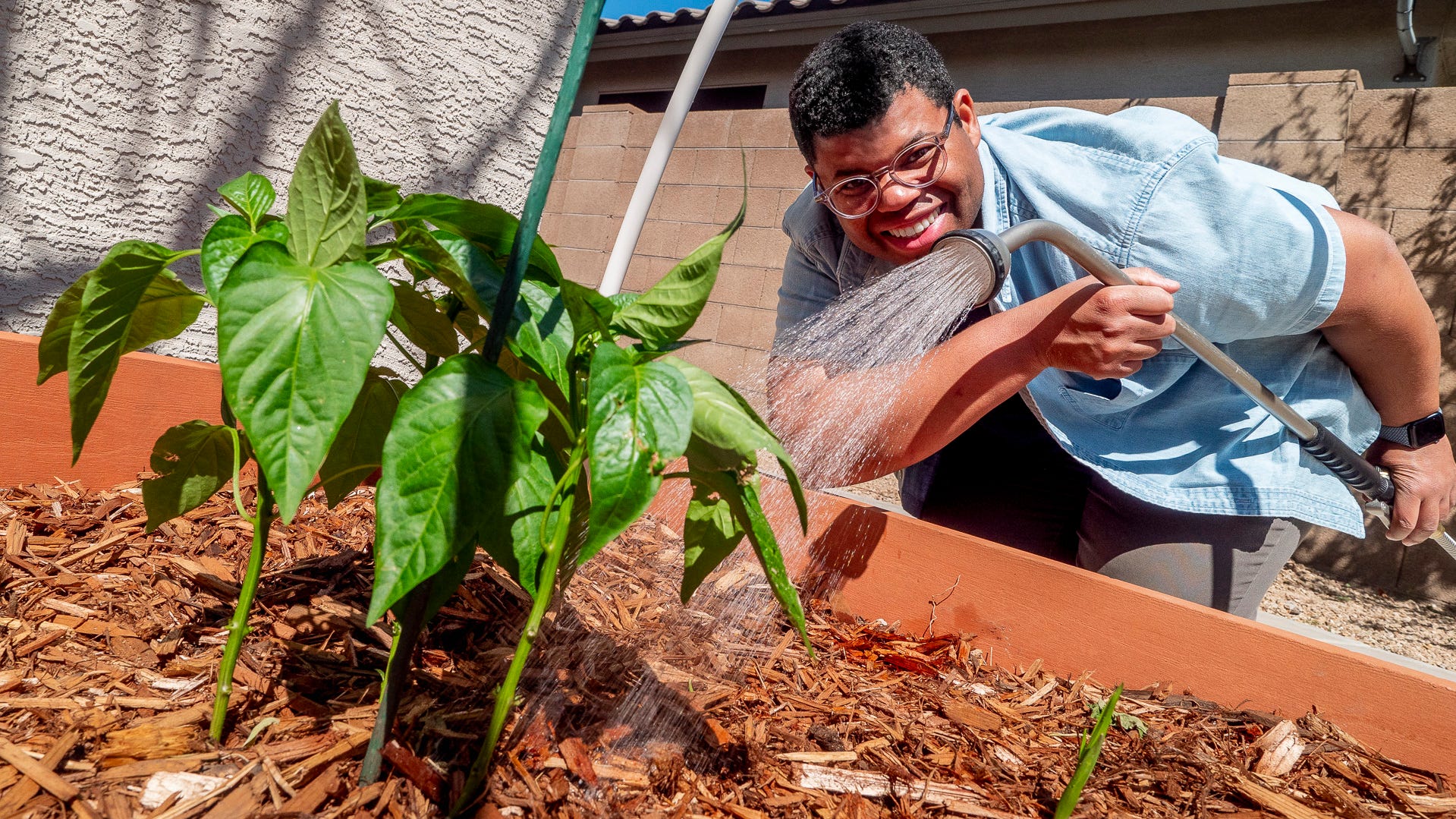
Don’t put the garden hose away yet
While evening temperatures can be cool in October, daytime temperatures on sunny days in October can routinely reach 80 degrees, which means that plants will need to be watered, especially if rainfall becomes scarce again this month. Newly planted trees, shrubs and other perennial plants will especially need water to develop root systems to store energy needed for green-up next spring.
If you want to continue to enjoy the summer colors of your begonias, geraniums and petunias, they too will need a deep watering once a week to continue the color. The last of warm season vegetables in the garden, along with newly planted cool season vegetables, should also be irrigated in October. Even fall stalwarts such as hardy mums and asters can dry out and wilt on warm October days in the absence of weekly rainfall events.
Don’t clean up everything
Some herbaceous perennials can be left standing and removed in late winter or early spring. After the first killing frost, pull out annual flowers as well as plant debris from the vegetable and herb garden. Add this plant material to the compost pile, except for any diseased plant material which should be bagged and placed in household trash.
Resist the temptation to cut down herbaceous perennials that add interest to the winter landscape. Ornamental grasses such as feather reed grass (Calamagrostis) with its tall plumes, and perennials such as blue false indigo (Baptisia australis), which has interesting elongated black seedpods, can be left standing through winter.
Some plants provide food for birds, so consider leaving these plants standing through winter as well. For example, goldfinches love the seed heads of purple coneflower (Echinacea purpurea). Overwintering birds also find winter shelter in ground covers and plant material left standing.
Many perennials help beneficial insects in winter by providing shelter from their predators. Don’t cut back marginally hardy plants like garden mums (Chrysanthemum spp.) as their tops help them survive the cold of winter. There is no need to cut back low-growing evergreen or semi-evergreen perennials such as hardy geraniums, heucheras, hellebores and moss phlox. Be sure to cut back plants diseased with powdery mildew such as bee balm (Monarda) and peonies this fall. Remember to only dispose of any diseased stems and leaves in household trash.
Mike Hogan is Extension educator, Agriculture & Natural Resources and associate professor with Ohio State University Extension.
hogan.1@osu.edu
Comments are closed.