
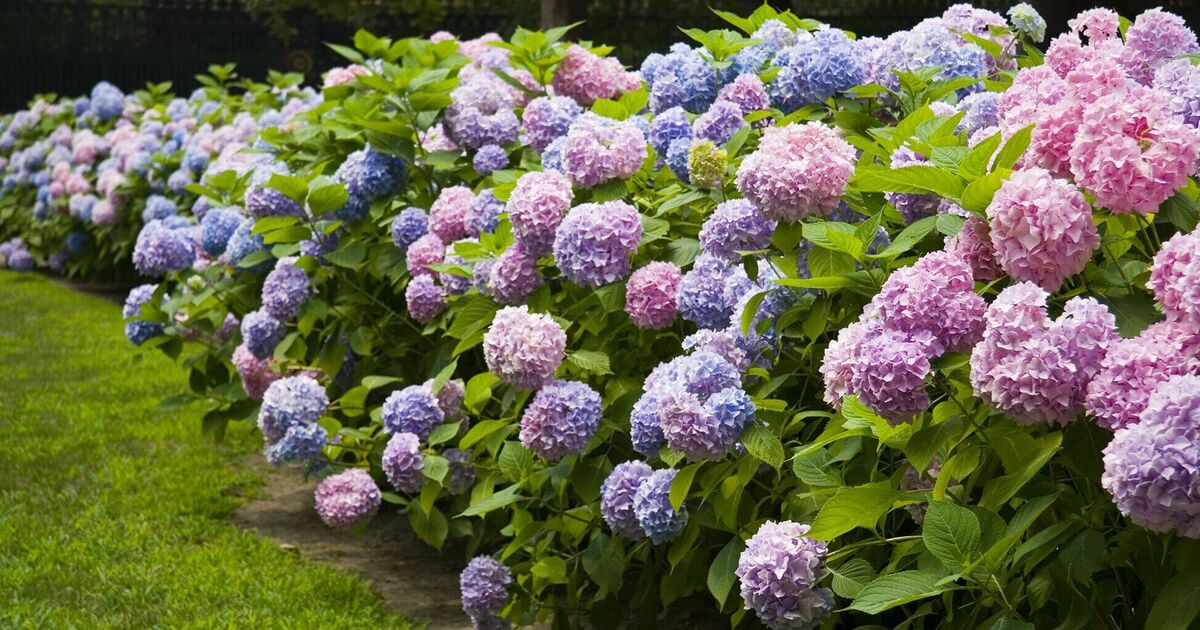
The flowering season for hydrangeas may have drawn to a close but now that autumn has arrived, it’s the time to start preparing the plants for the long winter. Gardening experts say the best time to prepare hydrangeas for winter is a few weeks leading up to the first frost, which typically happens around early November.
Of course, this can vary depending on where you live, with frost generally hitting northern parts of the country first. As such, it’s better to get ahead of the game and start carrying out crucial tasks now so that the plants will survive the cold winter and look their best come the next flowering season.
An important task ahead of winter is ensuring the plants have access to lots of nutrients for the winter and this is achieved by adding a layer of compost around the base of the plant. Hydrangeas thrive in soil that is moist so adding a layer of mulch after a thorough watering is a good way to help the plant retain moisture and warmth, but if you want to give it an extra boost of nutrients, experts recommend adding banana peel to the soil.
Banana peels are rich in potassium, which is essential for overall plant health and helps to promote stronger roots and better water absorption, ultimately resulting in bigger, healthier flowers come spring.
Experts at Sherborn Lodge explain: “[Banana] peels are a natural source of potassium, a vital nutrient that aids in water absorption, root growth, and ultimately enhances the yield of flowers and fruits.
“By utilising banana peels, gardeners can provide their hydrangeas with the necessary elements for healthy growth while also promoting sustainability through recycling organic materials.
“One of the standout features of using banana peels as fertiliser is their ability to offer long-lasting nutrition. The slow breakdown of banana peels in the soil ensures that potassium is released gradually, providing sustained nourishment to plants over time.
“This slow-release mechanism is beneficial for hydrangeas, allowing them to access nutrients as needed throughout their growing season, leading to more robust and vibrant blooms.”
Gardening experts recommend cutting up a few ripe banana peels and placing these around the base of the hydrangea plant, before covering them with soil to help them break down and release their nutrients.
Alternatively, you can make a banana peel tea by placing some peels in a jar, adding water and sealing the lid, before leaving it to sit in the fridge to steep for three to seven days.
Experts at Sherborn Lodge add: “Once the steeping period is complete, the mixture can be stored in the refrigerator for up to two weeks, ready for application.
“When it comes to applying the banana fertiliser to hydrangeas, dilution is key. It is recommended to dilute the concentrated banana fertiliser by mixing one part of the fertiliser with five parts of water before application.
“This diluted solution can then be poured around the base of the hydrangeas, ensuring that the roots can absorb the nutrients effectively. Alternatively, gardeners can bury banana peel scraps directly around the plants; this method allows for a gradual release of potassium as the peels decompose in the soil.”
Comments are closed.