
Helen Vanella, Master Gardeners of Greene County
| Special to the News-Leader
One of several boxwoods I planted in a group this spring is turning brown and looking bad. The rest are doing fine. What could be the problem and what can I do to save it?
There are several things that could be happening here, including reaction to drought and heat, fungal disease, overwatering leading to root rot, and possible need for soil amendment which would require a soil test to diagnose. Since only one of the shrubs is being affected, I would wonder about damage from urine, since boxwoods are extremely sensitive to this. If you have a dog or if there are dogs passing by and visiting your yard, this is a possibility. Deep watering would help dilute any urine present in the soil, but after that recommend only watering when the soil is dry a couple of inches down.
I have a sweet autumn clematis in my yard which I really like, but I have been told this is a highly invasive plant and I should remove it. Would it be okay to keep it if I don’t let it go to seed?
Sweet autumn clematis is lovely, smells great, however it is highly invasive, not a recommended plant for any yard. It’s fine in its original habitat in Asia but literally takes over if given free rein. In my opinion, it is not worth keeping. Sweet autumn clematis can grow up to 32 feet, cover small trees, telephone poles, and buildings if allowed to grow unbridled. This vine is number 15 on the list of Missouri’s emerging invasive plants, having a significant impact on the ecology of an area, crowding out and out-competing native plants which are food plants for many. While some non-native plants do provide food for various pollinators, there is evidence that the nutrition provided may be less than ideal.
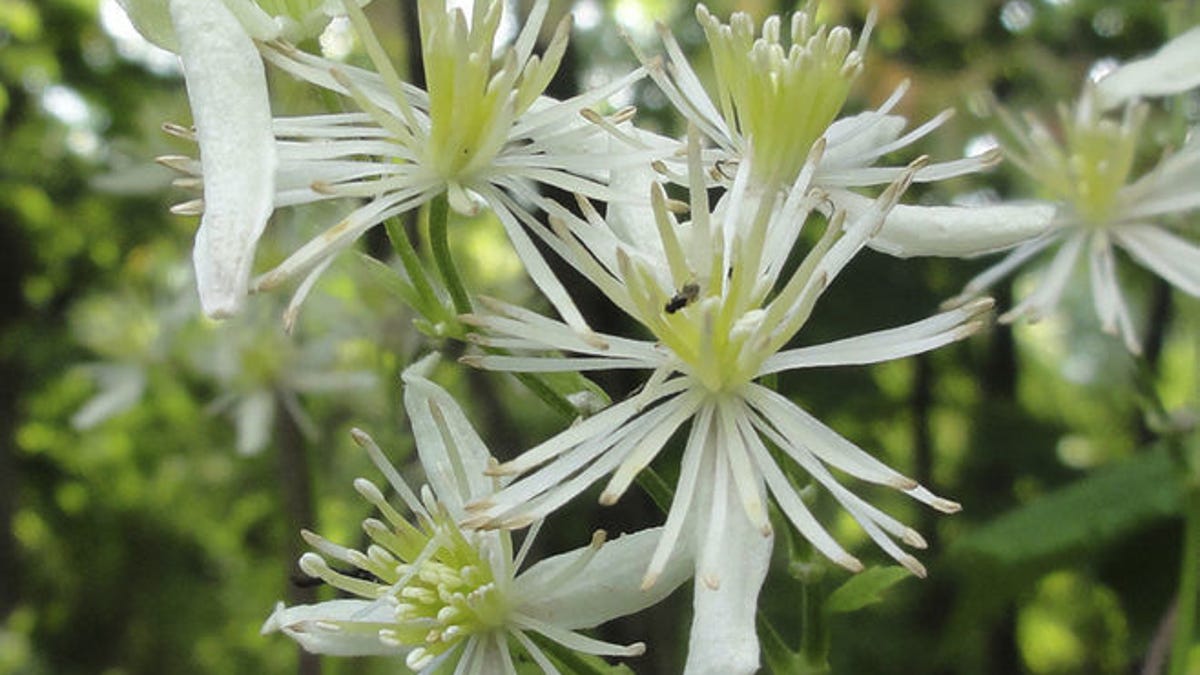
If you do decide to keep this invasive vine, absolutely all blooms MUST be deadheaded and not allowed to go to seed. The seeds are carried by the wind and can travel far and wide. Even though you may not see this plant spread in your yard or nearby, it can absolutely spread elsewhere. A better solution would be to plant the native equivalent, Clematis virginiana, or some of the other non-native but also non-invasive varieties of Clematis.
Leaves on my lilac bush are turning brown. What is causing this and what can I do about it?
This is a common problem for lilacs, particularly at the end of the season, and is usually self-limiting. Some causes could be fungal spot disease, bacterial blight, improper watering, or frost. In general there is no real need to treat this, as the leaves will most likely be fine in the spring, leafing out green and healthy. Cleaning up debris around the shrub will help limit any disease pathogens. If the problem recurs in the spring, treating fungal disease may be necessary. If there is bacterial blight present, this is generally not able to be treated.
Readers can pose questions or get more information by calling 417-874-2963 and talking to one of the trained volunteers staffing the Master Gardener Hotline at the University of Missouri Extension Center in Greene County located inside the Botanical Center, 2400 S. Scenic Ave., Springfield, MO 65807.
Comments are closed.