
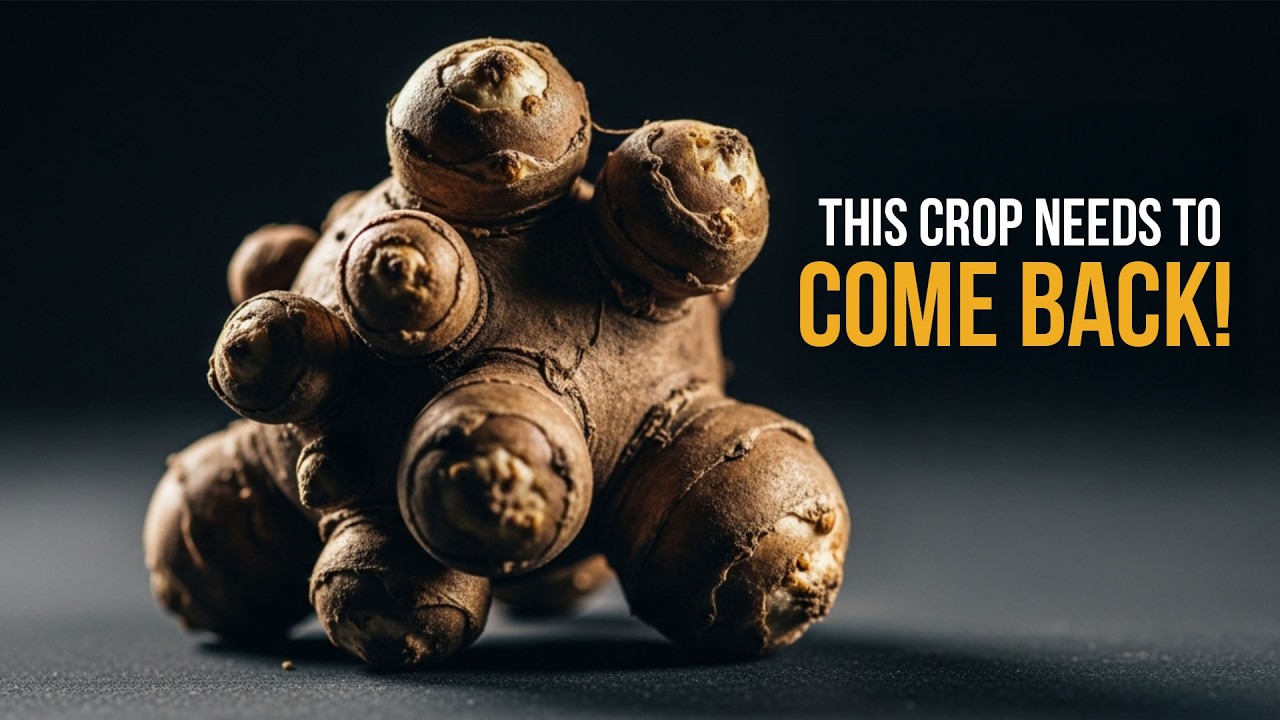
During World War II, over 20 million Americans turned their backyards into “Victory Gardens,” growing crops that fed nearly half the country’s fresh food supply. These weren’t just ordinary vegetables, they were resilient, nutrient-packed, and chosen for survival. From Golden Wax Beans and Oxheart Carrots to strange but powerful crops like Kohlrabi, Strawberry Blite, and
Banana Melon, these plants kept families alive when grocery stores couldn’t.
In this video, we’ll explore 25 of the most important Victory Garden crops where they came from, how families grew them, why they mattered, and the surprising reasons they disappeared from modern diets. With rising food costs and a renewed interest in self-sufficiency, these forgotten wartime foods may hold the key to feeding ourselves again today.
The carrots in your grocery store are weaker than the ones your grandmother grew in 1943. And that’s just the beginning. These 25 W TU2 superfoods were more nutritious, lasted longer, and grew in any backyard. Stick with me because I’ll walk you crop by crop through the forgotten road map that once kept America fed. The Garden Revolution, the year was 1941. Pearl Harbor had just been attacked and America was thrust into a global war that would reshape everything, including what grew in backyard gardens across the nation. But this wasn’t just about patriotism or propaganda posters. This was about survival. Imagine the Roosevelt administration facing a terrifying reality. How do you feed a nation when half your food production is being shipped overseas to Allied forces? How do you maintain nutrition when sugar is rationed, meat is scarce, and every calorie counts? The answer came in the form of a quiet revolution happening in backyards, vacant lots, and rooftops across America. The Victory Garden Movement. 20 million families became farmers overnight. But here’s what’s fascinating. They weren’t growing the vegetables we know today. They were cultivating varieties that had been perfected over centuries. crops that could survive neglect, store without refrigeration, and pack more nutrition into every bite than their modern counterparts. One, golden wax beans. In the cramped urban gardens of 1943, nothing was more reliable than the golden wax bean. Developed in America during the late 1800s, these weren’t the stringy disappointments that gave green beans a bad reputation. Picture a bean so tender and sweet that families would eagerly anticipate harvest time, knowing they could preserve jars of these golden treasures through canning. The genius of golden wax beans lay in their forgiveness. Amateur gardeners working 12hour factory shifts could plant them alongside corn in tiny backyard spaces and still expect heavy yields. These beans thrived with minimal care. Their disease resistance making them virtually foolproof for novice victory gardeners who were learning to farm by moonlight. But here’s the tragedy. We abandoned them for stringless varieties and higher yield hybrids that prioritize shipping convenience over flavor. The golden wax bean with its superior taste and canning qualities became a casualty of agricultural efficiency. Two cushure squash. If you saw a cous squash today, you might mistake it for something from another planet. This gnarled, curved giant with its pale green skin and bulbous neck looks nothing like the neat uniform butternut squash lining modern grocery shelves. But this alien appearance hides one of nature’s most ingenious survival foods. Indigenous peoples have been cultivating kosure squash for centuries using the three sisters method, interplanting it with corn and beans in a symbiotic relationship that maximized nutrition and soil health. Victory Gardeners discovered what Native Americans had known all along. This squash was drought tolerant, pest resistant, and could store for months without any preservation technology. Imagine opening your root cellar in February and finding perfectly preserved cushure squash. Their flesh still sweet and nutritious after months of storage. A single plant could produce enough food to sustain a family through winter. No refrigeration required, no canning necessary. Yet, we abandoned this marvel for varieties that looked better in supermarket bins, trading substance for style. Three, Swiss chard. The ancient Romans knew something we’ve forgotten. Swiss chard is a nutritional powerhouse disguised as a humble leafy green. In Victory Gardens, this Mediterranean crop became the gift that kept giving. Its cut and come again harvesting method providing continuous nutrition throughout the growing season. Picture a wartime family stepping into their garden each morning, harvesting outer leaves of Swiss chard while the inner leaves continued growing. This wasn’t just convenient. It was revolutionary. One plant could feed a family continuously from spring through fall, providing iron, magnesium, and vitamins A, C, and K in concentrations that would make modern superfood marketers weep with envy. The plant’s tolerance for both heat and frost meant that even in the unpredictable climate of a world at war, Swiss chard delivered reliable nutrition. Yet somehow, in our modern quest for convenience, we relegated this champion to specialty markets. Preferring the delicate leaves of spinach that wilt at the first sign of stress. Four. Oxheart carrot. The Oxheart carrot is perhaps the perfect metaphor for what we’ve lost in modern agriculture. Known in France as guerrand, these carrots were stubby, heart-shaped, and completely unlike the long uniform orange sticks we expect today. But their unusual form was actually their superpower. These carrots could grow in rocky clayheavy soil where modern varieties would fail completely. Picture Victory Gardeners in urban lots, dealing with poor soil conditions and limited space, yet still harvesting sweet, meaty carrots, perfect for the stews and soups that stretched rationed ingredients into satisfying meals. The Oxheart’s concentrated sweetness and dense flesh made it ideal for storage and cooking. While today’s carrots are bred for appearance and shipping durability, the oxart was bred for survival, for growing food in challenging conditions and providing maximum nutrition per square foot of garden space. We traded this resilience for aesthetics, choosing pretty carrots over practical ones. Five. Lincoln P. The Lincoln P tells the story of engineering genius hidden in humble garden crops developed in the early 1900s specifically for small urban gardens. These peas grew on compact two to three-foot vines that were perfect for the cramped victory garden sprouting up in every available space across America. But Lincoln peas weren’t just space efficient. They were soil builders. Like all legumes, they fixed nitrogen in the earth, essentially fertilizing the ground for future crops. Victory gardeners may not have understood the chemistry, but they knew that soil that grew peas would grow better vegetables the following year. The sweet flavor and reliable yields made Lincoln peas a favorite among families new to gardening. These weren’t finicky plants requiring expert care. They were forgiving crops that delivered consistent harvests even when tended by exhausted workers learning to garden after long days in defense plants. Yet hybrid varieties eventually replaced them, prioritizing shipping and storage characteristics over the qualities that made them perfect for home gardeners. Six. Henderson Bush Lemur bean. In 1888, Peter Henderson and company introduced a bean that would become a wartime hero, the Henderson Bush Lemur bean. Unlike sprawling limer varieties that required extensive space and support, this compact bush variety was engineered for the tight confines of urban victory gardens. Picture families in crowded neighborhoods, every inch of yard space precious, growing these proteinrich beans that thrived even in hot, dry climates. Limema beans weren’t just food. They were nitrogen factories, improving soil quality while providing high protein nutrition that was crucial when meat was scarce and rationed. The Henderson Bush Limer’s reliability in harsh conditions made it a favorite among novice gardeners who needed crops that could survive neglect and still produce food. But as post-war prosperity brought dietary diversification, Americans taste shifted away from lemur beans toward faster cooking green beans and snap peas. We traded protein density for cooking convenience, abandoning a crop that had sustained families through their darkest hours. Seven. Duranju kale. Long before kale became a trendy smoothie ingredient, there was duranju kale. What wartime gardeners simply called wartime kale. This northern European variety was the ultimate survivor, thriving in conditions that would kill other greens and providing nutrition when fresh vegetables were impossible to find. Imagine stepping into a victory garden in the depths of winter, frost covering everything in sight, and finding rows of Duranju kale still growing, its leaves dark green and packed with vitamins A, C, and K, plus calcium and iron. This wasn’t just a cold hearty plant. It was a nutritional lifeline during the months when other fresh foods were unavailable. The continuous harvest method meant families could harvest outer leaves throughout the growing season while the plant kept producing new growth. This kale variety fell out of popularity in the post-war years as fresh vegetables became available year round. But its recent revival in health food circles proves that sometimes the old ways really were better. Eight. Early Jersey Wakefield cabbage. The early Jersey Wakefield cabbage arrived in America from England in the mid 1800s, but it found its true calling in the victory gardens of World War II. This wasn’t the massive uniform cabbage we see in supermarkets today. It was small, pointed, and perfectly adapted to the realities of wartime gardening. Picture urban families with limited space growing these compact cabbages that matured quickly in just 60 to 75 days. The sweet flavor made them perfect for fresh eating. While their ideal size and density made them excellent for sauerkraut production, a crucial preservation method when refrigeration was limited and fresh vegetables were scarce during winter months. The early Jersey Wakefield’s rapid maturity allowed families to grow multiple crops in the same space throughout the season, maximizing food production in minimal space. Yet modern agriculture abandoned these perfectly sized cabbages for larger varieties that look more impressive on storeshelves and could be harvested mechanically. 10. Red Roma lettuce. Red romaine lettuce wasn’t just prettier than its green cousin. It was functionally superior in almost every way. This ancient Mediterranean crop brought striking color to Victory Gardens. But more importantly, it brought enhanced nutrition and resilience that green varieties couldn’t match. The red pigmentation wasn’t just decorative. It indicated higher levels of antioxidants than green lettuce varieties. Red Roma was also more heat tolerant, continuing to produce crisp leaves even as temperatures rose, and other lettucees bolted to seed. The cut and come again harvesting method extended yields, providing continuous fresh salads throughout the growing season. Picture families in wartime when fresh vegetables were precious, harvesting beautiful red leaves that not only added color to their meals, but provided superior nutrition. Yet, supermarkets eventually standardized on green Roma because it looked more uniform and familiar to consumers, relegating red varieties to specialty markets and losing both beauty and nutrition in the process. 11. Detroit Dark Red Beat. The Detroit dark red beet, an 1892 American heirloom, exemplified the efficiency that victory gardeners needed. Two vegetables from one plant. While modern consumers typically only eat beetroots, wartime families knew that both the sweet, ironrich roots and the vitamin packed leaves were nutritional gold mines. Picture a family dealing with rationing and scarcity, planting rows of these beets in spring and fall, then harvesting nutrient-dense greens throughout the growing season before finally pulling the sweet roots for winter storage. The leaves provided fresh vitamins when other greens were unavailable, while the roots could be pickled, stored, or cooked fresh. The deep red color wasn’t just beautiful. It indicated high levels of betalanes, powerful antioxidants that modern nutritional science has only recently begun to understand. Yet, hybrid beet varieties have largely replaced Detroit dark red, often sacrificing both the quality of the greens and the intensity of flavor that made this heirloom variety so valuable. 12. Charleston gray watermelon. The Charleston gray watermelon represented southern agricultural ingenuity at its finest. Developed in South Carolina in the 1950s from earlier wartime prototypes, this variety produced enormous fruits that could provide refreshing relief during hot summers when other treats were rationed or unavailable. These sprawling vines in warm climates could produce watermelons weighing 30 lbs or more. Each one capable of feeding an extended family or neighborhood gathering. The fruit’s disease resistance and ability to withstand hot, humid conditions made it reliable even when other crops failed during challenging growing seasons. But modern consumers wanted smaller, more convenient watermelons, preferably seedless ones that could be eaten individually rather than shared communally. The Charleston Gay’s massive size and abundance of seeds made it unsuitable for modern marketing. So, we abandoned melons that could feed many people in favor of personalsized varieties that generate more profit per pound. 13. Dcho broccoli. Dchico broccoli tells the story of how we abandon sustainable harvesting for industrial efficiency. This 19th century Italian variety didn’t produce one massive head like modern broccoli. Instead, it provided multiple side shootutes over weeks of continuous harvest, delivering steady nutrition throughout the growing season. Picture victory garden families harvesting small heads of dico broccoli week after week. The plant continuing to produce new shoots as long as they kept harvesting. This wasn’t just convenient, it was economically crucial for families depending on their gardens for nutrition. One plant could provide broccoli for months rather than days. The rich vitamin C, iron, and calcium content made Dico broccoli a nutritional powerhouse. While its flexibility in both cold and warm climates made it reliable for gardeners across different regions, but mechanical harvesting required varieties that produced one large head that could be cooked once and shipped immediately. We traded continuous harvest for industrial convenience, losing both sustainability and nutrition in the process. 14. White Creole Onion. The White Creole Onion was the South’s answer to food storage challenges. Developed in the early 1900s for southern climates, this variety could be direct seeded in warm regions and would store for months without refrigeration, providing sharp flavor when raw, but becoming sweet and mild when cooked. These onions were heat tolerant champions, thriving in southern summers that would wither other varieties. Victory gardeners could plant them once and harvest bulbs that would last through winter, stored in mesh bags in cool, dry places. The storage capability was crucial when fresh vegetables were scarce during winter months. picture families in the south dealing with hot, humid growing conditions, yet still producing onions that could be stored through winter and used to flavor the simple meals that stretched rationed ingredients. But hybrid storage onions bred for shipping eventually replaced regional varieties like the white creole, prioritizing uniformity and commercial durability over heat tolerance and flavor. 15. Pennsylvania Dutch Crook Neck Squash. The Pennsylvania Dutch crook neck squash embodies the immigrant wisdom that built American agriculture. This Pennsylvania German heirloom grew on compact vines perfect for small space gardening, producing nutty, creamy flesh fruits that could be stored through winter without any preservation technology. The unusual curved neck and bulbous body made these squash unmistakable, but also made them unsuitable for modern packaging and shipping systems that demanded geometric uniformity. The rich, dense flesh was perfect for baking and roasting, while the excellent storage qualities meant families could enjoy fresh squash months after harvest. Picture Pennsylvania German families, their agricultural wisdom passed down through generations, growing these oddly shaped but incredibly nutritious squash in small backyard plots. The compact vine growth made them ideal for victory gardens where space was precious. Yet, we abandoned them. for butternut squash varieties that looked more conventional and shipped more easily. 16. Green Arrow P. The Green Arrow Pee arrived from England in the early 20th century with a remarkable characteristic, uniform ripening that made canning and preservation much easier for home gardeners. While most peas ripened irregularly, requiring multiple harvests, Green Arrow peas could be picked all at once at peak flavor and nutrition. These peas produced extraordinarily long pods, each containing up to 10 peas, a remarkable yield that made them incredibly efficient for small space gardening. The uniform ripening meant that busy families could harvest and preserve their entire pea crop in a single weekend. Crucial for people balancing victory gardening with demanding wartime work schedules. Picture families gathering around kitchen tables, shelling pods filled with 10 sweet peas each, preparing jars for canning that would provide protein and nutrition through winter months. The dependable yields and processing convenience made Green Arrow peas perfect for wartime conditions. Yet, commercial agriculture moved toward varieties optimized for mechanical harvesting rather than home preservation. 17. Scarlet Ono Turnip. The Scarlet Ono turnip brought Japanese agricultural efficiency to American Victory Garden. This remarkable variety could go from seed to harvest in just 40 days, making it perfect for succession planting, growing multiple crops in the same garden space throughout the season. The beautiful red roots weren’t just aesthetically striking. Both the roots and greens were edible, providing two vegetables from one plant. The rapid growth meant families could plant turnips in early spring, harvest them, then plant another crop in the same space, maximizing food production from limited garden area. Picture urban gardeners with tiny plots planting rows of these quick growing turnips every few weeks throughout the season, ensuring continuous harvest of both roots and greens. The reliability in poor soil made them perfect for challenging urban growing conditions. Yet turnips in general fell out of favor as post-war prosperity brought dietary diversification and the association with poor people’s food. 18. Kulabi. Kulabi looks like something a science fiction writer might imagine. A bulbous alien looking stem that grows above ground with leaves sprouting from its surface. This German crop from the 1500s was perfectly adapted to cool weather growing, producing vitamin C rich bulbs and edible leaves that provided two harvests from one plant. The mild sweet flavor of kolabi bulbs made them appealing to children, while their rapid growth and tolerance for poor soil made them practical for novice gardeners. Both the swollen stem and the leaves could be eaten raw or cooked, providing nutritional diversity when other vegetables were scarce. Picture German immigrant families sharing their traditional crops with neighbors in victory garden communities introducing this strange but nutritious plant to families desperate for reliable food production. The alien appearance never caught on with mainstream American consumers, confining Kolabi to ethnic communities and wartime necessity before fading from most gardens entirely. 19. Strawberry blight. Strawberry blight sounds like something from a fairy tale. And in many ways, it was a magical plant that provided both spinach-like leaves and small red fruits that could be made into jam. Indigenous North Americans had been eating this plant for centuries before it found its way into victory gardens. This remarkable crop grew easily in poor soil conditions that would challenge other plants, requiring virtually no care while providing dual harvest throughout the growing season. The leaves could be eaten like spinach while young and tender, while the small red fruits added color and sweetness to the austere wartime diet. Picture families discovering this indigenous wisdom, growing a plant that gave them both vegetables and fruit from the same plot. The ease of cultivation made it perfect for novice gardeners. Yet the small, mildly sweet berries couldn’t compete with commercial strawberries, relegating strawberry blight to the category of ornamental curiosity rather than practical food crop. 20. Parnips. Parsnips tell the story of a vegetable that was once as common as carrots, but somehow became almost forgotten in modern American cuisine. This European staple had been feeding families since the Middle Ages, and wartime gardeners knew a secret about parnips that we’ve forgotten. They actually improve with frost. Victory gardeners would leave parsnips in the ground through winter, harvesting them after frost had converted their starches to sugars, creating a sweet potato-like vegetable that could provide hearty nutrition during the coldest months. The long storage life meant families could have fresh vegetables even when nothing else was growing. Picture families in the depths of winter, digging through snow to harvest parnips that had been sweetening in the frozen ground, providing starchy, filling nutrition when calories were precious. The storage capability and cold tolerance made parnips invaluable for winter food security. Yet, they were overshadowed by potatoes and became increasingly difficult to market to modern consumers unfamiliar with their preparation. 21. Rutter Bagger. Rutterbagger, also known as Swede turnip, carries the unfortunate reputation of famine food. But this Scandinavian crop was actually a nutritional powerhouse that thrived in conditions where other vegetables failed. Victory gardeners discovered what northern Europeans had known for centuries. Rutterbagus could be grown in poor soil, stored for months, and provided filling, nutrient-rich meals. These large purple topped roots grew reliably in cool climates and could be stored through winter in root cellers, providing fresh vegetables when nothing else was available. The sweet mild flavor when cooked made rut baggers versatile for soups, stews, and roasted dishes that stretched rationed ingredients into satisfying meals. picture families in northern regions where growing seasons were short and winters harsh depending on stored root beggars to provide fresh vegetables through the coldest months. The association with wartime austerity and economic hardship made rut baggers unfashionable in the prosperous post-war years. Yet their nutritional density and storage capabilities are exactly what modern food security requires. 22. Collarded greens. Colored greens represent the deep agricultural wisdom of the American South. Descended from ancient cabbage varieties and perfected through generations of cultivation, these hardy greens could withstand heat, cold, and poor soil conditions while providing continuous harvests of nutritious leaves throughout the growing season. The cutand come again harvesting method meant families could harvest outer leaves continuously while the plant kept producing new growth from the center. This wasn’t just convenient. It was economically crucial for families depending on their gardens for nutrition during rationing and scarcity. Picture southern families. Their agricultural knowledge passed down through generations, harvesting collarded greens that provided vitamins and minerals even during winter months when other fresh vegetables were unavailable. The incredible hardiness and nutritional density made collards a survival food. Yet their association with southern cuisine and poor people’s food limited their adoption in other regions. 23. The amaranth tells one of the most remarkable stories in agricultural history. An ancient Aztec crop that provided both spinach-like leaves and proteinrich seeds. Essentially functioning as two crops in one plant. This Central American native had sustained civilizations for thousands of years before finding its way into wartime victory gardens. The dual harvest capability made amaranth incredibly efficient for small space gardening. Families could harvest leaves like spinach throughout the growing season, then allow the plants to go to seed and harvest the tiny proteinrich seeds that could be ground into flour or cooked like quinoa. Picture families discovering this ancient wisdom, growing plants that could provide both fresh vegetables and storeable protein in the same garden space. The drought tolerance and fast growth made amaranth perfect for challenging conditions. Yet, it virtually disappeared from Western diets after the war, only recently being rediscovered as modern nutritional science, recognizes its exceptional protein content and complete amino acid profile. 24. Radishes. Radishes were the victory gardener’s secret weapon. Fast growing crops that could provide fresh food in just 20, 30 days, filling the gaps between longer season vegetables and providing quick nutrition when it was needed most. Varieties like cherry bell and French Breakfast could be planted in small spaces and harvested repeatedly throughout the season. The rapid growth made radishes perfect for succession planting and for teaching children about gardening. Kids could plant radish seeds and see results in less than a month. The spicy flavor added interest to simple meals, while the ability to grow in any soil meant they could be planted in marginal spaces where other crops might fail. Picture families with children using radishes to teach the next generation about growing food, creating a connection between young people and agriculture that was crucial for long-term food security. The quick harvest provided both nutrition and hope during challenging times. Yet modern consumers began treating radishes as garnishes rather than staple crops, relegating them to decorative rather than nutritional roles. 25. Potatoes. Potatoes were the foundation of victory garden food security, providing calorie-dense nutrition that could be stored through winter and prepared in countless ways. But wartime families weren’t growing the uniform russet potatoes we know today. They were cultivating diverse heirloom varieties adapted to local conditions and home storage. These wartime potato varieties were bred for flavor, nutrition, and storage capability rather than shipping durability and processing characteristics. Families would plant hills of potatoes in backyard plots. Then harvested them for storage in root sellers where they would remain fresh for months without refrigeration. Picture families in autumn harvesting potatoes that would sustain them through winter. storing varieties that had been perfected over generations for maximum nutrition and longest storage life. The diversity of varieties provided insurance against disease and crop failure. Yet, modern agriculture consolidated potato production into a handful of commercial varieties optimized for industrial processing rather than home storage and nutrition. Which crops would you plant in the next crisis? After World War II, America’s food system transformed. mechanized farming, chemical fertilizers, and supermarket chains redefined what made a good crop. It wasn’t about nutrition, resilience, or storage anymore. It was about uniformity, appearance, and the ability to ship. In chasing convenience, we abandoned vegetables that had fed families for centuries. Plants that could grow in poor soil, store without refrigeration, and deliver more nutrition than most modern varieties. Victory gardens weren’t just about survival. They were about ordinary people taking control of their food. Families grew banana melons on fire escapes, kushaw squash to last through winter, and Swiss chard that kept producing all season. These forgotten crops tell a story of resilience and wisdom, reminding us that real food security comes from knowing how to grow our own. Today, with rising costs, climate pressures, and fragile supply chains, the lessons of Victory Gardens matter more than ever. Maybe it’s time to ask, which of these 25 forgotten superfoods would you plan to feed your family in the next crisis?
21 Comments
What era would you like me to cover next? Leave your comments down below.
i wish u would just get to the point without being so damn over exaggerated british man.This isnt a comic book or car sales just stick to the info without blowing euro smoke up our rear ends plz
Where could we get the seeds of These Hardy plants? Are you able to tell a seed seller?
Unfortunately the Same deplorable developement Here in Europe: there exist only rare seed Sellers with the original variety of plants: i am continuously looking for sturdy plants with Storing qualities, which can grow on Bad soil and can overcome a harsh climate. I would be grateful to get the address of a Solid seed seller for Hardy plant types. Thanks for this good Video.
I would Love to plant These sturdy Squash sorts with a thick Peel and good storing qualities. That Attribute is all what counts in the end: also the variety of old robust potatoe sorts: which we get at least in Germany.
Why the medieval pictures :-)?
On rutabagas, you sowed illustrations of turnips not the large golden orbs of rutabagas!
On rutabagas, you showed illustrations of turnips not the large golden orbs of rutabagas
What nonsense, nothing is factual!
they keep harming our weather and farmers so growing anything will be very hard soon, most know they are doing this to all of humanity, while they have towns and places all under ground and we will not survive their evil, we have no bees here, no squirrels, very few birds its in our face, , our father knows who and why they are doing all of it, fear not, he will show us what we need to do,
Neat crops, but what about livestock? Backyard chickens, rabbits, small goats for dairy, Kune kune pigs, and heck there are mini cows like Dwarf Scottish Highland cattle, and Irish Dexters. These used to be common, and people used to produce at least some of their own eggs, milk, and meat at home. From small backyards, to a couple acres of land. The family dairy cow used to be a common thing, but you never really see it anymore. Then there's things like homemade cheese to preserve it. That seems to be a lost art.
Then there's other cultures. What did they grow, and how did they do it? Look at the Inca. They built an empire spanning the Andes mountain range. And yes, they grew crops everywhere, including the mountain peaks. This is the culture we get potatoes from, but that was only one of their root crops. They had things like Oca, Ullaco, Maswa, and Yacon among others. Their grain crops included corn, but also had Quinoa, a type of Amaranth called Kiwicha, and the super hardy, drought resistant, cold and wind resistant, grows in ultra poor rocky soil, Kaniwa grain. That one has been found growing a couple of feet from a permanent ice cap on mountain peeks, all the way down to the coast where it was found growing in salty soil. It grows where the soil is frozen for nine months of the year, and frosts are common. You can buy seeds for all of these online. Also, a good book on it is 'Lost crops of the Incas', from 1989.
Goodness…in CANADA…my great grandparents, grandparents, parents, myself, and now my niece and nephews grow the produce your focused on in the video…but…we have added more Fruit Trees, multiples berry bushes, and so many more!
However I am exceptionally excited to ask my older relatives if they ever encountered “Strawberry Blight” throughout their extensive gardening experience! I have never heard of “blight” as a boon…so it’s going to be a delightful addition to our gardens! It’s truly exhilarating to discover a plant (veggie/fruit) that none of my highly educated agricultural family may have missed…what a TREASURE!😉
I cannot wait to try this versatile, delicious plant!
I encourage those unfamiliar with gardening, farming, etc., to try an item or 2 at an Farmers’ Market or Farm Stand, and, ask therm or others for suggestions as to how to prepare it, so you can enjoy it fully! Who knows, you many begin growing raspberries, blueberries, strawberries or even a larger shrub variety mulberries, and so many others…the success is bringing with a pot on your step or deck, alone or amongst some beautiful flowers…exciting design and a deliciously one at that!
xx❤🇨🇦Many Blessings to all!🇨🇦❤xx
Chantenay carrots will grow through rocks and clay. If they hit a rock it may look like an octopus but mine would grow to about a foot and 6 inches across. After improving my soil for over 30 yrs I can grow just about any carrot straight without extra appendages
Warning!
Easy to grow
But gas if you are not used to them!
start out gradually with these until your intestinal flora adapts otherwise Gas! gas gas
sunchokes, red onions, kalmata olive,feta cheese,olive oil balsamic vinegar,
or
equal parts cauliflower and sunchokes then onions celery and cream soup
I have been looking for sun chokes for a long time people use to grow them but no one dose were i live now
Im a vegetarian who last ate beef or lamb back in 1986 and love my vegetables but most of the cheapest ones are my most disliked turnips pumpkins swedes choose i will eat any vegetable because they are good for you and ive moved to the city and since moving i find eating vegetables from shops don't taste anything like my vegetables grown on the farm with rich compost soil organic produce not rubbish grown with salts and totally synthetic nutrients the only hydo vegetables i prefer are frilly lettuce and baby spinach leaves everything else tastes tastes crap I grew lots of heritage varieties which don't keep the same sometimes but the taste is so much better and when you go out and pick tea each afternoon fresh for tea or fresh corn straight from garden to pot nothing like shop brought corn and the shop brought fruits are picked when green so they last zwe grew peaches and they shit on every shop peaches i had tried in my 60 years so sweat same as my rock melons just so sweet you can't beat vine ripead fruits and vegetables in really miss the farm fruits and vegetables
I'm planning to plant some sunchokes this fall. They are durable, attractive plants with sunflower like blooms and edible tubers. Be warned, they will take over any space you put them in.
Where can I find seeds for these plants?
it would be better to actually show the actual vegetable rather than ones. it makes no sense.
Your illustrations were unreal. Very little related to the 40s
the carrot now are easily rotten