
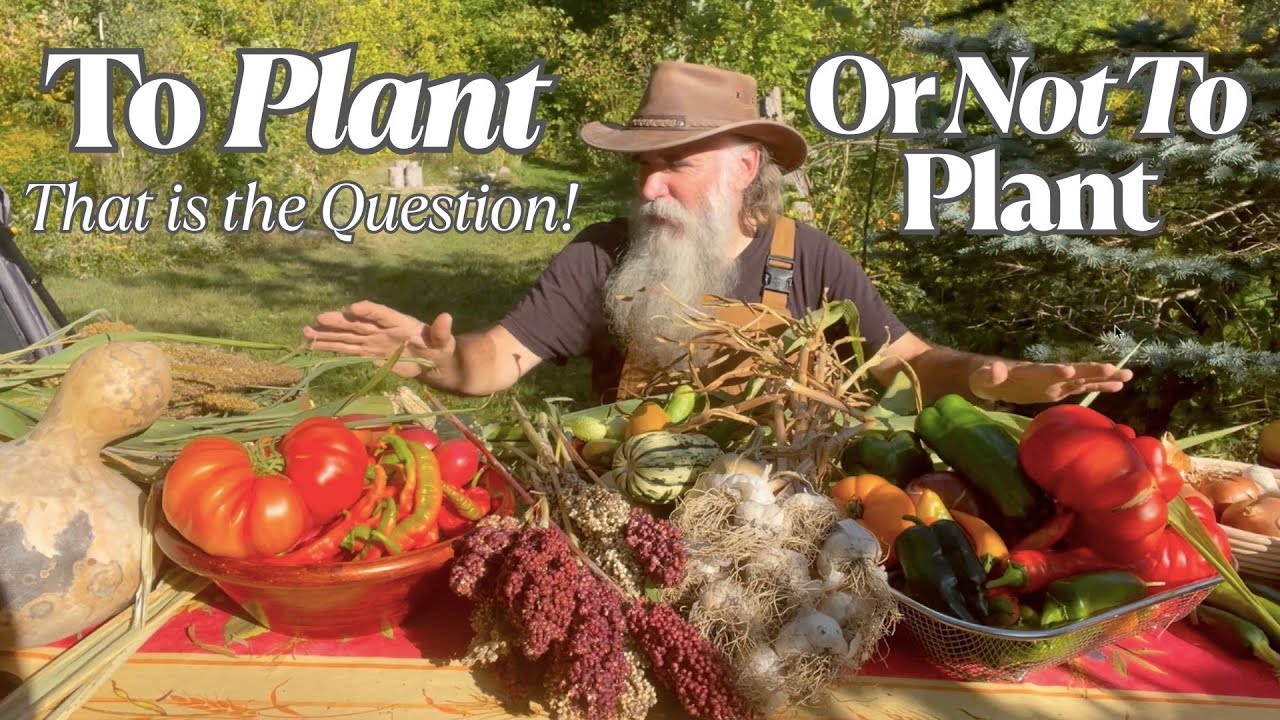
What grows well, what grows easily, what keeps easily for a year. What is the food that we’ve been growing that feeds us the most. And what crops we are going to stop growing because it’s just not worth the effort, along with what will replace those crops we are no longer going to grow. Finally, what we have to do differently to grow certain food items, how we have done it in the past and how we are going to change it up. Advice on approximately 50 vegetables and other food crops.
Here it is! 6 years worth of advice on growing all of your food for it to last a year until your next harvests! Plus how to do it, guided by nature!
00:00 Intro
01:41 Peppers
07:08 Barley, wheat, oats
08:38 Millet, sorghum
12:20 Imitating nature’s biodiversity
13:20 Onions
16:46 Garlic
19:25 Spinach, coriander, Swiss chard, Malabar spinach, parsley, tchepiche, basil, mint, watermelon, groundcherries
24:30 Lettuce, dill & tomatoes
29:11 Cucumbers
31:04 Why I lost my tomatoes to the blight in 2023
32:24 Blight resisteant heirloom tomato varieties
33:42 Cucumbers
35:53 Cabbage, kale, broccoli, cauliflower
40:19 Quince
41:39 Hazelnuts
42:39 Wild grapes, black cap raspberries
43:07 Sunflowers
47:15 Squash
51:19 Stopping the squash vine borer
54:45 The Three Sisters
58:31 Potatoes
1:02:12 Beans
1:02:32 Beets
1:03:50 Rosemary, overwintering plants
1:06:15 Canteloupe, sweet potato
1:07:05 Edible flowers
1:07:49 Luffa, birdhouse gourd, beans
1:12:49 Thank you and outro
1:14:07 Nature scenes and sounds along with some quiet music
Website:
https://www.willowsgreenpermaculture.com
For online consultations or onsite consultations, please contact me:
Email:
apdehors@gmail.com
If you’re thinking of starting a garden in your backyard or on a balcony, or launching a full scale permaculture project, let’s talk and see how I can help you!
Magali’s channel and Website:
Elemen-Terre:
https://youtube.com/@ELEMTERRE?si=0tndnQ4rU-KZeiv9
Website:
https://www.elementerre.ca
Join this channel to support the free sharing of useful guides to growing your own food and becoming self-sufficient! 😊 Just click the join button below the video:
/ @willowsgreenpermaculture
Good afternoon and welcome to Willow’s Green Permaculture. Today I’m going to be bringing to you five and a half years of experience growing our own food and growing enough for a year. I’m going to talk to you about some of our favorite vegetables and some of the easiest vegetables to grow and to get a whole lot of and they’re delicious and why. And I’ll give you some advice for each. I’m also going to tell you about some of the vegetables that we’re going to continue to grow, but we need to do things differently. And I’m going to tell you how we’ve done them and how we need to do them differently. And I’m also going to be telling you about some of the vegetables that we’re not going to be growing anymore because we just don’t think that it’s worth the effort and we can get what we need from those vegetables from plenty others. And we’ll let you know what those alternatives are, too. And I’ve got all these cute cards here to kind of help me remember everything that all the different things I want to talk about cuz I’m always forgetting stuff. So, if you’re someone who’s just getting into growing your own food or you’ve been doing it for a while and you just want some really, really useful tips, really useful advice that’s going to help you do better, grow better, get more food, get better food, get food that that you can grow while you’re respecting nature and while you’re basically celebrating nature all around you and actually having nature help you. If this kind of thing interests you, then let’s get started. So, so much to talk about. Let’s start with peppers. Peppers were definitely it’s one of my favorite vegetables. We’re definitely going to be continuing planting those. But there are a lot of very useful things to know when you’re planting your peppers. For example, first of all, it’s best to start them in small pots. And if you’re in a cold climate, you start them in small pots indoors or in a heated greenhouse, not in a an unheated greenhouse because it’s going to be too cold in an unheated greenhouse. You get them started started in small pots, but not too small. Okay? You’d probably probably the best size pot is about that big, you know, that big, that tall, and so on. Anything smaller than that is too small. Why? Because your peppers need about 8 weeks before you transplant them out. And what you want to do is transplant them out when the danger of the last frost is long gone. Here, that’s the beginning of June. Here in our 5B6A garden, it’s the beginning of June. First week of June, that’s when we transplant. For you, it might be at some other point. And so, they need to last a long time in those little pots. And so, if you put them in something too small, they’re going to get stressed. And if they’re starting their life out stressed, they’re not going to grow as well in the garden after you transplant them. A few other things that tips that are really really important with peppers. When when your peppers start to uh form their fruit, okay, they’re going to you’re going to see maybe lots of flowers and lots of fruit on each plant. When the fruit starts to get shiny like this, okay, and it starts to change color like this. All right. Um, or even when it’s still green, but it’s shiny and you’ve got maybe a lot of different peppers on the plant, a lot of peppers on the plant, and you’ve got some really tiny ones and you got flowers and so on, pick some of those green ones. So long as they’ve started the so long as they’re shiny or that they’ve started to change color, you’ll be able to ripen them inside in a sunny window, let’s say. And that way, your plant’s going to have more energy to finish ripening the remaining fruit. All right. Now, sometimes you will see I don’t have an example here, but sometimes you will see at the bottom of the pepper. All right? You’ll see a little maybe a little spot, a little bit of rot, maybe a little bit of mold or or it’s just gone a little black or discoloring or or the skin has dried. That’s what we call um actually you can see a little bit of it right there. All right. That’s that’s either sunburn or if it’s down here, it’s blossom and rot. And it’s often caused because of stress from too much sun, too much heat. This past summer, we had a a drought, and so there was way way too much heat, not enough water, not enough rain. And so some of these peppers got this. And it’s important that you pick them because they’re not going to they’re not going to ripen as well as the other ones, and the plant’s going to be trying to keep them healthy. So you pick those so that the plant has more energy for the rest of your peppers and then you’ll get more peppers. And then these ones that you pick that have those little spots on them, you ripen them inside. You cut those spots out and you eat the rest that the rest that’s still good and you’ll still get your peppers. Now, what else? Another good thing about peppers is they don’t mind being crowded as opposed to tomatoes. Tomatoes don’t like being too crowded, especially in a rainy area. you. Tomatoes need their space so that the leaves can dry off and so on. Peppers don’t mind it. In fact, peppers like being crowded because they like to give their fruit a little bit of shade with the leaves of of of the pepper plant itself or other pepper plants around it or maybe a few other plants like sunflowers you might have growing close by. Sunflowers are a good companion plant for peppers. Oh, another one last thing about peppers. Really useful piece of advice. Okay, so we got different types of peppers. We’ve got like bell type peppers. This is a relatively small bell type pepper, but this is another bell type pepper right here. It looks kind of like a cross between a bell and maybe something longer and thinner. And then then you got these types of peppers and these types of peppers which kind of look like hot peppers, but both of these are sweet peppers. This is a tequila pepper and this is a Jimmy Nardell pepper. Here’s another another Jimmy Nardelloo pepper right here. Now, what I want to say about these is um I I mean I I love hot peppers. They’re great. And what’s great about hot peppers is a hot pepper plant will give you lots and lots and lots and lots and lots of peppers. But let’s say a bell pepper uh will give you nice big juicy peppers, but it won’t give you necessarily as many. Same same with this kind. But but hot peppers, for instance, this is a publano. The plant gives you tons, okay? Because it’s a hot pepper. And then you’ve got these peppers here which are sweet, but they kind of look like a hot pepper and they behave like a hot pepper. These long, thin, sometimes curved, smaller peppers, the plant will give you lots and lots and lots. And so I highly advise you to grow those types of peppers if you want a huge abundant harvest. and they seem to be more resistant to the bugs as well, just like hot peppers, cuz hot peppers are resistance to the bug, resistant to the bugs as well. So, there you go. There’s some advice for peppers. Let’s go on to the next thing. Let’s go to something that I’m not going to plant anymore. I’m going to talk about some grains. All right? So, I’m going to talk about barley and wheat and oats. Okay? Not going to plant those anymore. And I’ll tell you why. And I’m going to tell you what we what we plant instead. you know, because we’ve we we make our own bread and so we want to reduce the amount of flour that we buy and and we’ve got a solution for that. But we’ve been trying over the last few years all sorts of grains to see how well they do. So here we’ve got for instance some some barley and some wheat right here. Okay. And uh here too. Here’s some some purple barley. And then here we’ve got some oats. Now, I’m not going to be planting these anymore. Uh even though uh I’ve enjoyed uh planting them. I’ve enjoyed growing them. I love to just take the berries off of here and eat them and chew on them. They’re really nice, but um they’re just not very convenient. They’re not they they I mean, as you can see, the plant is very very small. This is and it doesn’t give you a whole lot of grain per plant. And it’s not very tall, but it’s tall enough that it falls over and it’s so short that it’s very easily foraged by by animals. Very very easily foraged. And each plant doesn’t give you a whole a whole bunch. And so you need just way way too much space to be able to get enough oats or barley or wheat. What I what we plant instead and what is grows really really well. We plant millet, which we’ve got here a whole bunch of it. This this this millet right here is still a little bit green, but I picked it green just as an experiment to see if it will ripen well. Okay. And then here’s some ripe millet. Now, this millet here is foxtail millet. But that’s not the only green we grow. We also grow different types of sorghum. So, we’ve got we’ve got some coral sorghum here. And right here, I’ve got some some William syrup sorghum right there. And got some sorghum from uh from a subscriber who sent me seeds this past winter. His name’s Robert Resnik. And this is a type of hybrid sorghum that only grows to a meter 20 to about 4 feet tall. So, it’s really convenient and it gives nice big heads. You see how big those heads are compared to, let’s say, the coral sorghum or even the William sorghum. And uh so I’m looking forward to trying these seeds. But what I can tell you is the birds love them. Uh and uh and so which means they’re probably going to be really really good. And another one that the birds really love and the birds really love the well they love all the sorghum. They go after all our sorghum which is fine because And then we also have uh some popping sorghum. This is aloo jola popping sorghum. Now what’s great about the millet and the sorghum is you see how big these heads are compared to these ones. Okay, there’s a huge difference. And yet a plant of millet doesn’t take up much more space than a plant of wheat or barley or oats. But look at how much more we get. The sorghum might take up a little bit more space, but really not much. So for the space you get a whole lot more. Plus the the coral and the Williams and the alujola is really really tall and so it uh it’s a little bit harder for the animals to get at. And um and then the millet and the and and Robert Resnik store it’s a bit shorter. It’s about 4t tall but still it works really well. And so we’re going to we’re going to keep growing that. And I’ve done a whole bunch of videos on those. that I’m going to be actually doing a video about uh uh specifically about sorghum. So, I’m not going to give you and millet. So, I’m not going to be giving you too much advice today. But what I can say is in a cold climate, it works better here. Let’s say here in Ontario or any cold climate, 5A, 5B, 6A, whatever, it works better if you plant them in small pots ahead of time, about four weeks, four or five weeks ahead of time. Um, and you can plant several seeds in a pot because they’re they’re they’re grass. They grow like grass. They don’t mind being crowded. These all all of these this sorghum you see here was all growing really crowded. And you saw how big the heads were. And so you start them in little pots about four or five weeks ahead of time and then you transplant them into the garden because even when you sew the sorghum when the soil is the right temperature, uh, direct sewing it here, it just takes too long. It takes longer for them to germinate than than they do when they’re in pots. And when the soil’s the right temperature, you can just transplant the four or five week old plants that are already that that big. And so, they’re just going to grow a lot faster for you and give you a lot earlier harvest. Next, let’s talk about something that I want to do differently. Let’s talk about onions. Onions. Now over the last few years, I’ve been growing onion sets and I’ve been also growing onions from seed. Now, but before I talk to you about the onions, I want to talk to you about the context of how we garden. And that’s a really, really important point. How I like to garden is I like to garden imitating nature, using biodiversity. If you’ve seen any of my videos, you’ve seen what my garden looks like. You can see that it’s just full of all sorts of uh plants. Uh there’s not not even a a hint of monoculture there. And so I do a lot of companion planting. And once the the plants are established, I let the weeds grow because they end up doing some companion planting as well. And so and also I don’t water most of my gardens depending on the conditions. There there are a couple of small areas that need watering because simply because of the soil conditions, but most of our gardens are placed in areas where there’s water beneath the soil most of the year, even this year and during the drought. And so we don’t water. We don’t water. We do very little weeding. And so the plants need to be independent. And so what that means is in some cases things might end up being smaller. Like you can see, these onions aren’t very big. We don’t fertilize. Like I said, we don’t weed. We’ll do some mulching. We’ll do some weeding. Especially for onions, it’s important to weed around your onions because they really don’t like competition. Um but uh otherwise, the plants really need to be independent. Uh and so for example, in order to get like really big onions I’ve seen people grow, I think you have to do a lot of fertilizing. And the only fertilizing I I could say that we do is in the fall we will add mushroom compost to our our garden beds in the fall and then we’ll add on top of it. We’ll put leaves if we’ve got them and then in the spring we’ll either rake those leaves off or we’ll leave them on if we can. And that’s what basically is going to be the fertilizer for the year. And we’ll also use our weeds as mulch. And so those weeds are going to decompose and also be a sort of a fertilizer. Otherwise, our plants really, really need to be independent. And something like an onion, well, it just doesn’t get as big when you’re not when you’re not really paying close attention to it because we basically there’s so much work that we basically ignore our our vegetables most of the time. Uh, and so, however, they might not get very big, these onions, but they are beautiful and they have more flavor than any onion that’s three, four, five times bigger. These things have a lot of punch to them. A lot. They’re they’re really, really strong. And so, you don’t need to use them as use as many. And so, what what is my advice about onions? What am I doing differently? Well, what I’ve done in the past is I’ve direct sewn them. I have sewn uh seeds in pots and I’ve used onion sets. And I find at least in a cold climate in in our short seasons here in our in our 5B 6A garden, the season’s just not long enough for onions sewed from seed to do well. at least not in the context where, you know, we we don’t do much weeding and stuff like that. If we were only growing onions, we could probably grow them from seed. And I find growing them from seed indoors starting in January and February, it’s just so long. It takes so long. It takes up space. You have to be watering them. And we end up getting these tiny little onions that kind of look like onion sets. Whereas these are from onion sets. You think, well, why didn’t we get anything bigger? Like I said, they have to be sometimes some years they’ve been bigger, but this year like it was a drought year and so uh so they weren’t as big, but we didn’t water them. And so uh I I’m I consider they did pretty pretty well for that. And so that’s what we’re doing this the as of next year. I’m not going to be sewing onion seeds anymore. I’m just going to be using onion sets. I’ll still collect onion seeds more for using as a spice in the kitchen, but sometimes I might I might still direct sew onions around other plants as companion plants. Uh but not necessarily to get a harvest. So I just sort of broadcast the seeds and whatever wants to grow grows. And on that subject, let’s talk about something that I’m going to be continuing to grow and that is garlic. Nothing better than having a whole bunch of garlic. This year we got about 565 beautiful heads like that. These are some some of the garlics that the garlic heads that I’m going to be dividing up and replanting in in late October or early November. And uh we’re going to keep planting those. And actually this year we did it differently and our garlic was so much better. Uh it was a lot more potent, a lot stronger this year as far as its flavor. Uh and the bulbs were bigger. Often when you get bigger bulbs, your flavor is not as good. And so what was the difference this year from previous years? Well, I followed a subscriber’s advice, Olson Pine, who said um it’s not good for gar, you know, because I always thought garlic needed a lot of water. So I put it in a spot of the garden a bit lower that always, you know, that I never never ever needed to water and so on because it was always fairly damp there. And but as a result, I learned in 2024 when my garlic was so wet, right up to the last minute, right up to when I harvested it. No, normally it’s good to let your garlic dry a little before you harvest it. And I couldn’t. And so the bulbs weren’t as big and they weren’t as flavorful as they were, for example, this year. They were still excellent. I still loved them, but they could have been better. And this year they were much better. Even though we got some of those uh leak moths, but the leak moths didn’t do uh much damage. They just uh they hatched their eggs in the in the garlic scapes. I cut those off anyways to harvest them to eat them. So, they didn’t uh they didn’t affect the garlic whatsoever. So, garlic is a great one to plant and it’s a great companion plant. I I have it, you know, I have one area where I plant garlic every year, but I also uh will put a bit of garlic here and there throughout the garden as companion plants. And those ones I don’t harvest. I just let them stay in the garden. So, one garlic clove that turns that grows into a garlic if I leave it there. Well, the following year that little area will turn into four or five or six garlic plants. And each year it’ll get bigger and bigger. You can harvest the greens as a for salads and or for cooking with as well and leave the leave the bulb underneath. And it also acts as a companion plant for the plants surrounding it. So there’s one that we’re going to keep growing. Now let’s go on to something we’re not going to grow anymore. Let’s see. So let’s say for a no here. Um oh, one thing that I’m not going to try growing anymore is regular spinach. Regular spinach, it just bolts way too quickly. Actually, I’d say in that same category is coriander or cilantro. Bolts way too quickly. And so, for the amount of work of getting it started, getting it growing, you get very little harvest out of it before it bolts. There are lots of uh vegetables that can take their place. For instance, um you got Swiss chard, which really uh tolerates the heat quite well. Swiss chard. Obviously, kale and cabbage and all those things, they replace it well. In the early spring, you got sorrel. And uh one thing I like to plant is something called Malabar spinach. Now, I don’t have a whole lot of it with me. I don’t have any of it here with me. I’ve got some growing. Um I’ll see if I can put an image on there. It’s beautiful plant. It’s a little bit different from spinach, but it’s a leafy green. It’s it’s kind of its leaves are kind of full of water. It’s very tropical. It’s a tropical plant. It uh it only grows uh like obviously it’s only going to grow in the summer. You have to It will the frost kills it. A beautiful plant too. A nice deep green with uh with some red and burgundy overtones in it as well. And it grows into a vine. You can have it grow over an arbor. It’s quite beautiful. And its flowers are pink. And actually its seeds can overwinter and survive the winter here because I’ve this year I got some Malibar spinach volunteers which was quite nice. So, there’s a really nice replacement for spinach and uh essentially for spinach, for cilantro, a good replacement would be it’s not exactly the same flavor. Obviously, it’s parsley, but it’s the same type of looks looks the same anyway, but the flavor is completely different. Although, if you want a a nice cilantro replacement to give it to do the same sort of things with the different ones that replace it would be um for example something called chapiche. It’s a Mexican herb. Really, really nice. Dill is actually a good cilanthro replacement and dill actually grows quite well here. We uh I like to always collect the seed. It’s really nice to collect the seed and I grow our dill with uh with the tomatoes. It’s a really great companion plant for tomatoes. Another one is uh another good replacement for cilantro is mint. Any type of mint. Uh for example, cilantro is very popular in in Thai cuisine. And something else that you often will always see going with cilantro or replacing it is our different types of mint either uh mint or basil I should say. So we have for example here we have four types of mint apple mint, peppermint, spearmint and wild mint. Uh and we also have three three types of basil. Thai basil, geneveves basil and purple basil. And they all grow really well. Uh it’s uh for the basil it’s important obviously to start it in small pots. We started in early May uh and then we transplant it out when when it’s really really hot. So like end of June is when we’re going to transplant the basil out into the garden or mid to end mid to end of June around the same time we transplant the watermelon. And basil is a great companion plant for watermelon. They grow really really well together. Uh it’s also a good companion plant for for tomatoes. Now uh as far as mint’s concerned, uh sometimes it’s a good idea not to put the mint in the garden because it can really really spread. We have mint in our garden. I don’t really mind it uh how it spreads because we harvest a whole lot of it and then uh when it’s time, let’s say the we let’s say we harvest a whole lot of it throughout the season, but mostly in the spring and in the fall. So late fall we’ll harvest a whole bunch of it and then in the spring and late spring we’ll harvest well all through the spring we’ll harvest it because it’s going to be ready early in the spring and then what happens is uh when we want to plant something where the where the the mint is going we’ll just pull it all out and then we’ll take all those and and because it pulls out really easily. We’ll take those roots and we’ll take those leaves out and then we’re going to throw them somewhere where we’re building the soil where the soil is having a real rough time getting built. mint will definitely be able to help us build the soil there and then we’ll plant in there. And that’s what we’ve been doing with our watermelon in our main garden and our basil is we we do that. We clear out the mint. We transplant the watermelon and the basil. It grows really well. And because we’re clearing out the mint in about mid June, what happens is the volunteer seeds for the ground cherries and the and cherry tomatoes that are there will also sprout at the same time like maybe within a week of after we’ve transplanted the watermelon and the basil. The ground cherries and the cherry tomato volunteers will sprout and they will be ready to harvest right around now in September when the watermelon has long finished. And of course the basil’s still growing and those uh ground cherries and tomatoes love basil. So so it’s it really is a nice situation that really works well. Obviously another good replacement for for uh actually for spinach is lettuce. And lettuce like the dill we will grow it as a companion plant for our tomatoes. Why is that? I’ll show you. Here’s our lettuce. That doesn’t look much like lettuce, but that’s our lettuce seed. That’s our lettuce. That’s that’s that’s a little very tiny little bit of lettuce that has bolted and gone to seed. Cuz that’s the thing when we harvest our lettuce. We don’t pull the plant. We cut the plant. Sometimes we’ll just cut some leaves off if if it hasn’t finished growing. But once it’s grown into a nice big beautiful head, we’ll just cut it. uh cut the cut the plant and leave the base. And often there’ll be more lettuce that we can again harvest the the and we’ll do it again the same way. And then at some point we’ll just stop harvesting it. We’ll let the plant grow. And what what happens? Well, the lettuce is going to spike up and grow to about four or 5t tall. Well, no, 4 and 1/2 ft tall. Let’s say 1 m 20 to 1 m 50. And it’ll grow thousands and thousands of flowers. And around the same time as the dill will also reach its height, reach its height. And then those, you see the the lettuce and the dill we plant sort of around on the outside of our tomatoes. And so what they’re going to do is not only, you know, the dill is aromatic. It’s going to help the tomatoes. Uh but the lettuce and the dill when they’re in flower, they’re going to be in flower at the same time as the tomatoes are in flower. So they’re going to attract all the pollinators. Plus, we like to plant what’s it called? the indeterminate tomatoes because they give you a bigger harvest because they’re the the kind of tomato plants that grow everywhere and we don’t prune them. And so we we do trellis them a little bit. Uh I could use probably some more trellising for my tomatoes, but the dill and the lettuce when they’ve when they’re really tall and they’ve got very very strong stems, they help us trellus those tomatoes. We take some of those long vines that have some tomatoes starting to grow on them that might be trailing along the ground. We’ll gently lift them up without breaking the vine and we’ll drape them over the dill the dill plant or we’ll drape them over the lettuce plant and then you then then the tomato is no longer going to be lying on the ground. It’s going to be hanging from the dill or the lettuce plant. So that really really really works. Okay. And another tip about tomatoes is uh if you found a tomato that you really really like, like we have so many that are so nice. Look at these tomatoes. This is an AMA orange. This is a uh it’s either a Sicilian saucer or it’s an Italian heirloom. I can’t remember. And then this one here is a black crim, but it also could be a purple Cherokee. I’m not exactly sure the difference. I grew both and they looked exactly the same. They could be just two names for the same thing. Uh so really lots of nice tomatoes. Then we’ve got we got a whole bunch of these ones which are called they’re type of a they’re aroma type tomato except that they’re purplish. They’re called purple Russian. Really love these ones. Another one. They’re all kind of all buried in my in in my pot here, but I’ve got a miniature one, but they grow really really big, like that big. uh are these ones which are pink heart-shaped tomatoes. I I think they might be the same thing as ox heart tomatoes. Really, really nice. And also, I think they’re the same thing as uh Hoya de Wajaka uh tomatoes, which they’re all like they’ve got pink sort of a pinkish skin in their heart shape. Really, really nice. And when you found some tomatoes you like them, well, and these are all heirloom, by the way. I just I I tried the the the hybrids last year, didn’t like them as much. Um, and you know, when you collect the seeds, you’re not you don’t know what you’re going to get. Whereas generally the heirloom seeds you collect will much of the time grow true. Sometimes they’ll cross with other tomatoes and then we get these new varieties. Same thing happens with the peppers, of course. Some peppers cross and we get these new varieties. But, uh, if you if you found some tomato you really really like, well, then when you when you cut it up to eat it in a sandwich, like you know, I love to eat tomatoes in in in sandwiches when I’m cutting it up. A lot of the seeds fall onto the cutting board. So, I’ll just keep them and just uh um just go put them onto a a piece of recycled paper, let that dry up, and once it’s good and dry, then I’ll just stick it into an envelope for for next year. So, there are some tips for tomatoes. Now, I’d like to talk about something that we want to do differently next year, and that is cucumbers. Here’s some advice for cucumbers. So, here we got some cucumbers for you. Here’s like a regular one. It’s pretty small. Now, the way I’ve been gardening, cucumbers are have not been uh something that’s done particularly well here. Uh, I suppose if I concentrated on them, uh, which I want to do next year, concentrate a little bit more on them, then we’ll get more cucumbers. We did get quite a few, but the problem is the way I garden because I, you know, for example, I’ll plant beans with almost everything. Well, they end up hiding everything. And the weeds I let grow end up hiding everything. And cucumbers are like onions and they’re like carrots. They don’t like competition. They don’t like having other plants around them. And so next year I’m going to plant at least two cucumber plants inside our greenhouse because you see this is what ends up happen for with me with my cucumbers is I end up not seeing them until they turn orange or yellow cuz then they you can see them in the background. I’m very lucky if I find one green and so uh we get them like this. But even orange and yellow it’s fine. I mean you can you can still these are still really really good for pickling. They’re just not as crunchy on the inside, but they’re excellent for pickling and they still have all the good properties. And when they’re this color, well, they’re almost ready for collecting the seeds if you like to collect your seeds. Now, next year, what am I going to do is I’m going to put the cucumbers. Basically, I’m going to isolate them like I I’ve isolated in the past. I’ve isolated onions and carrots and sometimes even watermelon. I’m going to isolate them but still do companion planting because when I’ve isolated some other plants in the past and almost done like a miniature monoculture that’s when I’ve run into problems like one year in in the space that I plant 24 tomato plants this year I planted about 50 of them back in 20 uh 2023 and I lost most of them to the blight and uh however luckily uh and that’s why I tried the hybrid tomatoes last year but I knew why I lost those to the blight. It’s cuz I didn’t do companion planting with them. And so these last two years I’ve been using the dill, the lettuce, the basil around the tomatoes and in carrots, too. They really work. They really help. And I’ve made sure I’ve given my tomatoes space. And of course, this year with the drought, there was no danger of blight. Uh because blight is a fungal uh problem. And when you got like 50 tomatoes crammed into a spot where you should only have about 12 of them, well, they’re the the rain water is not going to evaporate off the leaves, and that’s where you’re going to have problems with blight. Cuz I don’t do things like I certainly don’t use pesticides and chemical sprays and so on, but I also don’t bother with the homemade ones like using, I don’t know, whatever, you know, using soap or baking soda or whatever. I don’t bother with any of that. And I don’t use BTK either because that kills it might kill the some of the bad bugs, but it kills the caterpillars of the good native bugs, too, if they’re eating at the same time as the problematic ones. So, uh, and but by the way, that year that we lost most of our tomatoes, uh, one of them that survived was this one. And I made sure to keep the seeds. And look at what that’s given us. Just beautiful, beautiful, beautiful. Resistant to the blight. Another type of tomato that’s resistant to the blight are I’ll show you. I’m not done talking about the cucumbers, but are any type of cherry tomato like this one. I remember at the end of the season when I was I had already cleared out all those tomatoes that had died from the blight. There was like nothing left. And then uh like about two months later, I found uh I found a couple of these on the ground. And so somehow those plants had survived the blight. not only survive survived it but regrrew and uh these are called yellow pear tomatoes. Another type that’s really resistant to the blight are these. These are coyote tomatoes I got from Fruition Seeds several years ago. But I’ve been collecting the seeds ever since and they always grow true. Same thing with these. I’ve had these since 1990 when I got some seeds from the experimental farm in Ottawa. And then uh here these are uh um chapas tomatoes also blight resistant. I got these from Fruition Seeds as well, the seeds several years ago. Okay, let’s get back to the cucumbers. So that’s what I’m going to do with the cucumbers. I’m going to isolate them. I’m going to make sure I trellis them well so they can grow up. I’m going to make sure that I water them at their base just like you should do with pumpkins and squash which are in the same family. Just like you should do with watermelon, which is in the same family. Don’t water on top. You might say, “Well, I mean, when it rains, they get watered on top.” But the thing is, when it rains, it’s different. You got different conditions. It’s cloudy. It’s not sunny, so you’re not going to get any burn and stuff like that. Uh, you should never water anything while it’s sunny, by the way. But, um, and rain water is different than whatever you might be watering from. Maybe there there are a whole bunch of reasons and they’re not coming to my mind right now. But uh maybe I’ll do a short later to talk about what’s the difference between when when they say you have to water at the base and don’t water on top because it can make the the plant sick and whereas rain doesn’t, let’s say. Well, anyways, I could get on into that later. However, here’s a cucumber that will do well even if your own your your regular cucumbers aren’t doing well. This this is a cucumber that’s really really independent. And this is called this is I call it a Caribbean cucumber. Hong Kong desi. Um it’s also called a Caribbean girkin I think it’s called. Um and it’s uh it’s it’s from the Caribbean. grows really nice. These are actually from Guadaloop. These uh these these seeds actually got them from u lasc plant in Quebec, but that they that’s where the the seeds come from. And uh they these don’t look like they’re very edible. In fact, they kind of look a little bit like wild cucumbers, but these are not wild cucumbers. They look spiny, but you can eat the whole thing. They’re great for pickling. They taste just like cucumbers, and they’re really, really nice. It’s nice to slice them and then eat them that way or to pickle them like I said, but they’re really, really nice. Really interesting conversation piece, too. Okay, let’s continue. Something that I’m going to do differently here. Let’s talk about cabbage. Well, the whole cabbage family I’m going to do differently next year. And I plant a whole bunch of things in the cabbage family. I plant curly kale, purple Russian kale. Sometimes I plant kabi. Uh this year I tried Brussels sprouts. I plant green cabbage. I plant this type of cabbage called red calibos cabbage. A really nice cabbage, nice purple cabbage. Um, I also plant I’ve also planted broccoli and cauliflower. So, let’s start with the broccoli and cauliflower. And I’m not going to plant cauliflower anymore. And and I’m not going to plant Brussels sprouts anymore. I just find that they take up too much space. They require too much effort to do well. You know, if they get a small issue, like I said, I like my plants to be independent. And if they get a small issue, because I don’t cover my my stuff up with row cover, that might be something I’ll try next year for my cabbages. Um, but any little small problem and the flower doesn’t develop and then you don’t get a harvest. Um, broccoli I’m going to plant fewer cuz once again, I just find it takes up too much space for what you get from it. And what I’m going to plant more of is a lot more kale, a lot more curly kale, a lot more Another kale we plant is dino kale and purple Russian kale. All three of those do really, really well. And they give us a lot of kale. And you can keep harvesting and harvesting and harvesting and harvesting. They keep giving and giving and giving and giving. And they give you the same nutrients as broccoli, cauliflower, and Brussels sprouts. And of course, so does cabbage. And we’re going to keep planting cabbage, but I’m going to be planting less cabbage so that my cabbages can just be bigger. I’m going to give them more space. And for a few of them, I’m going to try some row cover so that I’m not uh let’s say dealing with the bugs as much. However, the thing about cabbage and bugs is when the bugs will actually go after the cabbage when it’s still very small and they’re going to go and get into the get into, let’s say, the center, let’s say, and they’re going to start eating it. Uh, but the thing is, they have like a cycle and when their cycle is done, as long as your cabbage plant is healthy, it’s going to keep growing. All my cabbage got full of the cabbage bugs this year in spite of all the companion planting we do because it’s probably a good idea to rotate them into very different spots. But then again, those white cabbage moss, they’re everywhere all the time. And the thing is they’re they’re an important species, too, because if ever you wanted your your cabbage seed, let’s say if you wanted to let it go to flower and go to seed, it’s probably going to be those ones, the cabbage moths more than anything else that’s going to be pollinating them. Now, so the thing is the cabbage is going to grow and it grows from the center. So in fact, all the damage that got done was on the out will eventually be on the outer leaves like you can see a little bit right here. There was more on the other outer leaves. And also when you harvest your cabbage, you’ll see a lot of these things sometimes growing. You see that? Those are they look like little uh Brussels sprouts. And so when you harvest your cabbage, don’t harvest the whole plant. Cut it. Try and leave some of these there. And these little sprouts here will grow into new cabbages if you have enough time in the season. Um and uh but even even if they don’t grow into big cabbages, they’ll still go into small cabbages that you can harvest. There’s some advice about cabbage. I’m going to try row cover on maybe four to six cabbages next year to see how it does. I’ve always been kind of skeptical about row covering because with row cover what you’re doing is okay so you don’t need the the cabbage to get pollinated because it’s not going to flower before you harvest it. So the row cover is not going to stop it from being pollinated. But the problem with row cover is yes it might protect it from any aerial bugs you know that are flying around but what about the stuff that’s coming out from the soil? It’s not going to protect them from those. And in fact, those bugs that are going to come and start eating it from under the soil are going to have wonderful protection from the birds with the roll cover. So, I’ve been skeptical about it, but next year I’m going to give it a try and we’ll see how we’ll see how it goes. I’ve never done it before. We’ll give it a try. Let’s uh let’s continue. Let’s talk about some fruit. This is a really really great fruit to have um in for let’s say in a food forest. This is quint. It’s actually called purple flowering quints. There are many different there are three or four different species of quint. This this one’s called purple flowering quint chennome haponica. It’s not native here. But the thing is, I planted this tree bare root in 2020, and it’s been giving us big harvest since last year, since 2024, which is really nice because at the same time as planting the this um this quint, I also planted bare root apple trees, bare root plum trees, bare root pear trees, um and and a few others. And uh they haven’t really started giving much. We’ve gotten some plums, not a whole lot, not nearly as many of these. And we haven’t really gotten any apples and pears. We do harvest pears from an existing tree that was dying when we moved here because it had its roots water logged all the time. So, we fixed that problem and and we’ve had bumper crops for the last three years from that pear tree. Another tree or shrub I should say. And the this the the quint is actually a shrub. It’s beautiful, beautiful shrub. Another one of those shrubs is that we planted at the same time back in 2020. It’s hazelnut. Look at this beautiful harvest of hazelnut that we got this year. And we’re not done yet. It’s really nice. I’ve uh these are the We still have a lot left. And today I’m doing an experiment. I harvested some while they looked still a little bit green while they were still kind of a little bit stuck to the branch. But I want to test to see if they’ll finish ripening. All the others I waited until they were brown and kind of like really hanging down and really easy to pull off the the branch. So, I’m going to experiment and see what happens with these guys because it’s nice to know that you can pick some things when they’re not completely ripe because that’s one strategy of beating the animals to them, let’s say, so you can get them before the animals cuz the thing is we we have lots and lots of animals that uh come around on our property and uh and that’s fine. And we’re really happy about it because they actually help us with uh and I’ve spoken about that in lots of videos how they’ve the you know birds and and other animals have planted wild grapes for us. We get huge harvests of those. They’ve planted black cap raspberries for us. We get huge harvests of those and so many other plants. We have literally hundreds if not thousands of plant and fungus species on our property whereas it was practically a a grass a grassy monoculture when we arrived back in December of 2019. However, one thing we do for the animals is far away from our garden, we’ll plant stuff. For example, uh and also near our in our garden, we plant a lot of sunflowers. We plant lots and lots of sunflowers. Actually, we don’t actually plant them. We only planted them in 2020. We planted them once. We basically didn’t harvest them that year. I I can’t remember how many we had. Maybe I don’t know five or six or 10. I can’t remember then. And they were most of them were the multiple seeds, although we had a multiple flowered ones. Although we had a few of the giant ones as well. Um, and we didn’t harvest them. We just let them stay there. We let the birds harvest them. We let the squirrels harvest them. And what the birds and the squirrels and probably raccoons did for us is they harvested them. They took some of them. Sometimes squirrels will will take them away completely like this one. They’ll just take it off, take it away completely and eat it somewhere else. And uh so they basically replanted the sunflowers for us everywhere. So why is that a good thing? It’s a good thing because when some of your when lots of your stuff is ready to harvest or close to ready to harvest, so uh so are the sunflowers. In fact, the sunflowers, the animals will go after them even before they’re ready and when they’re ready and after they’re ready, when they’re drying up. So, there’s a very, very, very long period of time. Sunflowers will start being attractive to animals probably at the beginning of August, right up until the end of the season, right up until the end of November, especially if you got enough of them. And so, they will distract the squirrels, they’ll distract the raccoons, the birds. Uh, for example, yellow finches love them. If you like yellow finches, plant plant sunflowers. And we even we get so many we have literally probably hundreds of sunflowers spread all over the land here. And um and so we do harvest some. And if you want to know when they’re ready to harvest, when they’re not all because you don’t want them to be overripe, especially if you want to sort of eat them fresh, you want to grill the flower or something like that. Well, you harvest them when you see that the petals are are starting to uh shrink and stuff. And then uh like don’t wait until they’re completely off because the birds will have beaten you to it. Okay. So, when you start to see kind of the petals start to fall, like I took when I took this, all the petals were there, but between the time I took it and doing the video, they all finished falling off. And so, like, uh, anyway, so, but that’s how you can get a harvest from your from your sunflowers. Now, some people I’ve, you know, I’ve seen uh I’ve I’ve read I’ve studied that sunflowers are alopathic, meaning they’re not good for other vegetables uh because of something that they express out of their roots. But that’s only really if you know your plant is here and your sunflower is here and the roots are basically touching. But if there’s any distance between them, there’s no problem. And in fact, the truth is the sunflowers will benefit all their plants. Like they’ll benefit your tomatoes. They’ll benefit your climbing plants. Your climbing plants won’t benefit the sunflowers, though. Like if you got beans growing up your sunflowers, whoa, the sunflowers don’t like it. They’ll end up bending way over because, of course, sunflowers like to be able to move. That’s why they’re called sunflowers. They like to tilt like this. So, they’re going to tilt their flower to the sun. And so, uh, first thing in the morning, you’ll see them facing in one way, like actually late at night, like before the morning, they’ll be facing west. And then through the morning, you’ll see them turn east. And then, and then through the day, they’re going to turn back west again and finish the day west. And then when the sun rises, they’ll start turning east again. And so, if you got like beans twining up your your your sunflowers, it’s going to make it hard for the sunflower to make that movement. and it’s going to, you know, it’s going to maybe fall over and that kind of stuff. But there’s some advice for sunflowers. Okay, what else? What else? What else? Let me see. Well, let’s talk about some squash. Squash is wonderful. Um, these are these are a couple of my favorites. This is delicata squash. And then another one that’s very similar in in size, but not in shape. It’s a rounder type. It’s more like this, but but smaller, is um sweet dumpling. Those are probably two of my favorite squashes for their for their flavor and even the seeds which are tiny. They’re so delicious. And another favorite, of course, is anything in the butternut family. Now, this is sort of a butternut, but it’s more like a cross between a butternut uh I can’t remember the name, but it’s a a pumpkin looking squash that has the same coloring as butternut. It’s really big and it’s got these big loes. It looks like a almost like a Halloween type pumpkin. Uh but like a like a an old-fashioned what do you call it? Uh you know fairy tale carriage type pumpkin with those big loes but it’s this color and it’s shiny. And then another one this is a real miniature version but usually they can be huge is the crook neck which is also in the butternut family. These are probably the most delicious flesh of all the the the pumpkin and squash is the butternut family. However, a video you’ve probably seen. Oh, and here’s another one of our favorites. It’s the um the buttercup squatch, which which is a very similar flavor as to the acorn squash. So, these are a bunch of favorites. Another one, I don’t have it here for how it looks, is the um is the Queensland blue. That’s such a beautiful, beautiful squash because of its bluish hue when it grows. Um and and then so when you harvest it, if it’s still blue and then the flesh is bright orange, the contrast is amazing. But eventually it will ripen to a kind of this pinky orange, which is really, really nice. Now, you’ve seen me talking about squash vines for supper. And so the only thing you need to know is the butternut type of squash either the crook neck or the butternut or or the other one that I spoke about. They those squash are recommended for planting if you want to have fewer problems with the squash vine bore. Why? Because the vine is hard. Uh it’s not juicy. It’s very fibrous. And so the squash pine bore doesn’t really like it or has a rough time boring into it. So they generally leave it alone and they’ll go after the Queensland blue. They love the Queensland blue. They’ll go after that like a magnet. They’ll go after like sometimes I will plant a whole bunch of Queensland blue seeds two or three weeks before I plan on planting my my transplanting my or no sorry sewing my squash. Why? So the bugs all uh go to those ones do their thing. birds will go after them, scare them away, and so on. And then when they’re done their cycle, probably towards mid to end June, that’s when I will sew all of my pumpkin and squash. When the when it’s really hot, but early enough that we’re not going to get into drought situations because obviously pumpkin squash, they need their water. They need lots of water, but uh so I I need to time it late enough so that the bug problem, I’ve already passed it. Um, and but the other thing is the squash love the heat and if you sew them when when you’re basically mid to end June, they are going to sprout super fast within a day or two. I used to sew them in May and they take sometimes a couple weeks to sprout and then they grow slowly. So the bugs would go after them and basically decimate them when they were quite small. Um, I don’t like using row cover on them because when they start to flower, obviously they and I don’t like to bother handpollinating them either. So, I just like them to grow on their own and so when it’s already hot, they’ll sprout quickly, they’ll grow quickly, they’ll spread quickly, and because they just love that heat. So, there’s some some advice for squash. And another piece of advice, because I still love that Queensland blue, even though the squash vine boards love them, too. What I do to prevent problems with the squash vine bore is as soon as that vine is getting is is like turning into a vine. Then anywhere where you’ve got a leaf node and I will just show you that with this piece of sorghum here. Actually, no, I don’t see any leaf nodes on there. I’ll use that. I’ll use this piece of garlic stem to show you. You see where the leaf meets the stem? Well, well, where the leaf stem meets the stem of the vine of the pumpkin, you’re going to have like little bumps there on on the on the pumpkin vine. So, I cover those I cover those little bumps either with mulch, with leaves, with weeds, with soil, with compost, whatever you have to cover them. Get them into closer contact with the soil and those little bumps, those little leaf nodes will sprout roots. So that way if this is your pumpkin vine here and this is the base, this is the root here and it’s grown along the ground and you’ve buried it here where there’s a leaf node and here where there’s a leaf node, roots will grow, roots will grow and often the the squash vine bore well it’s going to get at the plant early. So it’s going to get at it near its base. Most often you’re going to see the squash vine more damaged near the base. And so if it gets at it there, it doesn’t matter because you’re going to have roots here. You’re going to have roots here and wherever else you buried it. And so your base is going to get destroyed, but the plant is still going to thrive. And in fact, with all those extra roots, if it doesn’t get attacked by the squash vine bore, it’s just going to be that much stronger. And if it does get attacked, well, it’s going to do just fine. So, there’s some advice for squash and pumpkins. And another bit of advice for squash and pumpkins is sometimes the the your squash will the fruit will start to grow even though it’s not been properly pollinated. And so, if you notice your fruit is staying really small, like these, look at these zucchinis here. Now, these are relatively small zucchinis, but they’re a size I like to harvest them at because they’re nice and tender. I also like to harvest them bigger for using in bread and cake and stuff like that, and also for collecting seed and for having it stay through a couple months into the winter. However, sometimes the fruit will stay small. And if you notice it staying small and it’s really not growing, it’s probably because it wasn’t uh properly pollinated and it’ll probably end up rotting. And so before it ends up rotting and also while it’s still growing, the plant’s going to try and get it to grow. It’s going to try and it’s going to try, but if it doesn’t, and so it’s going to take energy away from new squash that it it wants to uh that it might want to have growth. So you’re going to get new little blooms with new little fruit at the the base of them um for the with the female flowers and and they’re just going to dry up because the plant’s trying to get the little one to grow. So, I’ll cut them if I see new like new new flowers and new female flowers with the fruit at the base. I’ll cut the small ones so the plant can give energy for those other ones. Okay, let’s continue. So, I’m almost done. I’ve checked my my Q cards here because uh there’s so many things to talk about. And let’s talk about corn. Now, corn is something where I I I put it under my no list, but it’s not really a no list. Like one reason why it might be a no list is because I haven’t tried niximalization yet. And niximalization is a process where you put your your corn kernels into some a lie solution or a baking soda solution like you can use a very clean uh ash from from your campfire, let’s say, if you didn’t put any junk in there. And uh you can niximalize your corn. It’s what they do in Mexico. It’s what’s been done for centuries and centuries if not millennia to make the corn something that you can actually absorb the nutrients into your body. Um it’s where the word p so comes from. It’s where the word like p so is is a is a soup made from niximalized corn where you’ve got those swollen because what the nextation does is it swells up the kernel and and and it it does something to it. So the nutrients are available. And for example, the word tamal, a meal that’s eaten in Mexico using corn flour or cornmeal. They’ll either stuff banana leaves with them or they’ll stuff corn musk leaves with them. And the word tamal, well, you hear you the base there is n tamalization. So the tamal comes from that as well. The corn is only really a nutritional value if you’ve niximalized it. And I haven’t I haven’t tried that yet. But I do want to try it though as soon as possible. And I with the corn this year, I’ll probably give it a try. But the other reason why I I might say no to corn. Well, what the no is is I’m not planting it this year. I didn’t plant it in my main garden. I only planted it way out back completely on the other side of the land. And why is that? Because corn is a real magnet for raccoons and for deer and for other animals, for squirrels too probably. And so I don’t mind the animals eating some of the corn because so long as they eat it while it’s still green and they don’t tear down the whole plant, then the corn can still produce ears. And I’ve had that in the past where the the ears it produces are a bit smaller, but it still produces ears even if the the first ones got eaten by deer or raccoon or anything else. But what I don’t like is when they make a huge mess in the garden, when they going after the corn and they’re they’re they’re going through everything else and they make a big mess and they they knock plants down and it just makes it it’s not pretty. Even though my gardens look really wild, as far as I’m concerned, they’re I think they’re beautiful. But I don’t like everything to get torn down. And so I plant it way out back. It’s there for the animals to eat. I make sure that I do the three sisters. So I surround them with as much squash as I can. And and I and I put teepeees up so beans can grow up the teepeees and attach themselves to the corn stalks while they’re also growing up the teepeees. And so those beans, those bean vines are going to hold those corn stalks up on a windy day because corn stalks all by themselves. Um they can often get knocked down on a windy day or they can get knocked down by animals. But if they’re attached to the the beans which are attached to the teepee, they’re not going to get knocked down. And so this is how I like to do the corn. I do like to make it available to the animals and then we harvest some of it. And no matter what, we always get lots of beans and lots of squash. And the thing is, we’re all we also also plant beans everywhere else in our garden. And we also have a pumpkin and squash patch. And so, uh, we not only plant the pumpkins and squash with the three sisters, we plant it elsewhere. Next thing I want to talk about are potatoes. Now, I haven’t done the harvest yet, but I’m going to show you these because this is a little bit interesting. say, “My advice about potatoes is be careful where you plant them because you don’t want them near your tomatoes because potatoes can carry the potato blight and the the tomato blight and it can the blight can pass from potatoes to tomatoes. So, you don’t want your potatoes to grow near your tomatoes. Um, and the thing is wherever you plant potatoes, they’re going to come back because you can’t kill them. They come back. They at least here they’ve come back every year. Wherever we’ve had them planted, wherever we’ve thrown a potato because it would gone bad and we threw it in the compost, it just regrrew. And here’s a here’s what I can show you about the tenacity of potatoes. These, which of course do not look appetizing at all. These are a couple of dried up purple Peruvian potatoes which they when they were fresh freshly harvested it would have been at the harvest last let’s say October October 2024 I would have harvested them and then of course I kept some just in case I needed for seed. Now in the end I didn’t plant potatoes this year because I knew they’d all come back and they all did come back. So, all the potatoes I kept for seed, I didn’t do anything with them. They stayed in my garage in a box in the dark. And uh these these uh these shoots here have been there since like March or April. These shoots have been there. And look, the shoots aren’t dead. They’ve been sitting in a box. No soil, no watering, no light. They’ve been sitting in that box since October or November of 2024. And since about a March or April of 2025, they’ve had these little shoots on them and they’re just Now, of course, feel kind of bad because they’re probably kind of suffering. But anyway, I could plant these and they will grow after sitting in a dark box with no soil, no water, no light for almost a year. and they would grow. These are purple Peruvian. I don’t know if all potatoes behave this way, although all our potatoes come back. All the different varieties come back. So, my advice about potatoes is be careful where you plant them. And uh we let the squash bugs do their do their thing on the potatoes. Although next year I might try just shaking them off and onto little blankets and then throwing them, you know, you know, into the into a prairie type area so the birds can can can can more easily get at them. But generally, I’ve let the the potato bugs uh let’s say have their fill of the plants because generally what happens is they have their fill, they finished their cycle, the potatoes have lost a lot of leaves, and this is usually by about mid July this happens. Uh maybe end of July, but then then there’s still tons of season left for the potatoes to bounce back, put all their their vines back, keep growing, and for the potato to fill in. This year, however, with the drought, the potatoes had a real rough time in one area where they got lots of bugs bouncing back. And so, what I should have done was shaken those bugs off earlier in the season, but uh but I didn’t. And I don’t know if I’m going to do it next year. We’ll see. We’ll have to see what the harvest looks like. Uh and we have potatoes growing in so many different spots, and in the other areas, they did quite well. So, that’s that’s what you got for potatoes. Okay, what else? I talked about beans. Beans are great. easiest thing you can grow ever. And uh you know, if you’re if you’re vegan or vegetarian or whatever and and u and you need a source of protein, well, beans are the best. And you can you can make tofu out of beans. You can make uh you can make all sorts of different stuff out of beans. All right, beets. Here’s one that’s really good. I actually don’t have any here to show you, but uh beets are amazing because they tolerate the weeds around them. They’re they’re one of the best ones to kind of uh like the waywood that we garden and they’re really really healthy. So full of antioxidants. I just love them. And uh surprisingly um with beets, I also plant them in small pots ahead of time, but I only plant one seed per small pot because the seeds are composite. And so you’ll end up having two or three beets inside that little pot growing like two or three sprouts. And so, and then when it when you transplant them into the ground, you leave them together because the thing is they’ll just they’ll all grow stuck to each other and they’ll grow at different speeds. Let’s say you’ll have one bigger before the other two. Let’s say and so when you can harvest the one and then leave the other two so they have time to get bigger and so on. You just have to let’s say let’s say these are my beets and this is the big one and this is the small one. Well, I’ll put my finger on the on the small one to keep it in the ground and I’ll pull the big one out of the ground and uh and then the small one can keep growing and and get bigger. So, there’s some advice about beets. Now, here’s a no one that I you know, unless I decide to plant it in pots, rosemary is a plant that there’s so so many of our herbs like they come back every year. talking about thyme, lavender, sage, uh catnip, all the mints, um oregano, you name it. All of those things, uh yrow, there’s a long list of them and they all come back every single year, but the one in for our five 5B 6A garden, rosemary doesn’t survive the winter. The only way I’ve gotten rosemary to survive the winter is by just planting it in pots and bringing those pots in for the winter. But I I find that that’s uh that’s a lot of work. However, we’re doing a special project this year. We are installing in front of our garage doors. Um, we’re installing in front of them greenhouse type doors uh that are basically going to cover the garage doors but be far enough in front of them they’re not going to cause any problems with opening and closing the garage doors. We’re just not we never have a vehicle in there. And so what basically we want to turn our our the basically front area of our garage into a into a bit of a greenhouse for the winter um because it will hold on to the heat better than an outdoor greenhouse. And basically what we will do during the daytime when it’s sunny is we will open the garage doors and then the sun will pour in because our garage we have our garage doors face south and so the sun will pour in heat up the garage and we’re going to we have a few like we have a couple lemon trees. Friends of ours just gave us a little fig tree. Uh and I also have a couple rosemary plants in the garden. I might dig those up, put them in a pot. I might even try overwintering a pepper. You never know. And we can do that in the garage. But I’ve always found overwintering more work than it’s worth. But we’ll see. We’ll see. I do it with our tropical plants, with our papaya. I’ve got a a type of berscera, a copal blanco, uh that I’ve that I grew from seed uh over 10 years ago. I started growing it and uh it’s quite beautiful. Um it’s in the frankincense family. Of course, those I keep indoors through the winter. So, there are some plants I do that with. Another no is cantaloupe and sweet potato. Watermelons do really well here. Cantaloupe, not so much. And so, and I’m not as much of a fan of cantaloupe anyway. So, I’m, you know, the effort to get it to grow well, I figured I’m not going to bother with it. Another one is sweet potato. I’ve tried it a few times, but it’s just not warm enough here. If I could get slips of it in the spring from from an Asian grocery store because they sell them like it’s spinach, then I could probably grow it more quickly. A friend of ours starts them in February inside with a whole bunch ton of grow lights and stuff. But once again, that’s just uh I find that’s too much work. Uh even though I do love sweet potato and I say I’m not going to grow it again, but uh I don’t know if I’m going to stick to that or not. Uh yes, of course it’s edible flowers. So many wonderful edible flowers out there. The the petals of sunflowers are edible. In fact, the whole flower is edible and we we grill them sometimes. And uh uh you know, holly hawks, I’ve got the list here. Holly Hawk, colundula, evening primrose, maragolds, nersium, wild bergamot, chapichi flour, anise, hissup, you name it. All these flowers are edible and they’re just so wonderful. You add them to salads and stuff like that. Really healthy. You can make syrups out of them. You can make candy out of them and they’re pretty. And the more of course that you pick those blooms and you don’t let them go to seed, well, the more blooms you’re going to get. So you get flowers all summer. Last one. Last but not least, one of my favorite plants because I’d love to replace my kitchen sponges with them and and I’d like to use them in the shower and all the rest of it. Lofah. It’s not something I grow to eat, but it’s something that I want that I grow to use. I’ve used the the lofah that I grew last year. It works so well. Works well for washing the dishes. It works well for, let’s say, scrubbing potatoes or carrots. uh you’re not using microplastics to scrub those potatoes and carrots. You’re using lofah and it does a real good job. And also for let’s say uh what’s it called? Exfoliating in the in the shower shallow shower. Really good as well. Lofah. Excellent. Excellent plant. Uh but I haven’t perfected it yet. The the drought wasn’t uh wasn’t good for the lofah this year. Although we’ve got some got a number of them growing. I’ll show them to you when they’re ready. Um, but you see last year I planted the lofah at the same in the same spot as the birdhouse gourd, but the birdhouse gourd grows like crazy here. And so that’s another one. That’s another Yes, by the way. G birdhouse gourd is just so much fun to grow. And so I’m going to keep growing that. But I don’t grow it in the same place as the lofah because it just it it it smothers the lofah. Now I started my lofah. I got it growing and once I saw it start it was growing, I added beans to where the lofah was growing cuz I figured the lofah wasn’t going to cover my cattle panels and so I grew some beans to fill in the holes. Well, the beans just went crazy. I I tried trimming them but they just kept going crazy and and uh and so they kind of shaded out the lofah I find a little bit this year. So, next year what I’m going to do differently with the lofah is first of all in the when I start it in in uh I think it’s March or April, I can’t remember. Um I think it’s probably late March when I start it. I’m going to start it at the same time as the peppers in big pots at least that big. you know, rather than the tiny little ones I use, the little like whatever cells, I’m going to start them in big pots so I don’t have to cuz a few of them I transplanted them while they were still indoors into bigger pots. That’s no good. Anything in the watermelon family, pumpkin family, pumpkin, squash, lofah, cucumbers, watermelon, uh all that stuff, they they don’t like being transplanted. So, if you’re going to transplant them twice, forget it. And so I’m gonna put them into bigger pots. And uh I don’t like to use the the the the pots that that decompose because they always get issues. I’ve I’ve had issues with them in the past. So I just plant them in pots and make sure they’re really really healthy when it’s time to transplant them. And it’s really really hot out. We’re talking probably end of June is when I transplant them. And I’m going to wait until I see a good healthy growth. probably not. Probably by mid July when they’ve maybe reached halfway up the the cattle panel. Only then will I add the beans cuz the thing about beans is, you know, they like the heat. You you can plant beans here in our 5B 6A garden as as early as, let’s say, the last day of May or the first week of June and you can direct sew them and they grow quickly. But you don’t have to plant them that early. You can plant them as late as late July and still get a harvest. You just won’t get as much of a harvest. Um, we plant them so we can harvest in the month of August. We harvest our green beans, whether they’re purple, yellow, or whatever color they are. We harvest them in August while they’re green as in not ripe, as in not haven’t formed their seeds. And then once we’ve harvested enough of them, by the end of August, we’ve had we’ve harvested enough they’ll last us all year. Then what we do is the the all the rest of the beans that are still on the vine. And because we’ve been harvesting, there’s still many more on the vine. They don’t give up until they’ve managed to ripen some dry seeds. So all the rest of those beans, we let them keep growing until they dry on the vine, and that’s when we harvest them to have our beans. So that’s one of our main sources of of uh protein that we can grow here. We don’t have animals. We still have at least seven or eight lers of dried beans from 2024, which are going to last us up until maybe December. Uh and and and we’re about to start harvesting our dried beans in in October already. And we still have a ton left from last year cuz uh beans are really really versatile. You can do a whole lot with them. So, I think I covered all the bases. I hope you enjoyed the video. Hope you learned something from it. If you enjoyed it, please share with your friends. Please give it a thumbs up. Uh leave a comment or ask a question. I love to answer your your questions and respond to your comments. And you know, when you when you do that, it’s it’s a real help. And in fact, I considered uh giving this message closer to the beginning of the video. You know, if you watch a lot of our videos and you really enjoy them and you’d like to see more and you’d like to encourage that these videos get done, then supporting us by giving it a like or subscribing if you haven’t done that yet or sharing it with your friends. And something else you can do now is you can hype them. You can hype the video. All that stuff basically is a real help. It’ll really help us. It’ll allow us to get more views. And with more views, we might get more longer views because people who enjoy us might find us and that will just help us out because we earn a little bit of money from these these videos. And believe me, that’s a real real help. And so, if you could help us out that way, we would really really appreciate it. Thank you very much for watching. Have a wonderful week and we will see you next time. [Music] [Music] [Music] [Music] [Music] [Music]
32 Comments
Subtitles and dubbing seem not to have been able to be processed. I apologize. Likely due to the frequent noise nearby during recording. I am very disappointed by this and I apologize in advance.
Il semble que les sous-titres et le doublage n'aient pas pu être traités. Veuillez m'en excuser. Cela est probablement dû au bruit fréquent à proximité pendant l'enregistrement. Je suis très déçu et je m'en excuse par avance.
Untertitel und Synchronisation konnten anscheinend nicht verarbeitet werden. Ich bitte um Entschuldigung. Wahrscheinlich lag es an den häufigen Geräuschen in der Nähe während der Aufnahme. Ich bin sehr enttäuscht und möchte mich im Voraus entschuldigen.
लगता है सबटाइटल और डबिंग पूरी नहीं हो पाई है। माफ़ी चाहता हूँ। शायद रिकॉर्डिंग के दौरान आस-पास लगातार हो रहे शोर की वजह से ऐसा हुआ है। मैं इससे बहुत निराश हूँ और इसके लिए पहले ही माफ़ी माँगता हूँ।
lagata hai sabataital aur dabing pooree nahin ho paee hai. maafee chaahata hoon. shaayad rikording ke dauraan aas-paas lagaataar ho rahe shor kee vajah se aisa hua hai. main isase bahut niraash hoon aur isake lie pahale hee maafee maangata hoon.
字幕と吹き替えがうまく処理できなかったようです。申し訳ございません。おそらく、収録中に近隣で頻繁にノイズが発生していたためと思われます。大変ご迷惑をおかけし、誠に申し訳ございません。
Jimaku to fukikae ga umaku shori dekinakatta yōdesu. Mōshiwakegozaimasen. Osoraku, shūroku-chū ni kinrin de hinpan ni noizu ga hassei shite ita tame to omowa remasu. Taihen gomeiwaku o okake shi, makotoni mōshiwakegozaimasen.
Parece que no se pudieron procesar los subtítulos ni el doblaje. Disculpen las molestias. Probablemente se deba al ruido constante durante la grabación. Estoy muy decepcionado y pido disculpas de antemano.
자막과 더빙 처리가 제대로 되지 않은 것 같습니다. 죄송합니다. 녹화 중 주변 소음이 잦았던 것 같습니다. 이 점에 대해 매우 실망스럽게 생각하며 미리 사과드립니다.
jamaggwa deobing cheoliga jedaelo doeji anh-eun geos gatseubnida. joesonghabnida. noghwa jung jubyeon so-eum-i jaj-assdeon geos gatseubnida. i jeom-e daehae maeu silmangseuleobge saeng-gaghamyeo mili sagwadeulibnida.
Wygląda na to, że napisy i dubbing nie zostały przetworzone. Przepraszam. Prawdopodobnie z powodu częstych hałasów w pobliżu podczas nagrywania. Jestem bardzo rozczarowany i z góry przepraszam.
Parece que não foi possível processar as legendas e a dublagem. Peço desculpas. Provavelmente devido ao barulho frequente durante a gravação. Estou muito decepcionado com isso e peço desculpas antecipadamente.
Sembra che i sottotitoli e il doppiaggio non siano stati elaborati. Mi scuso. Probabilmente a causa dei frequenti rumori nelle vicinanze durante la registrazione. Sono molto deluso da questo e mi scuso in anticipo.
Subtitel dan sulih suara sepertinya tidak dapat diproses. Mohon maaf. Kemungkinan karena seringnya terjadi gangguan suara di sekitar selama perekaman. Saya sangat kecewa dengan hal ini dan sebelumnya saya mohon maaf.
Ondertiteling en nasynchronisatie lijken niet verwerkt te kunnen worden. Mijn excuses. Waarschijnlijk door de frequente ruis in de buurt tijdens de opname. Ik ben hier erg teleurgesteld over en bied bij voorbaat mijn excuses aan.
I got some syrup sorghum seeds to plant for next year. Thanks for the inspiration.
check out cowpots. they are made of composted cow poop turned to composable pots that allow you just to bury the pot when you wish to move them to the garden. i get them in huge box of 100 and they last a long time. the roots just go right through them after planting but while in the greenhouse, they last months. i only grow oats to eat green. i do not fertilize at all. i do have nitrogen fixing plants everywhere though. my onions got huge this year. the key is to clip the greens in a flat top which will speed up growth. all my potatoes go totally wild. i have 7 varieties now. beans rule. yup, the leanto on the s. of my cabin never freezes. sweet potatoes work great with the cowpots. i cut the ends as i eat them and use them to generate slips that get planted in the cowpots. they get to grow nicely before i place them in the mound next to the leanto. it covers the south side of the cabin completely. grows really well. needs a lot of water so it should do well over there. great vid.
I started 2 luffa plants this year indoors with my peppers (zone 6). I did repot them into bigger pots before I planted them outside. The grew very well, no issues. I already have a dozen or so that fully ripened. There are a couple dozen more big ones still on the vines That I hope will fully ripen before the first frost. I have now cut off the smaller ones and any new ones that start growing so the plants put their energy into ripening the big ones. I have already given away a few as gifts and with a little luck I should have plenty more for myself for the whole year as well as more home grown gifts for others. Just be careful not to disturb the roots much when repotting and they will be fine.
Great video. I thought it pleasant and quite informative.
Onions, can't grow them😂
Do you grow mache in spring or fall? It’s delicious and skin to spinach, though I find it was bitter when I cooked it.
I’ve heard that papalo is a good replacement for cilantro. I plan to try it.
Could that be a Seminole pumpkin? Looks like the ones I’ve grown. And yes I only grow c.moschata now to try and evade the vine borers. It was very successful this year! I transplanted and watered well at first, but once they were large and we stopped getting rain, I pretty much stopped watering. Still got a good harvest though.
Also I’ve heard that papalo can substitute for cilantro during hot weather. I plan to try it next year.
Savory is another hardy herb that could help to replace rosemary.
And if you haven’t tried growing cucuzza squash, it’s worth trying. I ate some that my dad grew and I’m definitely adding them next year. Very nice texture and flavor. We grow tromboncino every year, cucuzza will add to our summer squash harvest without worrying about zucchini, which always gets decimated by insects.
Thanks for sharing! Your content is informative, educational, and enjoyable, similar to ASMR! It's your calm, cool, collected tone and cadence! Awesome garden show!
Have not seen the "hype" yet.
I tried growing some wheat for 2 years, frigin hate it xD plant just folds down and dies….. :/
Don't worry about the background noise, it happens!
What latitude are you? I'm 54N and I think I get less sun than you from how your summer crops grow and what you get to mature. But I do get 16-18hr days in high summer, so I DO get ok results from onions from seed -though I also get bigger ones from sets. Also (usually) a fairly mild winter. A few weeks down to maybe -10C, maybe not even that.
Have you tried Asturian Tree Cabbage? Recommended. Grows tall, taller than kale, lots of big leaves. Easy to see the butterfly eggs on them and remove. I also find the purple cabbages do better, probably because the birds can see the green caterpillars more easily.
I hate row covers and nets. I agree with you. I just had a huge aphid issue with my brassica seedlings which were netted against the butterflies. They will be fine though, cleaned them all up they will go in the field for autumn/overwinter.
I would get ZERO tree fruits if I did not harvest unripe and let them ripen in the crate. HUGE HUGE flock of starlings who start taking the fruit well before it's ripe. I get no cherries at all though.
I read in Asian cooking, the "bolted" feathery leaves of cilantro are what is preferred. I let mine go and got a HUGE harvest of both green coriander seeds and mature dry coriander seeds. Green coriander seeds taste just like coriander leaves! They freeze well.
I want to try fish pepper, broom corn, walking onion. Like the cold climate and they are small but can grow to be many plants plant and leave, you could try holly hock as a back up letter and the seeds can be used to help you health. Try growing bamboo you can eat the shoots like asparagus holy basil is good, try land racing cucumbers, you might,want to try like the other sister like the three sisters the other sisters are sun flowers cucumbers and melons. Why did people grow onions in the past because the help hid or mask the smell of other vegs. Try land racing garden because you get a better plant to your area but if when the cross pollinate it not going to go bad because you are growing the same type. Row covering is not needed if you land race but if you grow,a stronger plant that is resistant to pest. Try sweet potatoes flat bread, parched corn is great
Very good🌿🌿💓🌿🌿💓🌿🌿
Row cover makes a huge diffrence where i am in Australia . ❤
Blackcrem and Cherokee purple aren't the same tomato. I like the Cherokee purple much better and it grows better in my high desert zone 5b
Thank you for this amazing information and yes how would you plant sweet peas my son loves, but I try with not luck to keep dying
I'm going to plant garlic in pots this fall for the first time, Do you have any suggestions?or some tips?
Hi, I just read you can cut back your pepper plants, bring them inside and you have plants for the spring.
Zone 8a here I would be lost like a fart in a whirlwind trying to grow up there, all of our brassicas are mainly grown in the fall and winter but I know one thing is true for everywhere the best garden tool you can have is a 22LR 🤣
Thank you so much for sharing your garden experiences! Have you tried growing the supposedly hardy rosemary 'Arp'? I'm trying one this year outdoors in zone 6 NY and stuck some cuttings in pots as a backup.
I'm zone 5-6 in the Thumb of Michigan. Onion size is controlled largely by the variety. If you want big bulbs you need to fertilize according to the phase of the plant. Each bulb "leaf" is connected to a layer of the bulb. Assuming you are planting into good, bio-rich soil, when you plant, phase 1 only fertilize with nitrogen. You want to encourage as much top growth as possible. I put down blood meal when I plant my onions, then occasionally water with fish fertilizer. It's the shortening of the light that triggers a hormone to tell it to start bulbing. So on summer solstice I stop using any nitrogen fertilizer, and because my soil is so healthy, I don't do much fertilizer after that. I do water as needed. Plant your onion sets shallow, so just the roots are in the ground and it appears to be sitting on the ground. Your non-watered onions are probably so flavorful because they are slightly dehydrated.
I saw photos of onions made with some electroculture knowledge and it was pretty big. But I have also seen big onions just with compost. I would not care as much about the size because the small things may be more nutricious.
I planted sunflower next to corn this year and it was not a good corn year.
The corn variety matters for success. Reids Yellow Dent can get to fourteen feet tall with ears at eight foot plus stout stalks that make it hard for the deer/raccoons to knock over. This year I mixed Reids with Jimmy Red 50/50 before planting to work at crossing them for higher protein. Jimmy Red grows about ten foot with lower set ears but tends to throw 1.5 to 2 ears per stalk. I companion planted buckwheat after the corn reached "V6" growth stage so the corn could outrun the buckwheat and the buckwheat drowned out other weeds and grasses while adding potassium to the soil and attracting pollinators and insect predators for the corn pests. Japanese beetles like silks and corn tip worms. Be sure to test nixtamalization! I haven't made it with wood ash yet but baking soda and pickling lime have worked well. Baking soda leaves a stronger flavor of the two. Mexican groceries have "Cal" as another option. Another interesting corn variety is deep purple/black "Montana Morado" and one other "black" have the highest protein (15% vs 9% for reids, 12% jimmy vs 3.5% commercial hybrid/gmo corn), the South American "Cateo" and Italian "florina" have high nutrition too. These are short stature corn. Sandhill Preservation seeds has a large catalog of heirlooms and they fill their seed packets with much more than is stated on the listings.
I'm pretty good at growing the veg. I think I will experiment more with grains next year. Thank you interesting insights.
The quince is a shrub? Mine was eaten by my lambs. I have noticed today there a little buds regrowing. Does that mean it may come back in a more bushy habit than the standard? I would really like to keep my quince alive😊
Fascinating lessons.
Considering how small your onions were, I got similar sized bulbs from walking onions this year. They've been growing just great up in zone 3. No indoor start, just slapped some of the pups in the ground in April.
May I please ask how do you grill your sunflower seeds? Or how do you take them out of the shells? Thanks
Thank you for all the informative information.