
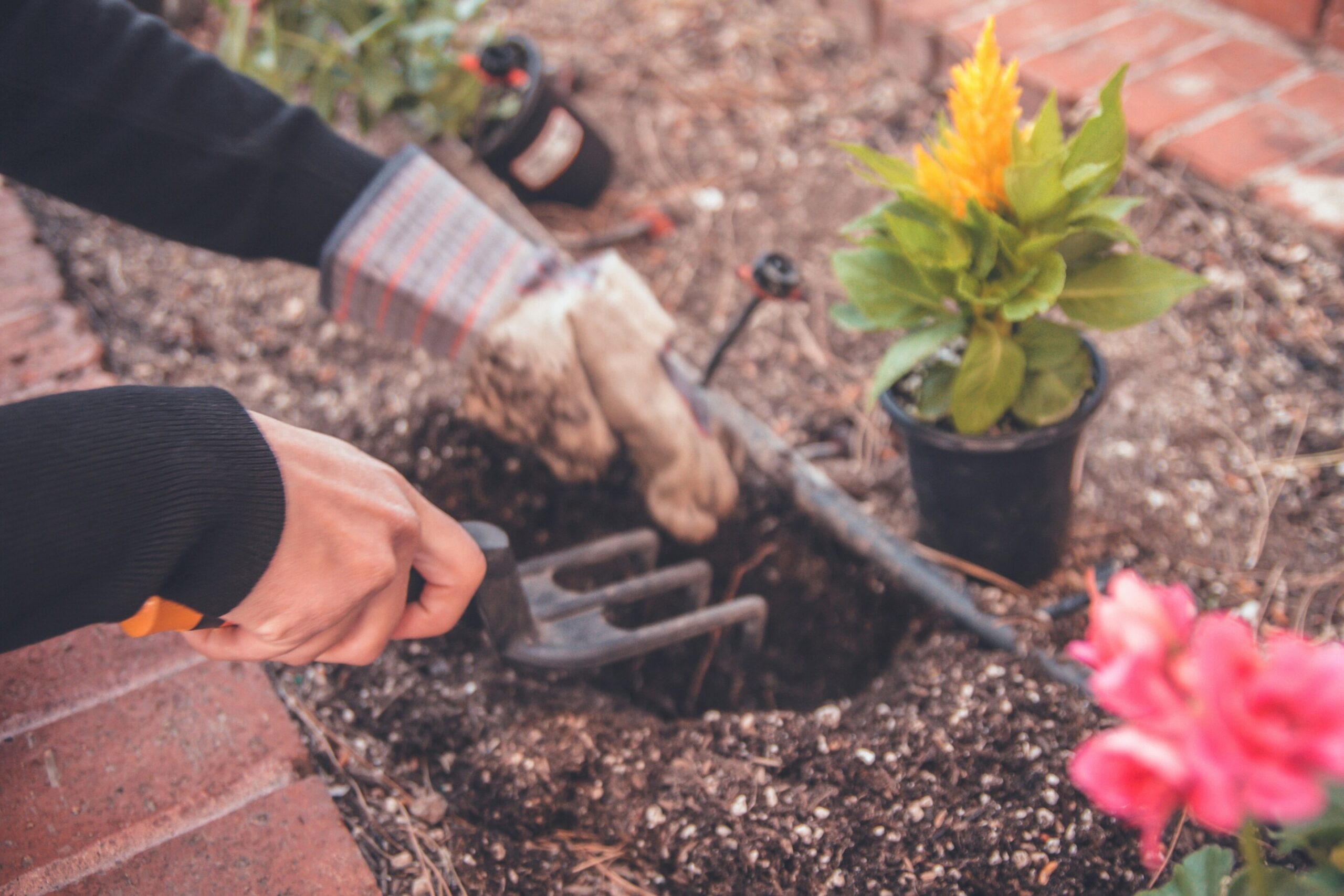
Credit: Unsplash/CC0 Public Domain
A new study shows that 94% of older Australians say having gardening space where they live is extremely important. But as the housing crisis impacts more older adults, not everyone can access the benefits.
A Swinburne report released in collaboration with the Botanic Gardens of Sydney surveyed the gardening needs of Australians over the age of 50. Almost all respondents selected more than one of 11 potential reasons to garden, with “connecting to nature” and “relaxing” emerging as frontrunners.
Co-lead author, Swinburne’s Dr. Jonathan “Yotti” Kingsley, says older adults can gain significant mental and physical health benefits from gardening, helping them feel more socially and environmentally connected, less stressed, and more healthy.
“Although gardening is often taken for granted as an activity done at home, there has been little attention on the connection between people’s ability to garden and their housing situation.”
Previous evidence demonstrates that many older adults in Australia experience housing difficulties. This can have flow-on effects for gardening and access to its numerous benefits.
Older adults in this study experienced housing barriers including lack of appropriate space, challenges with renting, and neighborhood issues, all of which impact their ability to garden.
The research team, co-led by Zoë Goodall, is calling on communities, governments and industry bodies to develop gardening assistance programs, more secure renting and garden-friendly apartments.
“Gardening is embedded in Australian culture and lots of us recognize that getting our hands dirty in our garden space is good for our health and well-being,” explains Goodall. “Our evidence-based research confirms these significant benefits. But surprisingly, we don’t know much about the relationship between our homes and garden spaces.”
“These diverse aspirations, barriers, and needs show that there is no one-size-fits-all housing solution for older adults who are interested in gardening. We must work towards making gardening more accessible to a wider range of people, whatever their housing circumstances.”
Susan Kowadlo is in her 70s. “Since childhood my happy place has been in nature,” she says.
“In adulthood I have created gardens in the three homes I have lived in and helped friends and family with theirs. It is a hobby that helps keep me physically fit, calms my mind and creates a pleasant immediate environment in which to live.”
The Botanic Gardens of Sydney provides an outreach community gardening program called Community Greening. The program is working with those most in need to support them to grow food and cultural gardens, Head Propagator Phil Pettitt says.
“We have a considerable evidence base highlighting the impact of our program. Through a community of people, plants, and places, Community Greening fosters a sense of well-being and improved safety. By exchanging ideas, sharing knowledge and encouraging collaboration, participants are empowered to live healthier.”
“I have witnessed first-hand how community gardening can change lives. Our programs have a profound impact on the mental and physical health of those involved through the healing qualities of therapeutic horticulture and connecting people to their communities.”
More information:
Zoe Goodall et al, ‘If I couldn’t garden, I wouldn’t enjoy life’: Older adults’ perspectives on housing and gardening (2025). DOI: 10.25916/sut.29233694
Provided by
Swinburne University of Technology
Citation:
94% of older Australians say home gardening space is important—why isn’t it part of housing crisis discussions? (2025, September 15)
retrieved 15 September 2025
from https://medicalxpress.com/news/2025-09-older-australians-home-gardening-space.html
This document is subject to copyright. Apart from any fair dealing for the purpose of private study or research, no
part may be reproduced without the written permission. The content is provided for information purposes only.
Comments are closed.