
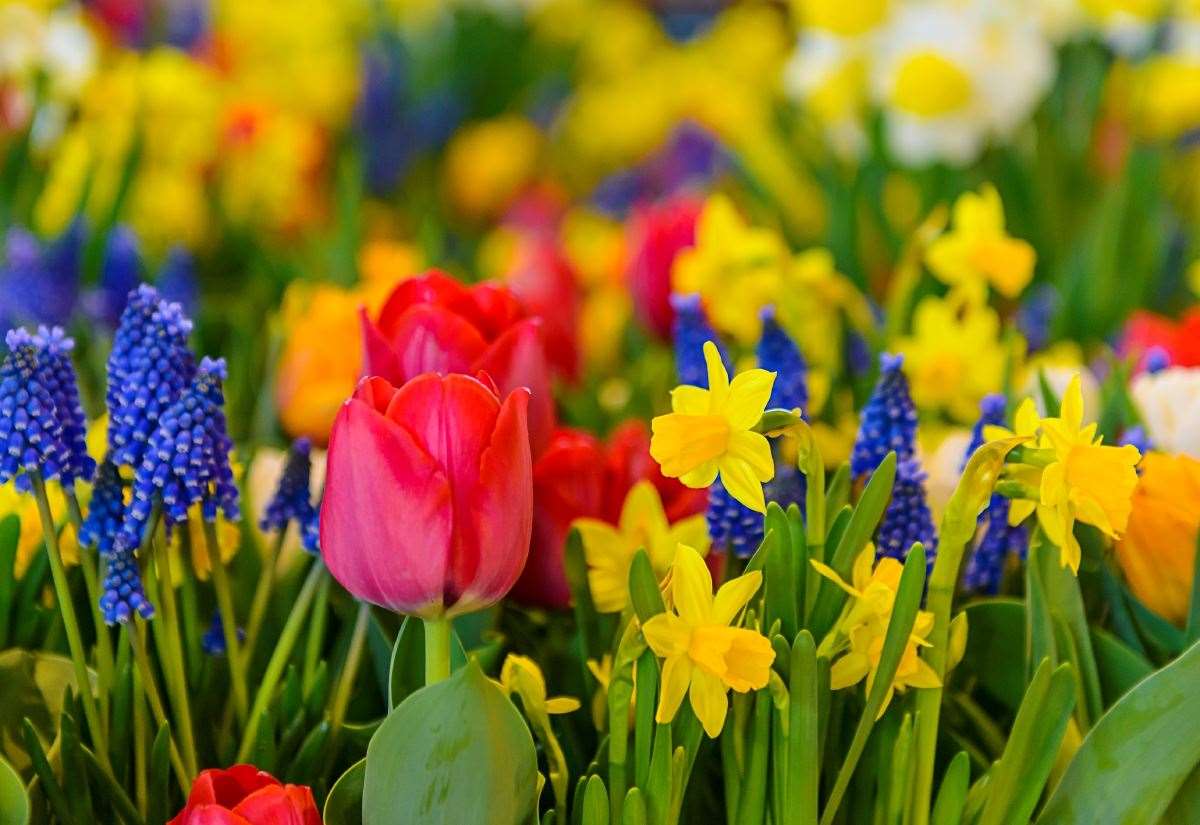
As the end of August approaches, thoughts turn to autumn gardening and in particular the planting of spring-flowering bulbs.
As they begin to emerge during the winter months they will lift your spirits, heralding the beginning of a new season and the warmer months ahead.
While it is still quite early to plant your bulbs, popular varieties and colours can often sell out quickly, so to avoid disappointment it is advisable to make your selection soon when a full range is available. Take time to decide on planting schemes and colour combinations.
 Spring colour
Height and flowering times are important when planning continuity of colour in the spring garden – combined with early flowering perennials and colourful bedding they will achieve a delightful display through the early months.
Depending on your requirements, there are bulbs for every aspect. For early flowering varieties choose iris, crocus, snowdrops and varieties of early, dwarf daffodils.
They work well in the borders or in pots and planters, topped with viola or pansy plants. Natural woodland areas where conditions may be damp and shady can be transformed with a carpet of colour using bluebells, aconites, snowdrops and fritillaria or why not consider wild garlic.
Spring tulips
It is important to remember pollinators as they need early flowers. Choose single flowered varieties, including hyacinths, aconites, crocus, bluebells and alliums, they will all provide a source of nectar and pollen for the busy bees.
Most bulbs can be included in the herbaceous borders. Along with the small bulbs like tulips and daffodils, why not try taller, structural varieties such as allium, camassia and imperial fritillaria for an impressive majestic addition to your beds.
These can be planted directly in to the flowering position or started off in pots to establish a strong root base before planting in the spring.
If you would like to introduce bulbs in a rockery or alpine garden, choose small and shorter varieties of daffodil and rockery or species tulips. Crocus and iris provide early colour, too.
Crocus
For windy spots choose shorter varieties of tulips and daffodils which will stand up to the elements.
Naturalising planting is very popular nowadays. Scatter a mix of daffodils over a lawned area and plant where they drop. With ‘no mow’ initiatives carrying on into May, the daffodils can remain untouched until mowing commences.
There are a few points to remember when buying bulbs:
Choose those which are firm and of good, plump size, these will provide strong, sturdy flower stems next year.
Check the bulbs are unmarked – bruised or damaged bulbs will struggle to survive and may not develop enough to produce flowers.
Ideally, plant your bulbs while there is still warmth in the ground, usually from September until mid November.
Tulips and hyacinths can be left until early November as they are late flowering.
Alternatively, fill your planters and baskets with bulbs for early colour.
Mixed with pansies, violas and cyclamen they are an attractive feature to behold before the garden wakes up for another season.
Layering bulbs for continuous flowering throughout spring is a popular growing technique – known as a ’bulb lasagne’, it’s a creative, fun activity for the autumn.
As a general rule, plant your bulbs at least double their depth directly in the flowering position.
To avoid predators eating the smaller bulbs they can be started off in pots and planted in the spring once they have an established root system and are not attractive to the squirrels and mice!
Home-crafted presents for Christmas have become very popular. For a personal touch choose ‘prepared bulbs’ to plant up a decorative bowl or planter.
These have been heat treated to force flowers for Christmas and need to be planted before the end of September. Hyacinths are a particular favourite, with a full range of colours to choose from.
Start them off in a dark, cool place such as a shed or cool greenhouse. Leave for approx 6-7 weeks. Once their shoot is around 2 inches or so, move to a light, cool area to green up and where they will continue to grow. Graduate into a warmer site as the festive season approaches.
Paperwhites (treated daff bulbs) can be planted 6 weeks before the desired flowering time. Place in a cool place, but not dark.
Amaryllis make ideal gifts, too. Plant during September or October, they will have green leaves for Christmas, ready to flower in the new year.
SIX OF THE BEST
Tulips – Lots of colours, varieties shapes and sizes for early, mid and late flowering. Ideal for cut flower displays.
Daffodils – A true favourite in a range of yellow and white shades. Dwarf and large flowering varieties. Good for naturalising in lawns and borders.
Hyacinths – Excellent choice to encourage pollinators and are highly scented. Late to flower in the border or choose ‘prepared’ varieties for Christmas (indoor) flowering.
Beautiful yellow daffodilsMulticolored hyacinths
Crocus – Early flowering good for pollinators. Low growing, ideal for rockery and alpine gardens or hanging baskets and planters.
Alliums – Late spring flowering. Good height for the perennial borders. Excellent architectural flowers which the bees love.
Snowdrops – Very popular for naturalising, particularly in wooded areas, planted in clumps they also grow well in borders or on grassy banks.
Giant purple alliumsSnowdropsHeuchera for autumn colour
There’s always room to add a few bulbs in the garden every year. The careful colour selection will soon be forgotten during winter, only to be remembered when they pop their colours from January onwards. A welcome surprise, putting a smile on many a face.
PLANT OF THE MONTH – Heuchera
A stunning evergreen perennial with a vast colour range, from lime green and caramel through to burgundy reds and veined tones of green. Clump-forming edging plant with scalloped, often marbled leaves, ideal for front of border and suitable for planters, providing interesting autumn colour. Prefers partial shade, although darker shades can tolerate sunnier positions. Tiny, delicate bell-like flowers of white, pink or red. Low maintenance and versatile – deserves a place in the garden.
AUTUMN WORKSHOPS
Join us to create your own colourful planted displays.
BULB LASAGNE, £5 per session (plus materials and bulbs)
Tuesday, September 16
Monday, September 22
Autumn hanging basket/planter, £7.50 per session (plus materials plants/bulbs)
Sunday, October 5
Monday, October 6
All workshops 10am-midday. Includes refreshments.
For more information or to book, visit rhn.me.uk
Sign up for a monthly newsletter at rhn.me.uk
Growing for more than 60 years
RHN Plant Centre and Farm Shop, Colethorpe Lane, Barrow, IP29 5BE
Call 01359 270577
See rhn.me.uk
Comments are closed.