
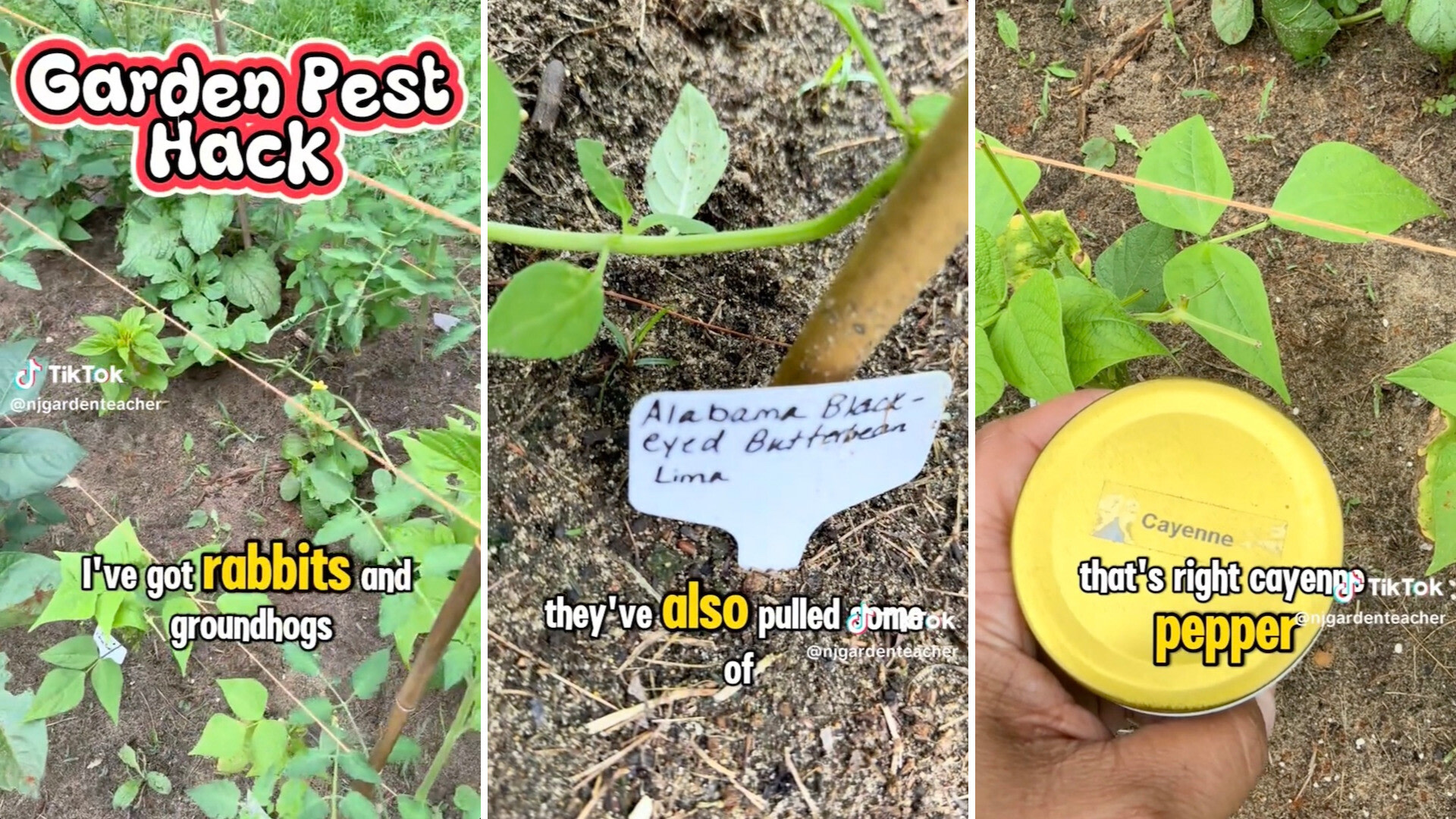
Are rabbits and groundhogs chewing through your garden like it’s an all-you-can-eat buffet? You’re not alone — and one gardener has had enough.
“They didn’t care about the fancy preventatives,” said TikToker Sonya (@njgardenteacher) in a video where she showed damage to her Alabama Black-Eyed Butterbean Lima plants. “They’ve also pulled some of my plants out of the ground.”
@njgardenteacher Cayenne pepper contains capsaicin, a compound that irritates the mucous membranes of many animals. While it doesn’t harm them, it creates an unpleasant experience that sends them searching for food elsewhere. Mammals like groundhogs and rabbits have a strong sense of smell. Capsaicin triggers a burning sensation in their noses and mouths, but not in birds or humans when applied externally to plants. You can sprinkle cayenne pepper directly around the base of plants or mix with water and a few drops of dish soap to make a spray. If you try it, let me know how it works. #PlantTok #TikTokLearningCampaign #PestControl #VegetableGarden ♬ original sound – NJGardenTeacher
That’s not a small problem. Rabbits and groundhogs are known for yanking up entire seedlings and defoliating plants. Left unchecked, they can destroy weeks of work in a single morning.
But here’s the twist. After trying all the usual tricks, she found one unlikely hero: cayenne pepper.
The scoop
Turns out, you don’t need fancy sprays or ultrasonic gadgets. Just grab the cayenne pepper from your kitchen cabinet. Sprinkle it directly around the base of your plants and even on the leaves. You can also mix it with water and a few drops of dish soap to spray over vulnerable crops.
Cayenne contains capsaicin, the stuff that gives peppers their heat. It doesn’t hurt the animals, but it hits their nose hard — especially mammals like groundhogs and rabbits, who have powerful senses of smell. Birds? No problem. Capsaicin doesn’t bother them.

Want to go solar but not sure who to trust? EnergySage has your back with free and transparent quotes from fully vetted providers that can help you save as much as $10k on installation.
To get started, just answer a few questions about your home — no phone number required. Within a day or two, EnergySage will email you the best local options for your needs, and their expert advisers can help you compare quotes and pick a winner.
“They don’t like the scent of it, and they don’t like the spice,” she explained. “Once they’re getting a good whiff of that cayenne, they’re leaving my plants alone.”
In the video, Sonya walks through how and where to apply the spice and shows clear results.
“I do have to reapply it after every rain,” she added, “but that’s OK.”
How it’s helping
This hack doesn’t just save your garden. It saves money. No need to buy chemical sprays or build elaborate fencing. A dollar store jar of cayenne will do the trick — and it lasts a while.
TCD Picks » Upway Spotlight
💡Upway makes it easy to find discounts of up to 60% on premium e-bike brands
It also keeps chemicals out of your soil and off your food. Harsh pesticides can harm pollinators and even affect your own health. A natural deterrent like cayenne helps you protect your plants without adding pollution.
If you’re growing your own food, this trick pulls double duty. It protects your harvest and supports a cleaner, healthier way to eat. Home gardening already boosts physical health and reduces stress. One study even linked community gardening to improved fiber intake and lower mental health risk.
Maybe the only thing tougher than a pepper is a hungry groundhog. Still, for most folks, this pantry fix is keeping gardens safe and dinners fresh.
What everyone’s saying
People chimed in with their own experiences.
“Oh this [is] so smart,” said one commenter.
“Worked for years till one day I got a groundhog who liked his food spicy,” joked another.
Join our free newsletter for easy tips to save more and waste less, and don’t miss this cool list of easy ways to help yourself while helping the planet.

Comments are closed.