
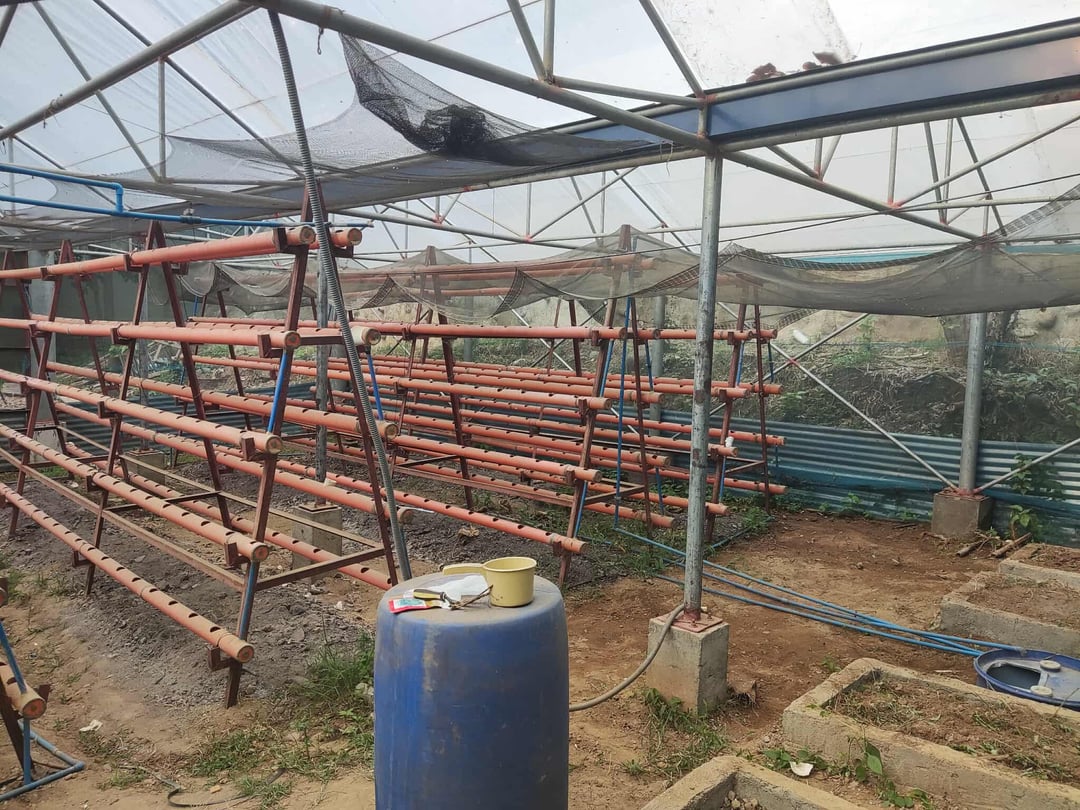
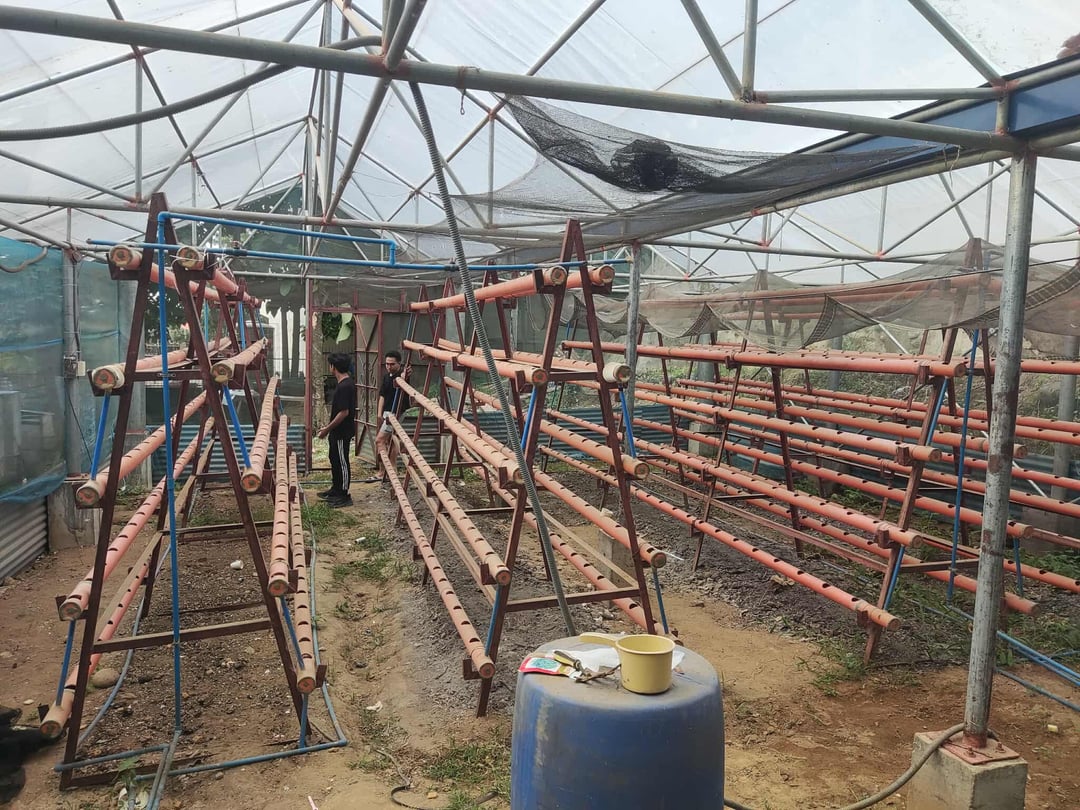
Good day, I have posted recently a question for help in automating a hydroponic system, but I have missed some important information and only provided the schematic diagram, so in this latest post, I have provided the built hydroponic system, and again, as stated in the title, me and my mates are planning to automate this hydroponic system (in the image attached), it is already built, it is powered with a solar pv system, but we don't have any ideas what to start with in automation, first, we looked up at the options for the microcontroller, and we are looking at the idea of picking Arduino Mega, is this a good option? Considering that we will be integrating every sensor as well as the actuators for the system?
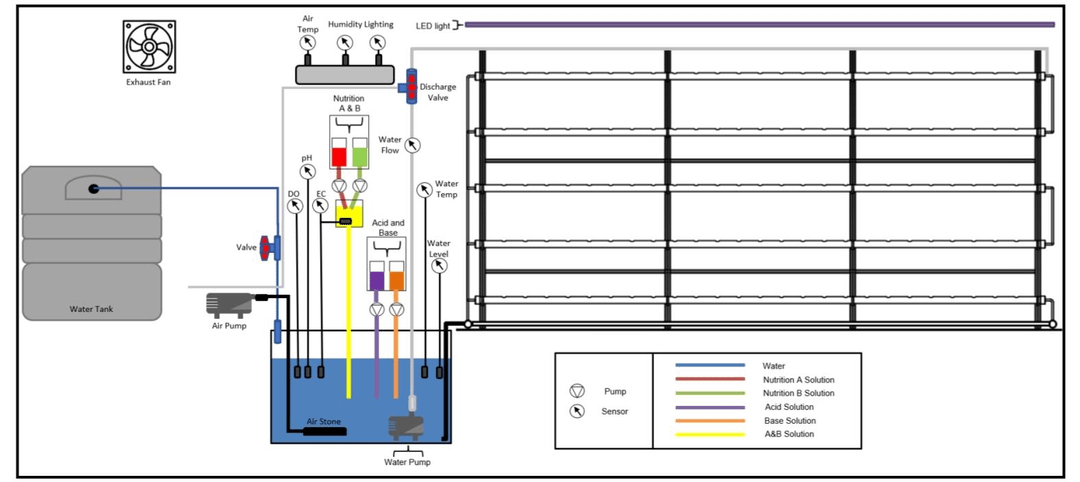
Also, are there any guides or references that you can possibly provide? A list of sensors along with its actuators would be very appreciated to have given that we are also constraint by our budget of a 1000 dollars. The last image attached is our schematic diagram of our ideal system (any suggestions and critics on the design is also very appreciated!).
In my recent post, I have gathered these informations:
1. For the microcontroller, some have stated to have used esp32 and an arduino uno with an expansion shield, but most of them have suggested to opt for raspberry pi. (Which one should we pick for an "easy" setup?)
2. That DO is a luxury, not a necessity. (so, should we cut off using DO sensor? will it not overly affect the growth of the plant?)
3. To put the pH on a timed schedule and not constant feedback or it'll corrode the electrode. (So, should we install a small motor mechanism for the sensor?)
4. We should never have both acid and base balancing. (How do we do this? a diagram showing how would be a very nice thing to have so we can follow!)
5. Not let a two part fertilizer mix together at concentration. Wait for full dilution after adding part A, before you add part B. If you have to dump them in at the same time, at least move the dispensing ends away from each other. (How do we do this? a diagram showing how would be a very nice thing to have so we can follow!)
6. For the coding part (if i am correct), they have stated NodeRed, and mycodo.
7. For the IoT platform, most have suggested home assistant.
Our plan is basically to rehab (based on the image of the current hydroponic system, please feel free to give us a feedback if you have any suggestions on what to rehab!) and automate the current hydroponic system. Overall:
- We're planning to only use 1 reservoir and only 1 water pump (any suggestions?) to provide water to all these channels.
- Will implement monitoring with remote controlling (will remote controlling be necessary or a fully automated system will suffice (with monitoring)?)
- Will be putting an exhaust fan (due to poor climate control)
- Implement a rehabilitation plan for easy maintenance
As someone have stated in my recent post:
"Simple is better. In all ways. People over complicate things they don’t fully understand."
So please feel free to give us insights! Any help regarding on what to do is very appreciated!
P.S. We are not that proficient when it comes to coding, but we are willing to learn complex things when it comes down to it!
by HeenimGumo
3 Comments
you deleted all the gold I gave you and you just listed some bad ideas you don’t understand.
First, I would automate as much of this as you can by *not* using a microcontroller. You can use a diaphragm pump (about $60 on Amazon) and several electronic hose timers to control the flow of nutrients to each zone. If you plan on having all the zones always on, you don’t need the hose timer. Depending on the needed flow rate, you may need more than one pump.
The problem with microcontrollers, and DIY automation in general, is that the peripherals come in two flavors: bargain-bin Chinese crap, and overpriced “laboratory quality” items. I use cheap Chinese sensors, etc. all the time, but they’re not terribly reliable, and they tend to have a short shelf life. I would not want to bet a garden of this size on the failure of any one of dozens of cheap sensors, solenoids, and motors.
Laboratory quality stuff would be preferable, but it is *expensive.* So much so, that by the time you add up all the items you need a la carte, you would be better off buying a prefab automation solution.
The coding isn’t anything you can’t handle. Even if you’ve never coded before, there are hundreds of similar projects that people have published, and you can easily edit or expand on these to suit your needs.
To keep things simple, I would try to avoid using displays or control interfaces. Just a lot of I/O pins managing sensors and motors/solenoids/pumps should be all that you need. At the most, you can have a “the red light means something is wrong” LED. If you see that, you can connect your computer to the microcontroller, and see what’s up using the serial console.
I agree with your idea to only use pH Up, or pH Down, but not both. Manually mix up some fresh solution, measure the pH, and set the system up to use the appropriate product. Likely, you’ll only need pH Down.
For clarity, here are my blind spots:
First, I don’t know how to check the nutrient levels of individual nutrients, or concentrations of solution A vs. solution B. I would only know how to add, say 3 parts A and 2 parts B, if anything is low.
I only know how to check PPM and pH. This will not identify if all the nitrogen is used up, but there is ample phosphorous and potassium, for example. This is difficult to do even manually. You will have to change out the nutrient solution at a regular interval to ensure success.
I don’t know how to factor in the mineral content of your water supply. Let’s say your water contains 100 PPM calcium. Okay, you can maybe rebalance the A:B ratio to account for the extra calcium. However, you know how when you mix up nutrient solution, and the pH and PPM change a bit over the next day or two? That’s the acids in the solution interacting with the calcium and other bases. Some of these reactions evaporate in the form of gas, like when you mix baking soda with vinegar. I don’t know how to get the system to account for this. I’m sure it’s doable, but it would take someone smarter than me to figure it out.
If you want to avoid all the development yourself, I’ve developed a low-cost plug and play automated hydroponic monitoring system. I’m trying to get it piloted by growers and ultimately I am gonna bring to market. DM and we can see if it’s a good fit for you.