

Sweet fragrance of a variety of flowers, birds constantly chirping through the day, and the earthy smell that is always in the air (whether it rains or not); this is precisely how it feels to enter Mala Raghavan’s home in Bengaluru.
While most of the residents in Banashankari are still asleep at 6.30 in the morning, 74-year-old Mala is out in her garden with her hot cup of filter coffee, greeting more than 1,000 pots brimming with jasmine, dragon fruit, chrysanthemums, cacti, curry leaves, banana, brahma kamalam, and a dozen shades of hibiscus.
She probably looks at each of her pots with a motherly gaze. At 74, Mala moves slowly, careful of the arthritis in her knees, but two hours later every leaf has been inspected for pests, every creeper trimmed back, and the lilies in half a dozen tubs have been fed — along with the small shoal of fish that keeps mosquitoes at bay.
Advertisement
Roots in Chennai, blooms in Bengaluru
Mala’s love for soil began in the 1980s, when she was just 18 years old. Under her mother’s guidance in Chennai, she actively participated in gardening and learnt about flowers, fruits and vegetable plants.
By 20, she had graduated to their larger plot, and grew parijatham, manoranjitham, paneer roses, and even a cotton shrub.
 Mala has been gardening for over 50 years.
After her marriage, Mala then moved to Bengaluru, and her hobby, travelled with her, too. “For a few years, I was unable to set up a garden because of family commitments, but after my children settled down, I could give all the time to my plants, whom I love like my children,” she smiles.
Today, the ground floor is dense with shanbagam, betel-leaf vines, and coffee bushes, leaving barely a sliver for walking. So 10 years ago, she lifted the garden onto the terrace and installed heavy-duty grills to prevent marauding monkeys — an investment that cost several lakhs but saved her harvests.
A garden that not only decorates the home, but also sustains
Would you believe it has been quite a few years since Mala bought flowers from outside? Also, the family’s vegetable purchases have reduced drastically, all thanks to her home garden.
Pumpkin, chow-chow, tindora, avarakkai, greens, chillies, tomatoes — whatever ripens is shared with neighbours or, in the case of last month’s six 15 kg of ash gourds, donated to the nearby temple.
The sapota, figs, star fruit and cherries peep through the leaves, while a lone avocado hosts a meticulous tailor-bird’s nest.
Advertisement
The routine also keeps her diabetes in check. “My D-3 counts are perfect because I stand in the sun for three hours almost every day, to check on my plants,” she says.
When the hobby turned into a life philosophy
What was started as a hobby 50 years ago has now become a life philosophy for Mala. “Plants are pure energy. You give love, they return peace,” she shares.
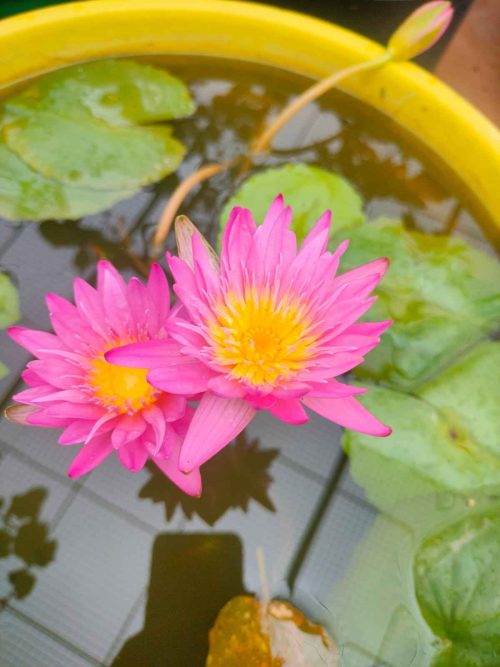 Mala’s garden has nearly half a dozen tubs of lilies.
This is evidenced by the buzz of visiting bees, the flutter of bulbuls, and the fragrance of night-blooming jasmine drifting into the home.
Many of Mala’s neighbours often stop by to admire her green space, though only a few have the same zeal. For those who do, Mala offers cuttings of succulents and dragon fruit at a nominal price.
Challenges that came along
In the last 50 years of her gardening experience, challenges were inevitable. Squirrels steal tomatoes; rats nibble roots; pests drill holes in buds.
“Recently, more than 50 rose plants of hybrid and beautiful colours died for reasons unknown. I was depressed for a long time and am yet to recover mentally from the loss,” she shares.
Advertisement
So what did Mala do? She turned to neem sprays and the ‘black gold’ – vermicompost.
“I have made a vermicompost pit about 8 by 8 feet, with a depth of one foot, where I deposit plenty of dried leaves, kitchen waste with a little cow manure, paper pieces, etc., and add lots of worms. Once every two months, I collect six big bags of pure vermicompost, which I use for the plants,” she explains.
Fifty years on, Mala may never open a commercial nursery or start a YouTube channel, but perhaps that’s the point: hers is a private, daily act of devotion that has quietly transformed a Bengaluru rooftop into a sanctuary in the clouds.
On mornings when the arthritis aches or the city feels too loud, Mala ties her hair, lifts a watering can, and steps among her thousand pots. The plants listen, the birds sing, and the gardener becomes, once again, a girl in Chennai, learning the language of leaves from her mother.
 Today, the ground floor is dense with shanbagam, betel-leaf vines, and coffee bushes, leaving barely a sliver for walking.
And that, she says, is more than enough.
6 simple and effective gardening tips for a home garden
Clean regularly: Regularly remove dead leaves, fallen petals, and weeds from your pots and beds. This not only improves the garden’s appearance but also:
Prevents pest and fungal growth
Helps air circulation
Keeps diseases at bay
2. Water in the morning: Early morning watering gives plants the best start to the day. Why?
Advertisement
Water gets absorbed before the sun evaporates it
Leaves have time to dry, preventing fungal infections
Cooler temperatures mean less water stress on roots
Avoid watering in the hot afternoon or late at night.
3. Used coffee grounds = Free fertiliser: Don’t throw away used coffee grounds! They’re rich in nitrogen, a vital nutrient for plant growth.
Mix into the soil or compost
Especially great for leafy greens and flowering plants
Improves soil texture and attracts earthworms
 Make your own Leaf mould: Turn fallen dry leaves into leaf mould, a powerful natural soil conditioner.
Use in moderation and mix well into the soil to avoid mold.
4. Use banana peels for instant nutrients: Banana peels are packed with potassium, phosphorus, and calcium—perfect for flowering and fruiting plants.
Chop and bury them near the roots
Blend into compost tea
Boosts flower production and root strength
5. Make your own leaf mould: Turn fallen dry leaves into leaf mould, a powerful natural soil conditioner.
Collect and store dry leaves in a sack or bin
Keep them moist and allow them to decompose for a few months
Mix into potting soil to improve moisture retention and aeration
Zero cost, high benefit!
Advertisement
6. Sprinkle epsom salt for magnesium boost: Epsom salt contains magnesium and sulfur, essential for:
Greener leaves
Better seed germination
Enhanced flower and fruit development
Use 1 tablespoon in 1 litre of water and spray on leaves once a month.
Beginner’s guide to growing ash gourd in your home terrace garden
Ash gourd is a nutritious, cooling vegetable used in curries, juices, and traditional medicines. The good news? You can grow it right on your terrace with a bit of planning!
1. Choosing the right spot
Sunlight: Needs at least 6–7 hours of direct sunlight daily.
Space: Requires ample space or vertical support like a trellis/net for vines to spread and climb.
2. Container and soil preparation
Container size: Use a grow bag or large pot (minimum 18–20 inches deep).
Soil mix:
40 percent garden soil
30 percent compost/vermicompost
20 percent cocopeat
10 percent sand (for drainage)
Add neem cake or bio-compost to prevent pests and improve soil health.
 Follow this nine-step plan to grow ash gourd on your terrace. (AI-generated graphic)
3. Sowing the seeds
Soak seeds in water overnight to speed up germination.
Sow two to three seeds directly into the pot.
Cover lightly with soil and water gently.
Germination typically occurs within seven to 10 days.
4. Watering tips
Keep soil moist but not soggy.
Water early morning or late evening.
Reduce watering once the plant matures and starts fruiting.
5. Providing support
Ash gourd is a climbing vine.
Use a strong trellis, net, or ropes for vertical growth.
Regularly guide the vines to climb and spread.
6. Fertilising
Add organic compost every two weeks.
Use banana peel water or diluted buttermilk as natural boosters.
Once flowering starts, add wood ash or potash for fruit development.
7. Pest control naturally!
Use neem oil spray (once a week) to prevent pests.
Remove infected leaves manually if needed.
Interplant with marigold or tulsi to repel insects.
8. Flowering and pollination
Ash gourd produces male and female flowers.
Bees usually handle pollination, but you can also do hand pollination:
Use a soft brush to transfer pollen from the male to the female flower.
9. Harvesting
Fruits are ready in 90–100 days.
Harvest when they turn light grey-green and have a powdery coating.
Use a sharp knife to cut the fruit off the vine.
Comments are closed.