
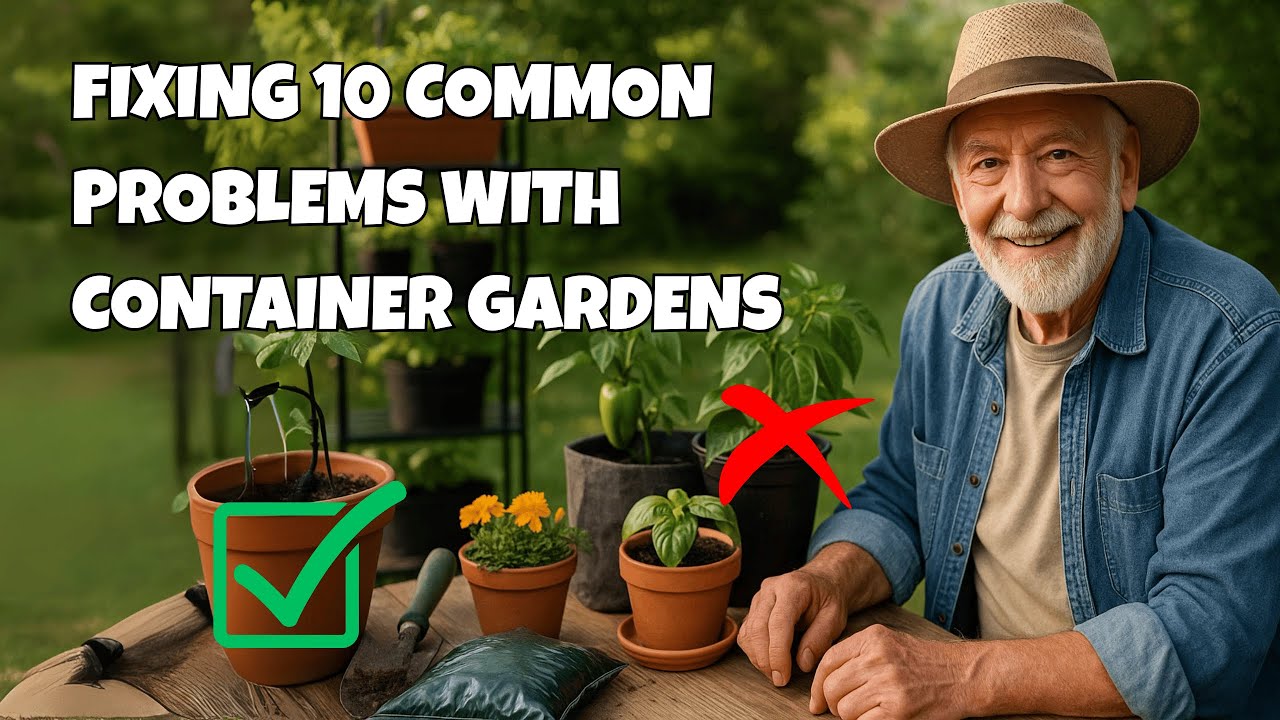
🌿 Tired of wilting leaves, dried-out soil, or plants that just won’t grow—no matter what you do? You’re not alone. This video dives deep into 10 of the most common container gardening problems—and gives you gentle, practical solutions that work, especially if you’re a senior gardener.
From poor drainage and overcrowded roots to overheating pots and sunlight struggles, we’ll explore every issue you might face. And best of all? You’ll learn simple, senior-friendly tips backed by university research and decades of experience.
🎯 Whether you’re growing on a balcony, patio, or porch, you’ll walk away with:
✅ Proven ways to fix water loss, root stress, and soil failure
✅ Smart ideas to keep plants thriving through summer heat
✅ Peace-of-mind gardening strategies tailored for older adults
✅ Encouragement to keep going, even after gardening setbacks
🌸 Let’s turn your struggling pots into thriving green spaces—with less effort, more joy, and a whole lot of heart.
👉 Click play and grow with us—your garden is waiting.
#Hashtags:
#ContainerGardening #SeniorGardenTips #EasyGardeningHacks #GardeningOver60 #GardeningForSeniors #UrbanGardening #RaisedBedGardening #PottedPlantsCare #ElderGardenWisdom #GrowYourOwn
hello there friend if you’re anything like me a senior who finds peace joy and purpose in tending to your garden then you know how deeply satisfying container gardening can be until something goes wrong from wilting leaves to thirsty soil I’ve seen it all today I’m sharing what decades of trial and error have taught me so your plants can thrive with less guesswork so grab your sun hat settle in and don’t forget to subscribe to Evergreen Seniors for more wisdom rooted in real soil and real life problem 1 my soil dries out too fast and so do my hopes now let’s start with the problem I hear most often and honestly 1 I’ve wrestled with myself for years you water your container in the morning feel good about it but by late afternoon the soil’s bone dry again sound familiar you see unlike raised beds or in ground plots containers simply hold less soil and that means they hold less water the sun pulls moisture out faster than we expect especially during those warmer months for us seniors who may not want to be out checking every pot four times a day this can turn into a frustrating guessing game but there’s good news this one’s fixable with just a few small adjustments what helped me most was switching to drip irrigation it delivers slow steady moisture right to the roots so there’s no waste and no midday wilt you can buy a basic kit online or at a garden store and once it’s set up it saves you time and energy two things we value more as we age now if you’re looking for something even more hands off consider sub irrigation that’s just a fancy term for placing water beneath the soil instead of above it I use this in many of my food focused pots the roots drink only what they need and the system keeps moisture consistent without daily watering some studies including one from the university of California Agriculture and Natural Resources found that subirrigated containers reduced water loss by up to 90% compared to top watering and here’s another secret go bigger the more soil you give your plants the more water it can hold if you’re using a 3 gallon pot and it dries out by noon upgrading to a 7 or 10 gallon container can make all the difference don’t worry those larger containers can be just as manageable if you place them on wheeled stands or benches at waist height and for a quick win mulch a simple layer of straw pine bark or even shredded leaves can dramatically reduce evaporation plus it makes your pots look tidy and well cared for something we gardeners always appreciate I found that when your soil holds moisture better your whole garden feels calmer and so do you it means fewer emergency waterings fewer droopy leaves and more time enjoying your morning coffee surrounded by green happy plants problem 2 my plants still look sad even when I water every day now this one’s a real heartbreaker you do your part you water regularly sometimes even twice a day but your plants still look droopy the leaves curl or worse they turn yellow around the edges it’s enough to make any gardener sigh and wonder what went wrong but here’s the twist too much water can be just as stressful as too little as we age many of us become more cautious we worry maybe they’re thirsty again so we water but when roots sit in soggy soil too long they suffocate no oxygen means no energy for the plant and that leads to weak growth yellow leaves and eventually rot that’s why good drainage is your best friend before planting make sure your pots have holes at the bottom not tiny pin holes but enough space for water to escape easily I always tell my friends if you can’t see the hole your plant can’t breathe just as important is the type of soil you use garden soil might seem like a cost saver but in containers it becomes compacted and holds too much water instead go with a well draining potting mix one that includes peat moss perlite or coconut coir The Cornell University College of agriculture backs this up showing that container success depends heavily on oxygen rich lightweight media if you’re like me and place pots on your porch or patio don’t forget this small trick raise your pots just an inch or two using bricks pot feet or even an old tile it helps airflow underneath which speeds up drainage and keeps the bottom from staying soggy once I made these small changes my garden felt more alive and so did I it’s a beautiful feeling watching your plants stand tall again knowing you’ve given them exactly what they needed problem 3 my plants just stop growing midsummer have you ever noticed that your plants start out strong green leafy full of promise but somewhere around July they just stall no more height no new blossoms no energy it’s like they ran out of steam well in a way they did what’s happening here is usually a root space problem your plants are tired they’re just cramped in containers roots can only grow so far before they hit the wall literally once they max out their space they stop absorbing nutrients efficiently and growth grinds to a halt this used to catch me off guard all the time especially with my tomatoes and peppers I’d wonder what did I do wrong turns out I was just underestimating how much room they needed as a general rule give your larger crops like tomatoes at least 7 to 10 gallons of soil to stretch out herbs and smaller veggies are fine in 2 to 3 but when in doubt bigger is better and your plants will thank you for it if you’re already mid season and repotting isn’t an option don’t worry you can still help use a fork or your fingers to gently loosen the top inch of soil then mix in a little compost or slow release fertilizer it won’t give them new space but it will refresh what they have studies from the university of Illinois Extension show that restricted root systems can reduce yield by over 30% in potted vegetables that’s a big number but also a reminder that this is one problem we can prevent as seniors we may move a little slower but we think ahead and with a little foresight you can avoid this growth stall altogether and keep your garden thriving right through the fall problem 4 my plants look hungry but I already fed them this one sneaks up on even the most seasoned gardeners in the ground plants can reach out and search for nutrients but in containers once the food runs out it’s gone rain and watering wash nutrients away faster than you might expect and the first sign yellowing leaves sluggish growth and flowers that just won’t come I remember one summer watching my marigolds turn pale week by week and I kept thinking but I fertilized them last month that’s when I Learned container gardening is a whole different ball game the key is consistent feeding most potted plants need a little boost every seven to 10 days I like to use water soluble fertilizer something gentle that dissolves right into the watering can it’s easy on the back and easy on the plants if that sounds like too much upkeep don’t worry there’s a lazy gardener’s trick I love just mix in slow release granules when you plant they feed gradually for weeks so you can relax and enjoy more mornings with your tea and fewer evenings fussing over bottles and if you’re like me someone who loves a more natural touch compost tea is magic in a jar it’s just compost soaked in water for a day or two strain it pour it on and watch your plants perk right up according to research from Washington State University compost teas can not only supply nutrients but also improve plant resilience against disease so if your plants look a little tired lately don’t take it personally they’re not complaining they’re just asking for a little snack and with the right care they’ll bounce back stronger than ever problem 5 my pots are turning into ovens now here’s something many gardeners don’t see coming overheating roots it’s more common than you think if you’re using black plastic pots in full sun especially in July or August your poor plants might be cooking from the bottom up I Learned this the hard way with my peppers one summer the leaves drooped by noon no matter how much I watered but it wasn’t thirst it was heat stress you see roots don’t like being hot once soil temps hit 90 degrees Fahrenheit or higher root function begins to shut down research from Colorado State University confirms that excessive root zone temperatures can reduce plant growth by over 40% the easiest fix switch to light colored containers white tan even light gray they reflect more sunlight and stay cooler if lifting heavy pots is tough on your back fabric grow bags are a wonderful alternative they’re lightweight breathable and naturally cooler you can also give your containers a little break from the sun move them to where they’ll get morning light and afternoon shade the golden combo for heat sensitive plants or place a simple garden umbrella or trellis nearby to soften the harshest rays and here’s a fun one I love sharing nest your pots inside decorative baskets clay sleeves or even old wicker hampers it insulates the container keeps things stylish and adds charm to your patio as we age many of us start gardening not just for the harvest but for the joy the beauty and the peace it brings so why not make your plants feel the same way cool cared for and thriving problem 6 by water and water but where does it all go have you ever stood there with your watering can watch the water pour in and then vanish one moment the soil looks wet and the next it’s dry again it’s not just your imagination in container gardening up to 50% of water can be lost to evaporation or runoff that’s according to a study by the university of Arizona which looked at how quickly containers lose moisture especially on hot breezy days for us seniors who may want to conserve water or avoid the hassle of constant rewatering that’s a problem worth solving that’s why I swear by drip irrigation systems I know I’ve mentioned them before but they really are the unsung heroes of container gardening they release water slowly directly at the root zone so almost nothing is wasted and once you set them up they do the work while you sit back with your lemonade and enjoy the Garden View another simple trick add saucers or trays under your pots they catch excess water that would otherwise escape through the drainage holes your plants can then soak it up later just like a sponge drawing from a shallow dish it’s a method I’ve used for years especially for my herbs near the porch here’s something you might not have heard grouping your containers closer together can actually help reduce evaporation when pots are bunched side by side they create a little microclimate a small pocket of cooler more humid air that slows moisture loss I like to think of it as community gardening your plants helping each other stay cool and hydrated just like good neighbors do problem 7 my plants just aren’t getting the sun they need now here’s something that often slips by unnoticed poor sunlight exposure we place our pots on the deck or porch because it’s convenient or pretty but without enough light even the best soil and watering routine won’t help much plants simply can’t do their job without the sun when your veggies grow tall and spindly or the leaves turn pale it’s usually a sign they’re reaching desperately for light but too much intense heat can do damage too especially to delicate herbs or leafy greens it’s a balancing act one thing I like to do and I think many of you will appreciate this is spend a quiet morning with a cup of coffee and just observe the light where does it hit first where does the shadow move by noon jot it down in a little notebook or if you’re tech savvy your phone can help track it too apps like Sun Seeker or even your camera’s time lapse feature make it fun the general rule sun loving plants like tomatoes peppers or squash need eight to 12 hours of sunlight a day if your spot only gets 4 or five consider moving the container or choose crops better suited to partial shade that’s where your lettuce spinach mint or parsley come in these leafy friends actually prefer a cooler spot with filtered light and will bolt quickly if exposed to too much heat according to research from the university of Maryland Extension matching a plant’s light needs with its placement can improve yield by up to 40% and reduce stress on both plant and gardener and let’s be honest we all feel a little better when the sun is just right don’t we problem 8 I thought companion planting was clever until they started competing now I get it space is limited especially when you’re gardening on a patio a balcony or a modest backyard so naturally it seems smart to plant multiple crops in one pot after all they look lovely together and it feels like a good use of space but here’s the thing not all plants make good roommates some grow faster drink more and hog all the nutrients before the others even get a chance I Learned that the hard way with a cucumber and basil I planted side by side one thrived the other struggled and I felt like a disappointed referee when you mix plants with different water light or nutrient needs they can end up fighting beneath the surface the strong roots take over and the smaller plant gets stressed or stunted it’s not about who grows faster it’s about compatibility if you want to mix crops the key is pairing plants with similar habits tomatoes and basil can work if both get enough light and water but pairing a heavy drinker like cucumber with a dainty herb like thyme that’s a recipe for imbalance a study from Michigan State University’s extension program showed that mismatched watering needs in container plantings often lead to early plant failure even in otherwise healthy setups so here’s a gentle tip from one senior gardener to another when in doubt stick to one plant per pot it may seem simple but it’s forgiving less stressful and you’ll get better results plus if one plant fails the others won’t go down with it gardening should feel joyful not like managing a botanical tug of war let each plant shine in its own little space just like we do best in our golden years with room to breathe and a little sunlight on our faces trouble 9 my soil looks fine but my plants disagree here’s a sneaky one you fill your container plant your seeds water generously and still your plants just sit there no growth no bloom sometimes they even begin to rot from below it’s frustrating especially when you’ve done everything right but here’s what many gardeners myself included learn a bit later than we’d like garden soil is not the same as potting mix in containers it tends to get heavy compacted and airless that means your plant’s roots struggle to breathe and without oxygen roots can’t grow the solution start with a high quality potting mix look for one that includes peat moss or coconut coir perlite and a touch of compost these ingredients keep the soil light fluffy and well draining the ideal environment for container roots to stretch and thrive if you enjoy a good DIY project like many seniors I know you can easily mix your own a simple recipe I often use is 1 part compost 1 part peat or coir and 1 part perlite or coarse sand it’s affordable forgiving and works beautifully in both veggie and flower pots The University of Florida’s Ifas Extension emphasizes that soil structure is one of the top three factors in container gardening success along with sunlight and watering so don’t overlook this step it really does make all the difference just like how we seniors need a supportive chair and good shoes your plants need the right foundation too give their roots room to breathe and they’ll reward you with steady happy growth all season long problem 10 feeling like it’s just not working now let’s talk about something we don’t always say out loud giving up too soon we pour our heart into a container garden but then the basil wilts the tomatoes don’t flower and suddenly it feels like maybe we’re just not cut out for this anymore I’ve been there and after decades of gardening I can tell you every gardener has their flops even the folks with green thumbs up to their elbows it’s part of the journey but here’s the beauty of container gardening it gives you a chance to start fresh you can move things around you can try again in a new pot you can swap out soil or switch to something simpler that’s a luxury we don’t always get in traditional gardens one thing I always recommend especially for us seniors is keeping a little garden journal nothing fancy just a notebook where you jot down what worked what didn’t what brought you joy over time you’ll start to see patterns and progress if you’ve had a rough season try something easy next time Basil lettuce and marigolds are forgiving little plants they bounce back quickly and give you quick wins that boost your confidence a 2022 study from the university of British Columbia found that seniors who garden regularly report higher resilience and emotional well being especially when they treat mistakes as part of the learning process so be kind to yourself your garden doesn’t have to be perfect it just has to be yours and every new seed is another chance to grow something beautiful not just in your pots but in your heart and if something didn’t work this season don’t worry that’s not failure that’s experience the kind only time patience and a few good gardening stories can give us whether you’re growing in clay pots wooden boxes or old tin buckets passed down through the family what matters most is the joy it brings you out here we’re not just planting seeds we’re planting peace purpose and maybe even a little laughter so if you found value in today’s tips give this video a thumbs up and subscribe to Evergreen Seniors for more gentle wisdom rooted in the soil we love and feel free to share your own garden wins or woes in the comments below we’d love to hear from you until next time friends stay curious stay growing and as always happy planting
1 Comment
Great tips! 64 here. Thanks! 🎉