
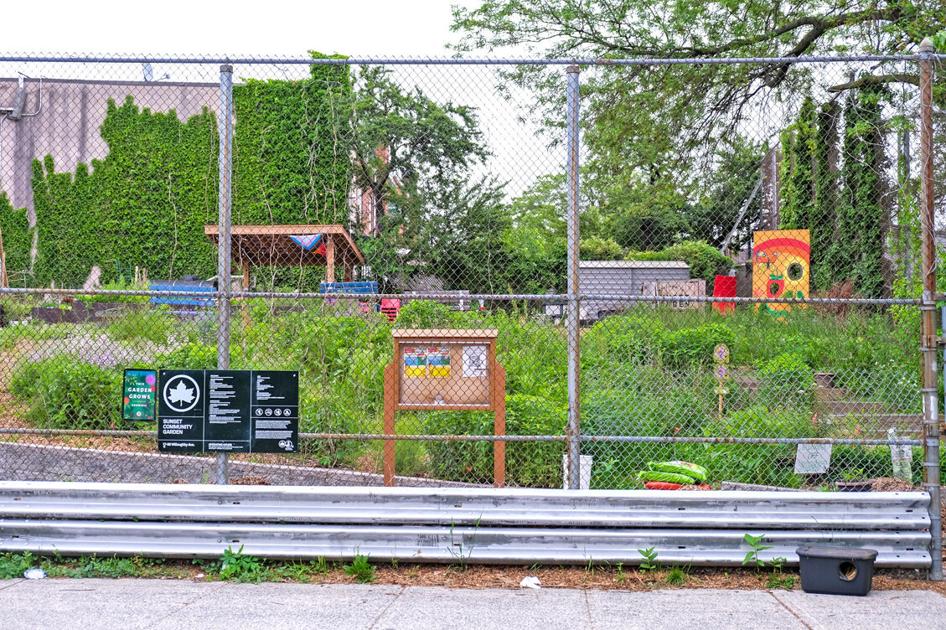
A member of Ridgewood’s Sunset Community Garden has withdrawn a request for a preliminary injunction to prevent the city Parks Department from terminating its license agreement, according to court documents filed Monday.
The court had been set to rule on the injunction when the plaintiff’s counsel, Jonathan Wallace, said he spoke with attorneys from the Corporation Counsel the day prior, according to a transcript of the hearing. Stating that he anticipates finding a resolution, he said he would prefer to set a control date rather than proceed with the injunction.
The judge then requested an off-the-record discussion regarding plans for a potential resolution.
The litigation began after Parks moved to terminate the garden’s license in May, stating that it failed to comply with the rules for community gardens by requiring ideological commitments from members. Among the required commitments is one to interrupt “behavior or rhetoric that expresses all forms of hate,” including homophobia, racism, Zionism and anti-Semitism.
The agency said it had been working with members since last September to address violations, and the garden has said the city falsely labeled its community agreements discriminatory.
The garden group also said in May that its conflict with Parks centered on the agency’s order to remove a memorial for transgender activist Cecilia Gentili. Parks said the memorial did not qualify for permanent installation and suggested ways for it to remain on display, none of which were accepted. The garden has since been renamed “Jardin de Santa Cecilia” in Gentili’s honor.
The plaintiff and the city agreed to a control date of July 18 to explore a resolution of the matter. Parks will not move to effectuate the termination of the license as negotiations continue.
Attorney Aaron Meyer of Long Island, who works for a Texas firm, said it was a “smart move” to withdraw the injunction request, and he understands why the court would allow it.
But to appear to backtrack is “troubling to a number of us right now,” he said.
“Whether that change of heart was because of the Democratic mayoral primary, whether it was due to other factors, I’m not a mind reader so I can’t say for certain, but they made a smart, tactical move there,” Meyer told the Chronicle Wednesday, stating also that parties “might be looking for the easy way out.”
“What’s troubling is it seems like there might be something else going on,” he said. “That’s where my particular concern is.”
He later added that looking to find an “expedient solution” is not going to be sufficient and that his team is reserving the right to file an amicus brief or pursue other litigation, if deemed necessary.
“These are community spaces, they’re meant to be community spaces,” he said. “There cannot be any sort of ideological litmus test.”
The garden group did not respond to several emails requesting comment. Parks said it does not comment on ongoing litigation.
A Corporation Counsel spokesperson said the agency is exploring whether the case can be resolved in a manner that is in the best interest of the city.
“You can’t have a public park weaponized to serve ideology, any ideology,” Meyer said.