
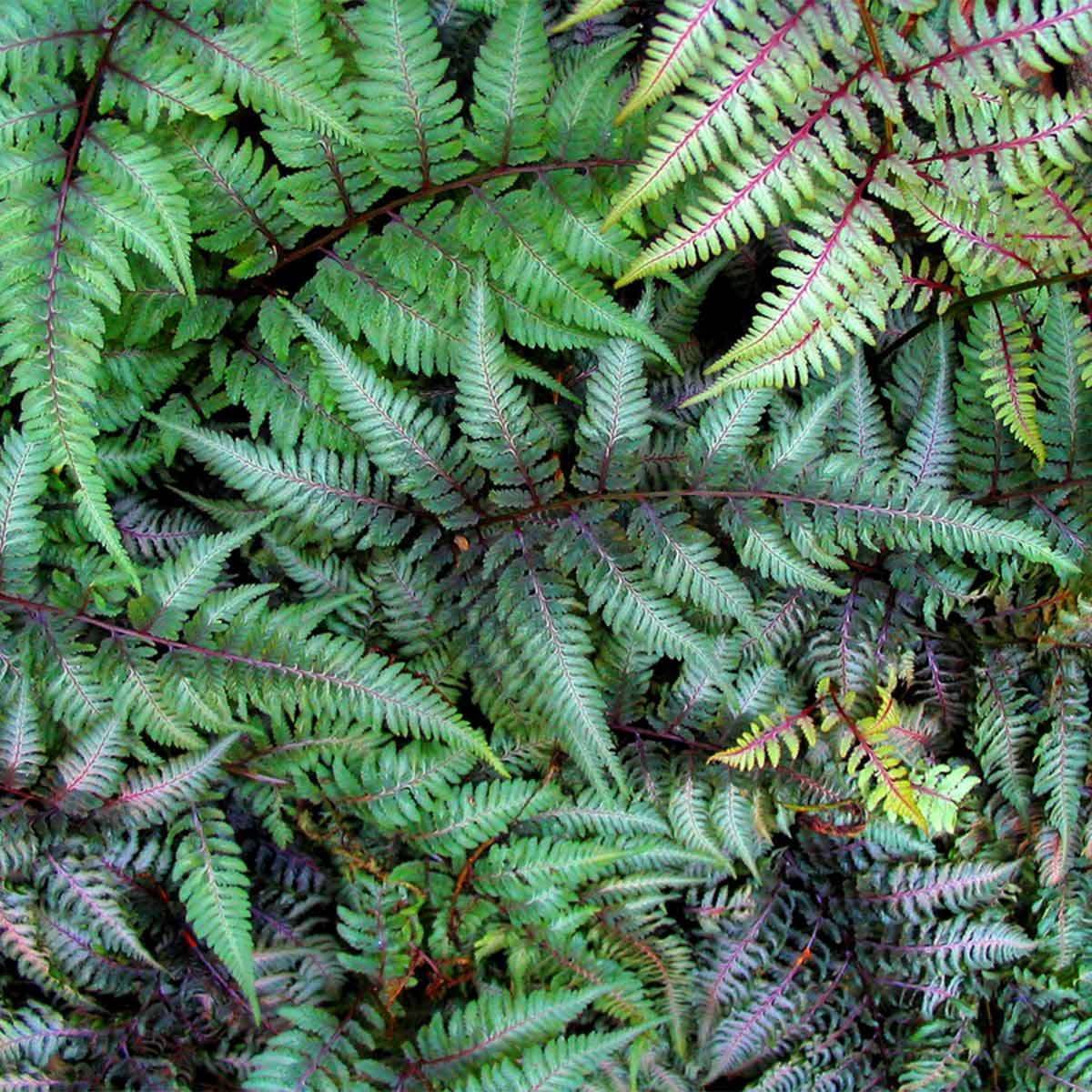
How to Grow Japanese Painted Fern Plants
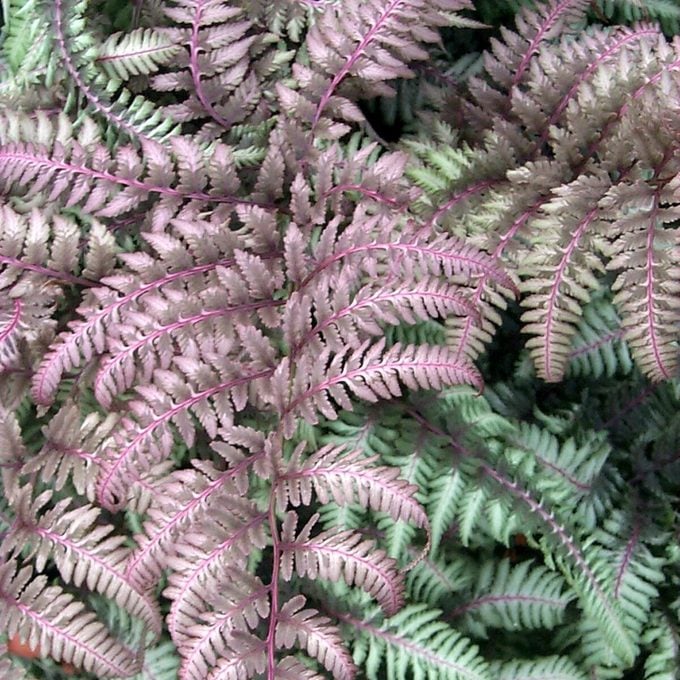 Terra Nova Nurseries‘Burgundy Lace’
Common name: Japanese Painted Fern
Botanical name: Anisocampium (formerly Athyrium) niponicum var. pictum
Zones: 4 to 8
Light needs: Shade
Water needs: Moist, well-draining soil
Size: 2 feet tall and wide
Japanese painted ferns are deciduous ferns that grow to about 2 feet high and wide. Their foot long, triangular-shaped fronds are green with a silver sheen and blueberry-colored midribs. Underneath, many russet-colored spores create a fuzzy appearance. These slow growing ferns spread by underground stems called rhizomes. The rhizomes grow away from the crown, putting up fronds in multiple locations. Eventually, they will create colonies, but these are not invasive plants.
Japanese painted ferns must be in consistently moist soil, high in organic matter (think woodland). Light or dappled shade produces the best coloring in the fronds. Usually, Japanese painted ferns are planted along the garden border with other shade loving perennials such as hostas, foamflowers, astilbes, bleeding hearts, and coral bells.
In the late fall, plants die back and become dormant for the winter. It is best to leave them as is and then cut away old or damaged fronds in the spring after new growth emerges.
There are several cultivars on the market: Burgundy Lace, Pewter Lace, Apple Court, Silver Falls, Red Beauty, Regal Red, and Wildwood Twist.
Check out more plants that like shade and wet soil.
How and When to Plant Japanese Painted Fern
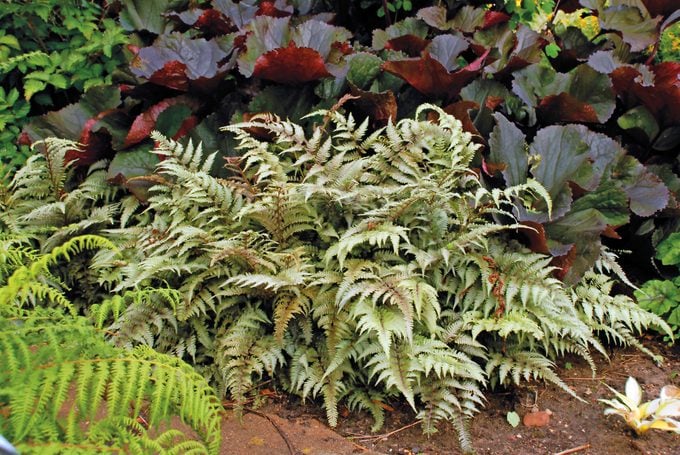 Ball Horticultural CompanyA Japanese painted fern stands out against other foliage plants with its silvery coloring.
These ferns are best purchased as small plants in the beginning of the growing season. “I recommend planting in the spring, because the plant is actively growing, taking up water and nutrients, and photosynthesizing and transpiring,” said Josh Demers, Environmental Horticulturist at Brookside Gardens. “In fall, it will head into dormancy, while in winter, it will be fully dormant. In short, plant in spring so that it has time to establish a larger root system and become acclimated to its new “home” while actively growing.”
To plant, Josh recommends digging a hole at least 1 ½ times the width of the root ball. The root ball should be massaged to loosen the roots and the plant should be planted about a half inch higher than the original soil line.
“Digging a wider hole for planting loosens the soil surrounding the newly installed root ball, encouraging roots to grow outwards, rather than continue to grow in same footprint of root ball, which may result in girdling roots that negatively impacts health of the plant,” explained Josh. “By planting a tad higher, we are accounting for any settling of the root ball, especially if we disturbed the native soil at the bottom of the hole. Plants survive if they are planted a tad higher; most plants will die if planted too deep.”
After planting, water and mulch. “Mulching helps to retain moisture around the root ball, reduce weeds that steal nutrients and water from the plant, and help regulate soil temperature,” said Josh. Fertilizing is not necessary.
Do Japanese Painted Ferns Attract Pollinators?
Ferns do not flower; hence, they do not attract pollinators. However, they provide shelter and nesting habitats for small animals, and they control erosion. Ferns reproduce via spores, not seeds. They can be propagated by spores, which takes a long time to produce plants that can be planted in the garden. A quicker way to propagate is by lifting and dividing the fern in the spring.
Why Are the Plants Turning Brown or Yellow?
Brown fronds, an indication of insufficient water, may be snipped off when they appear. Yellow fronds indicate too much water. Fungal disease and root rot can occur if the soil has poor drainage or too much moisture. Pests include slugs and snails, especially in the spring.
Do Deer and Rabbits Eat Japanese Painted Ferns?
There are conflicting messages about deer and rabbit resistance.
“While many sources claim the species is deer and rabbit resistant, I personally have experienced deer/rabbit browsing on these ferns,” said Josh. “I would say it is not high on their list of favorites, and the site where I saw deer/rabbit nibbling was in an extremely wooded neighborhood with a high population of both deer and rabbit. In short, the species is considered deer/rabbit resistant, but not deer/rabbit proof.”
Can You Grow Japanese Painted Ferns in Containers?
These plants are very hardy and can be grown in containers if the soil is kept moist.
About the Expert
Josh Demers is an Environmental Horticulturist at Brookside Gardens in Wheaton, Maryland. Brookside Gardens is Montgomery County’s 50-acre public display garden within the Wheaton Regional Park.
Sources