
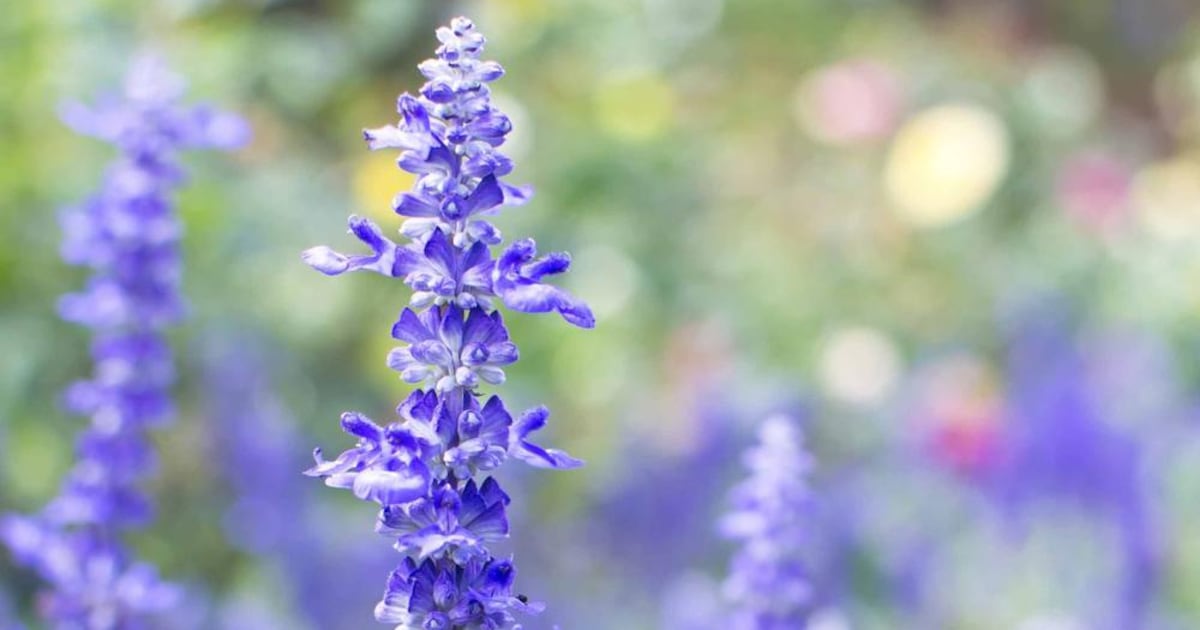
Some plants are celebrated in poetry, prose and song. Some give us (mostly girls’) names. Some are adopted as emblems and treasured for their symbolism. And then some just get on with it.
The salvias definitely fall into the latter category – reliable, not too showy or evocative, but dependable.
There are so many types and varieties of salvia that, if so minded, it would be possible to fill your entire garden with them. They come in various colours and numerous forms – annual, biennial, herbaceous perennial, and woody subshrubs.
In this wonderfully diverse family there are bedding salvias, tender salvias, perennial border salvias, and of course edible salvias, the most well-known of which is Salvia officinalis – common sage – a versatile herb with a history of culinary and medicinal uses as rich as its scent.


The name ‘Salvia’ derives from ‘salveo’ in old Latin, meaning ‘heal’ or ‘save’. Sage was used as a healing plant in the Ancient World and the leaves are deployed to this day in tea remedies for coughs and sore throats.
As an ornamental, salvias can form the backbone of the summer garden, delivering colour, fragrance and attracting wildlife.
The colour range includes vibrant reds, shocking pinks, deep purples and soothing blues.
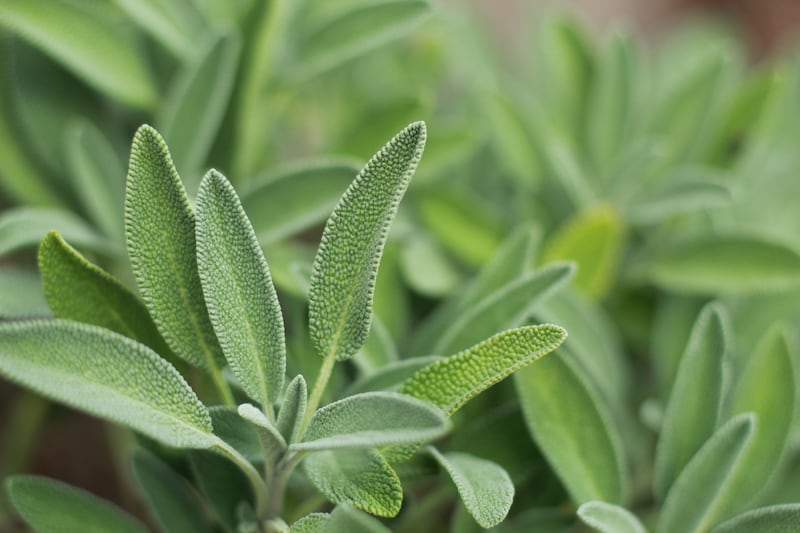 Salvia officinalis, the common sage (Bonnie McCann/Getty Images/iStockphoto)
Scents are fruity and organic; less conventionally seductive but divine nevertheless.
Salvias will match most garden plants in their amenability to beneficial wildlife, including butterflies, bees, hoverflies, moths and other pollinators.
While late June is never a recommended time to plant container-grown plants, the resolve of the drought-tolerant salvias means they’ll be reasonably quick to establish, even this late. Just ensure they’re cared for initially and in a well-drained, moderately fertile soil, in full sun or dappled shade.
Some are fully hardy but others are less so and in certain areas may be better looked on as annuals.
Suggested cultivars include the fully hardy Salvia nemorosa ‘Caradonna’, a wonderful perennial reaching about 75cm in height, bearing violet to purple flowers. Also hardy is the rather striking Salvia superba ‘Mainacht’, which reaches a height of around 45cm and spreads a similar distance. It has felt-like leaves and produces masses of flower stems topped by spikes of violet-purple flowers from early-to-midsummer.
Tender but worth checking out is Salvia coccinea ‘Lady in Red’ – great for a summer show of red flowers and the closely related ‘Lady in White’, which bears white flowers.
Salvia patens ‘Cambridge Blue’ is frost hardy (safe down to -5°C) and produces very elegant, pale blue flowers.
Salvia pratensis is a clump-forming perennial with a woody base. Up to 90cm in height and bearing flowers of violet, though in some cases they may be pink or white.
Maintenance of the latter is necessary but straight forward – trim off any wayward stems in spring and throughout the summer, while encouraging more blooms from your salvias by removing any flowers once they have ‘gone over’ – i.e. dead heading.
Common sage is prized for its culinary and medicinal uses but also works a decorative, evergreen shrub that won’t look out of place in an ornamental border. Salvia officinalis ‘Purpurascens’, which has purple-green and finely textured foliage alongside purple flowers, has the RHS Award of Garden Merit (AGM).
Most salvias benefit aesthetically from an annual clip to preserve their shape and encourage growth of fresh leaves. Older plants eventually become woody but are easily propagated from cuttings or by layering the naturally arching branches.