
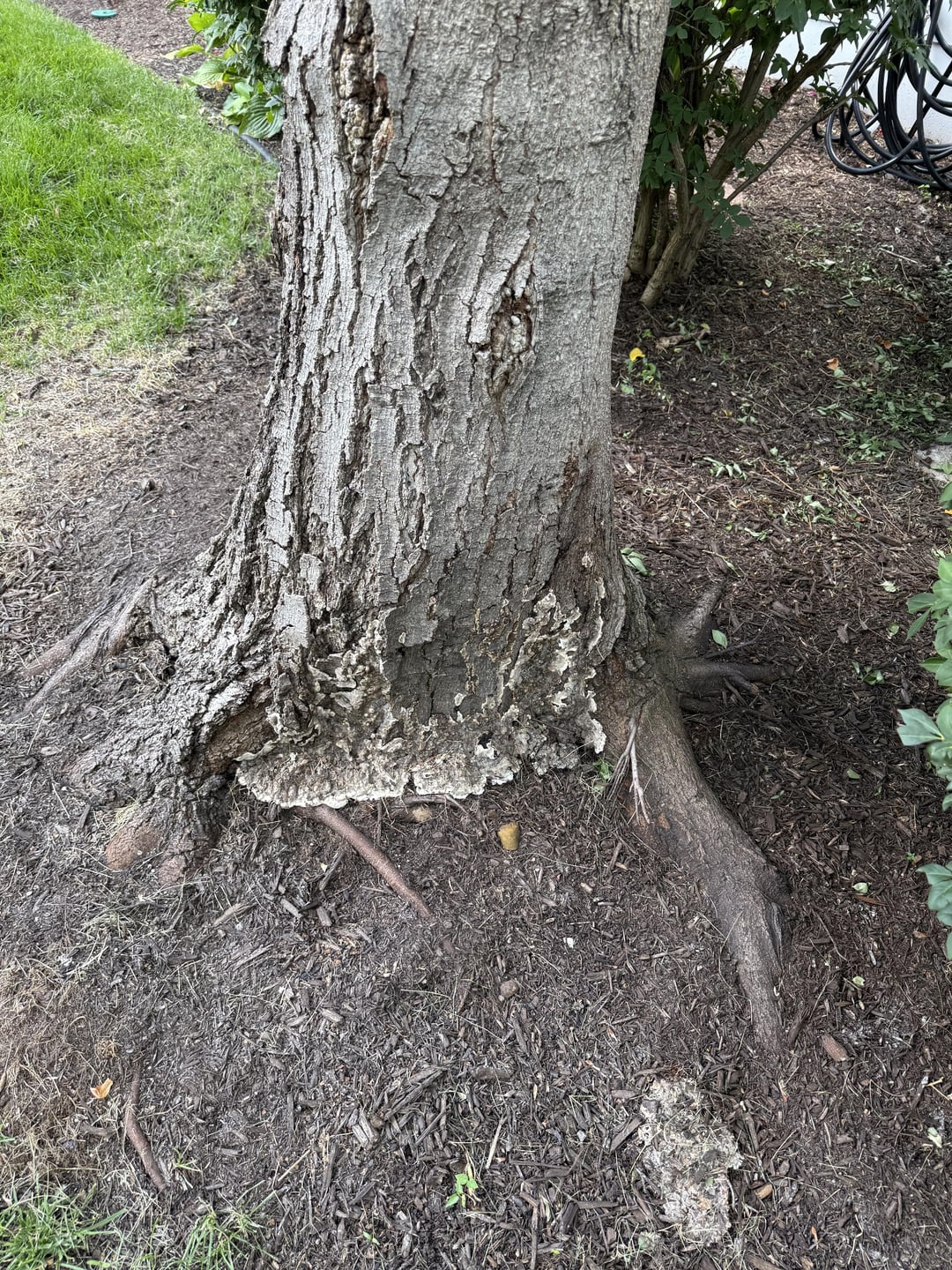
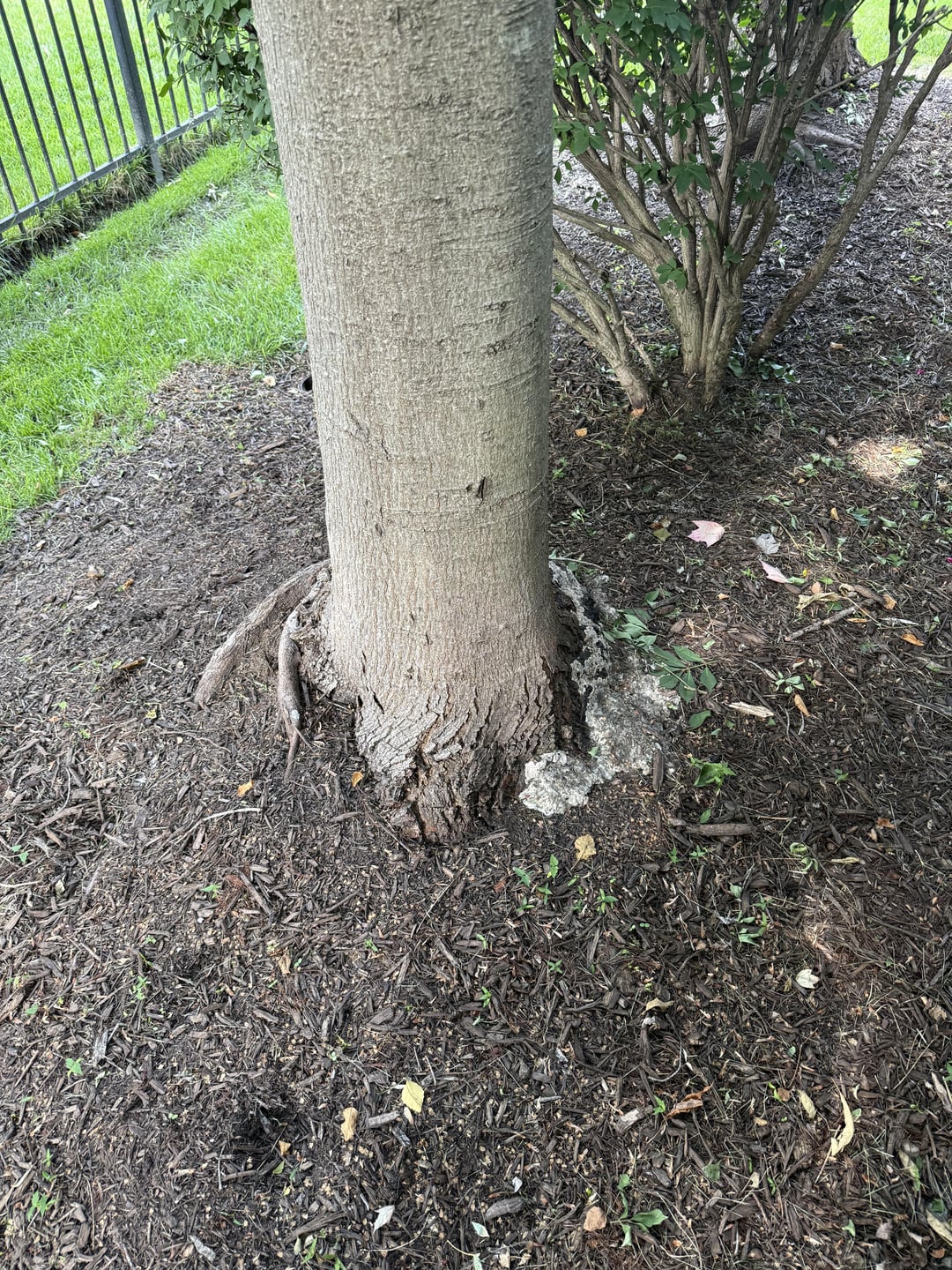
One Arborist is saying this is Kretzschmaria deusta fungi on both trees – another is saying that it is just fungus on the bark (implying the other is just saying that to get hired to fell the trees). The prognosis is dramatically different – if the former is right, the trees need to be cut down and replaced. Could you please tell me your thoughts based on this picture?
Thanks!
by Odin_the_Husky
9 Comments
Pictures aren’t great but looks like kretzschmeria to me. I’d be curious as to what the latter would recommend because sap rots that present on the bark can cause serious decay internally and especially at the base, I’d say you’d be hard pressed to find a way to treat/save this tree. I have heard of people using trichoderma mold as a treatment to stop the spread of kretzschmeria but I can’t speak to it’s effectiveness and it will not reduce the already rotted/compromised area.
I’m not sure why there’s a disagreement. It’s pretty clearly Kretzschmaria deusta. There are no lookalikes that I’m aware of. There are also no treatments that I am aware of.
Just another comment, if Kretzschmaria is presenting like this it means the decay is already significant and this tree has significant likelihood of failure
I’d say it is. Looks like the early stage of mushroom fruiting bodies, the typical black ones will grow later.
https://www.arbofux.de/img/ustulina-deusta6-g.jpg
“Just on the bark” 😂😂😂
You have one arborist and one “tree guy”
Kretzschmaria In my opinion. I see it a lot on hackberries my area. Reading the comments here, you have a hundred years of combined experience in the industry at least.
That looks more like moss IMHO
Fungal fruiting bodies signify the presence of decay. Period.
If its growing out of the most important structural region of the tree, odds are good that it’s mechanically compromised. There are certainly cases of fruiting bodies presenting on sound trees, however. This is likely not one of those cases.
I’d agree with others that this is kretzschmeria. If you really want to you know 100% you can always take a drill with 1/8 inch bit to the tree and collect the wood shavings from the bit to send in for DNA sampling for confirming kretzschmaria. But I’d say even if the second guy is saying it’s only on the bark and not a problem, he certainly doesn’t have a clear picture of what sap rot fungi do (kill cambium from outside in).
https://www.treerot.com/submit-samples-for-id/ Samples – TreeRot.com
https://www.treerot.com/fungi/kretzschmaria-deusta/ Kretzschmaria deusta – TreeRot.com