
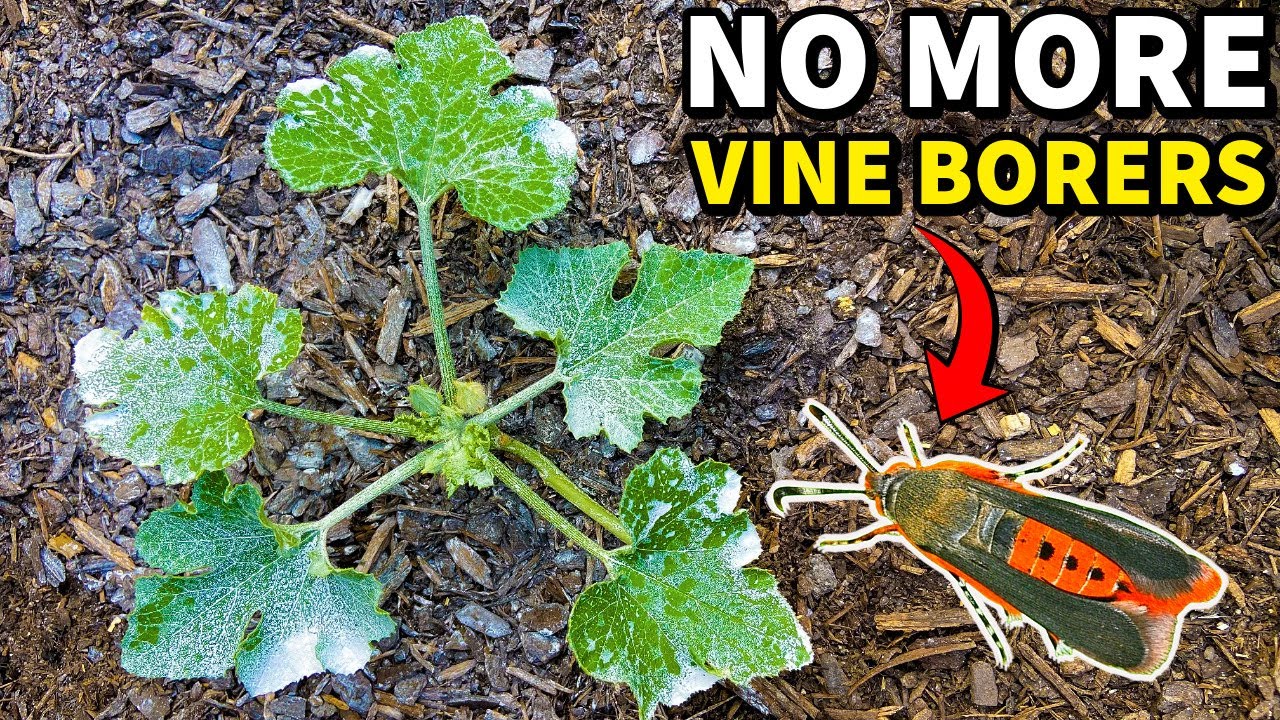
In this video, I share the real truth about preventing squash vine borers. Despite countless claims, there are only 2 ways to prevent squash vine borers from killing squash plants. These squash vine borer control methods provide real results. This is the ultimate guide to stop squash vine borers that actually works!
How To Hand Pollinate Squash Plants: https://youtu.be/7ojJy13PqSQ?si=zTW-RKGIMxz2tvga
Get Surround WP Crop Protectant here**: https://teamgrow.us/products/surround-wp-crop-protectant-25-lb-bag-copy?_pos=1&_sid=6193eb0f2&_ss=r&sca_ref=5979667.mULuEkE0AH
Vine Borer Resistant Squash Seeds:
Zucchino Rampicante: https://www.rareseeds.com/squash-summer-zucchino-rampicante
Tatume Squash: https://victoryseeds.com/products/tatume-summer-squash
Italian Cucuzza/Cucuzzi: https://migardener.com/products/cucuzzi-squash
Tromboncino Squash**: https://www.pntra.com/t/8-12781-345111-269073?url=https%3A%2F%2Fterritorialseed.com%2Fproducts%2Fsquash-summer-tromboncino
I use the following products* for growing squash and stopping squash vine borers:
Spinosad Concentrate: https://amzn.to/4kDAqxA
Bt Concentrate: https://amzn.to/3T3u7re
Pump Sprayer: https://amzn.to/4myhdz0
Insect Netting: https://amzn.to/43mtizJ
Syringes With Needle: https://amzn.to/43XrwW4
Hand Vacuum: https://amzn.to/4mCaxzT
Shade Cloth: https://amzn.to/49bqveh
Watering Wand: https://amzn.to/3OkgnG5
Weed Barrier: https://amzn.to/4mj7nkl
Grow Bags (Black): https://amzn.to/4a0MHa5
Grow Bags (Tan): https://amzn.to/4dqSsAD
Pruning Snips: https://amzn.to/4eZxCrM
True Organic All Purpose Fertilizer [5-4-5] (4lb): https://amzn.to/4mroKji
Espoma PlantTone Fertilizer [5-3-3] (36lb): https://amzn.to/4lgP9PW
Espoma PlantTone Fertilizer [5-3-3] (50lb): https://amzn.to/4lgPbr2
Espoma Bone Meal (10lb): https://amzn.to/4ieYapY
True Organic Blood Meal (3lbs): https://amzn.to/3DvlzVJ
Alaska Fish Fertilizer [5-1-1] (Gallon): https://amzn.to/4d9c1x7
GrowCo Fish Fertilizer [2-3-1] (Gal): https://amzn.to/3RvRwRq
Jack’s All Purpose [20-20-20] (1.5lb): https://amzn.to/4iRWtRc
Jack’s All Purpose [20-20-20] (25lb): https://amzn.to/3ZSJeGW
Crab & Lobster Shell Meal: https://amzn.to/4jNvA0t
Full Amazon Store: https://www.amazon.com/shop/themillennialgardener
0:00 The Truth About Vine Borer Prevention
1:50 STOP Vine Borers Method #1
3:13 STOP Vine Borers Method #2
7:09 Vine Borers Control Tactic #1
8:45 Vine Borers Control Tactic #2
11:14 Vine Borers Control Tactic #3
14:33 Squash Vine Borer Spray Routine
18:53 Vine Borers Control Tactic #4
21:12 Vine Borers Control Tactic #5
25:50 Adventures With Dale
If you have any questions about how to prevent vine borer problems in your garden, want to learn more about growing fruit trees or the things I grow in my raised bed vegetable garden and edible landscaping food forest, are looking for more gardening tips and tricks and garden hacks, have questions about vegetable gardening and organic gardening in general, or want to share some DIY and “how to” garden tips and gardening hacks of your own, please ask in the Comments below!
*******
VISIT MY AMAZON STOREFRONT FOR PRODUCTS I USE MOST OFTEN IN MY GARDEN*
https://www.amazon.com/shop/themillennialgardener
*******
VISIT MY MERCHANDISE STORE
https://shop.spreadshirt.com/themillennialgardener
*******
SUPPORT MY SECOND CHANNEL!
https://www.youtube.com/c/2MinuteGardenTips
*******
SOCIAL MEDIA
Follow Me on X (@NCGardening) https://x.com/NCGardening
Follow Me on INSTAGRAM https://www.instagram.com/millennialgardener/
*******
ABOUT MY GARDEN
Location: Southeastern NC, Brunswick County (Wilmington area)
34.1°N Latitude
Zone 8B
*******
*As an Amazon Associate, I earn from qualifying purchases.
**Are affiliate links that earn me commission at no cost to you.
© The Millennial Gardener
#gardening #garden #insectcontrol #vegetablegardening #vegetablegarden
what’s growing on gardeners today’s video is dedicated to the three dirtiest words in the gardener’s vocabulary squash vine bores so offensive are these three words that I honestly considered censoring them vine there are countless videos on the internet dedicated to stopping the squash vine bore but the truth is they don’t stop them they only delay the inevitable there are only two real ways to stop the squash vine bore and on today’s video I’m going to share with you exactly what they are and give you lots of helpful tips along the way if you’re new to the channel please subscribe hit the bell for notifications and check out my Amazon store and Spreadshop links in the video description for everything I use in my garden and awesome custom apparel and gear if you live in an area that colonizes the squash vine bore you know it is only a matter of time until those horrible pests come for your squash plants it seems that their death is inevitable in fact I’m willing to bet this isn’t the only video that you’ve ever watched on squash vine bores i bet you that you’ve watched lots of videos and you’ve probably Googled and researched and read various articles all promising you different ways that you could stop the squash vine bore and you’ve probably tried those methods and still they probably took out your zucchini and other squash plants that’s because the various methods out there that claim to stop squash vine bores from killing your squash plants don’t actually stop them all they do is they delay the inevitable they reduce the population of vine bores or they protect your vines to an extent that usually you get a few additional weeks of lifespan out of your plants but the honest truth is they are eventually going to get killed there are only two really effective ways to truly defeat the squash vine bore method number one that honestly will stop the squash vine bore is to grow your susceptible plants in an indoor growing environment that is closed off sealed off from the elements something like a sealed greenhouse or an enclosed patio or a sunroom or something of the like where there will never be an instance of a vine boring moth flying in and laying eggs along the squashes and I know for a lot of you you may be thinking “Well that’s not really realistic.” But I’m here to tell you that most of the squash that you buy in the grocery store well they are actually grown inside green houses and other enclosed structures exactly for this reason it’s just too hard to fight the pests that are outdoors so they grow them indoors so they don’t have to worry about them so if you never want to have to deal with a squash vine bore and you have something like a screened in porch or a sun room or a real deal greenhouse that is totally enclosed and sealed off well grow your squash plants there and then you won’t have to worry about them now the downside is with an enclosed environment like that if you’re lucky enough to have one your squashes are not going to get pollination so you will have to get some kind of makeup brush and manually transfer the pollen from the male flower to the female flower because while squash plants are self-fertile they still need something to transfer the pollen because they have separate male and female flowers so in your case you will have to be the pollinator and method number two that actually stops the squash vine bore is to grow varieties of squash that the vine bore just doesn’t like vine bores in many ways are just like us they have foods that they like and they have foods that they don’t like and you need to look at your vegetable garden and all of the different varieties of squash that you’re growing in them kind of like a kids menu there’s a reason why on every single kids menu you see things like chicken fingers and a hamburger and spaghetti on there that’s because pretty much anybody with the simplest pallet will eat them but you’re never going to see something like liver and onions on a kids menu because kids just aren’t going to want to eat that except in a what one out of 10,000 occurrence and the unfortunate fact is a lot of the varieties of squash that we grow in our backyard gardens are like the chicken fingers on the kids menu anybody will eat that from ages 7 to ages 97 everybody likes that so we can change our mentality and we can simply grow varieties of squash that the vine bore doesn’t want to eat we want to grow their liver and onions most gardeners that are struggling with vine bores in their garden are growing straight neck squashes like zucchini crook neck squashes and butternut squashes are resistant to the vine bore naturally now butternut squash is a winter squash type so if you actually want to grow a summer squash type that probably will not be on your menu and it won’t satisfy your needs but some crook neck varieties give off zucchini like vibes that you should be able to substitute and you won’t have to deal with all of these issues a lot of Italian crook neck squashes are similar to zucchini when harvested small and young some varieties that are naturally resistant to the vine bore are zucchino rampicante tatum squash Italian cuca and trombanchino squash the two squash plants that you see right here are the zucchino rampicante variety these are supposed to be some of the most vinebore resistant summer squashes out there so because they have a reputation of being so hearty so tough so long and so insect resistant compared to straight neck varieties of squash I have set these up in such a way that I intend to trellis them on this cattle panel up against my fence for the entire summer so I’m giving them lots of real estate whereas I don’t give that same luxury to my normal zucchini varieties because they only live usually 2 months or so when they’re out in the open because of the vine bore pressure these Italian varieties of crook neck squash are supposed to be almost exact zucchini replacements when you harvest them nice and young and tender and I intend to be using them just like a zucchini in my kitchen and that is the unfortunate truth of things if you really want to stop squash vine bores you either have to grow the plants in a sealed off environment where you can’t get the vine bore or you have to grow varieties that naturally resist them and to be completely honest I’m not going to tell you that these are 100% resistant they are highly resistant but if the vine bore has no choice and they have to eat something there could even be instances where they could damage your plants because at the end of the day liver and onions on the kids menu is better than total starvation right so that being said what if you don’t have the opportunity or the option to grow your plants indoors or what if you just want to grow straight neck squash and you won’t compromise well if you’re going to grow straight neck squash outside in an outdoor environment that colonizes the squash vine bore it is truly only a matter of time until your plants get hit by them it is inevitable however there are many different tactics you can do to protect your plants and delay that from happening so you can get much better production and have less problems over the course of the year tactic number one to get the best production out of your vinebore susceptible squash plants is the one that I use to successfully get me harvests of zucchini and other vinebore susceptible squash pretty much all the way up until frost and that is to succession plant your vinebore susceptible varieties and to plant enough plants that the vine bore simply can’t take them all out so what does that mean that means that every 4 to 6 weeks we are sewing new zucchini or other vulnerable varieties around our garden and we’re sewing so many different plants that the vine board just can’t kill them all because there’s just too many of them so if every four to 6 weeks we’re planting six zucchini plants chances are by the time you put in that new crop and that new successive crop starts producing you’re always going to have plants that are somewhere in the production phase so what you’re trying to do is you’re just trying to make sure that you have so much zucchini production that there is always something and that is really going to be the best tactic for most and this is a very easy thing to do because zucchini and other vinebore susceptible varieties well they germinate in only about 3 to 4 days indoors on a seedling heat mat and the new transplants are usually ready to go about 3 weeks after germination and then once it starts getting warmer and the nights are comfortably in the 60s in the middle of uh late spring or early summer you can just start direct sewing your zucchini seeds outside so if you just always have something growing in different levels of maturity and there are a lot of plants the vine bores just aren’t going to have enough population density to kill all of your plants but what happens if you can’t follow this tactic because you have a small garden and you don’t have enough room to plant a whole lot of different plants that are susceptible to the vine bore well tactic number two is every single day you want to check your plants over for two things pest eggs and bore holes now pest eggs are most likely going to be found on the unders sides of leaves and right here you can see a bunch of pest eggs they are probably squash bug eggs but what we want to do is we want to take a piece of tape like duct tape and we want to manually remove all of those eggs they will come off easily and then once you get all of those eggs off you can just ball up the duct tape and you can throw them away in the trash can see all those pest eggs we will have to check underneath every single leaf and also along the various stems and the spline of the plant that central stem down below where a lot of the fruit comes out of sometimes you do find bug eggs on the tops of leaves but generally speaking that is rare they almost always put their eggs on the unders sides of the leaves because that is more protected these bugs aren’t dummies and one thing you may notice when you’re searching around your plants is you may see some squash bugs start scurrying and running away along the ground if you see them I like carrying a small battery powered hand vacuum with me and if they start running and I catch them I like to suck them up but most importantly we want to check the centers of the plants and the big thick stems for bore holes the way that vine bores spread is the moth comes and it lays eggs along the stems and the ribs of the plants and then the eggs hatch and then the little tiny worms they bore their way into the plants and when you see a bore hole it will almost look like there’s sawdust coming out of the plants now when you see those bore holes you have to get those worms out of there because they are eating the insides of the plants so what I often like to do is I’ll take a knife or you could take a razor blade and you can cut open that area and you can manually extract them they’re big ugly gross looking worms at that point you can just squish them or some people also like to do things like get a syringe and they can inject a solution of BT or spin into the ribs of the plants or the stems of the plants more on that later tactic number three is to preventatively spray your susceptible squash plants with an insecticide and or a clay crop protectant now there are two very effective and safe insecticides that you can use organically on your squash plants one is Bt and two is spinid bt is a natural bacteria that you spray all over the plants and it will naturally kill worms and caterpillars upon ingestion so what you need to do is you need to spray the plants in the evening and let the solution dry on the plants and then the worms and caterpillars which the vine bores are that type of insect well as they eat the plants and they ingest that natural bacteria it kills them it ruptures their stomachs so that is a great way that you can kill worms and caterpillars and the vinebore larae now what’s nice about BT is it targets worms and caterpillars specifically so you don’t have to worry about it harming things like ladybugs or dragon flies or honeybees or any other beneficial insects but the downside with BT is because it only works it’s very narrow in the spectrum and it only works on worms and caterpillars it won’t kill the vine boring moths spenicide is a much more broadspectctrum insecticide just like BT it is a natural and organic bacteria that you spray on the plants and then a lot of insects once they eat the vegetation coated in it the same thing happens it ruptures their stomachs and it dies now spin is effective on squash bugs it’s effective on the adult moths themselves but the downside is it could also harm ladybugs dragonflies honeybees and things like that now remember a lot of those animals they don’t actually consume the vegetation on the plants so for that reason it’s actually listed as very low toxicity for those animals because why would a dragonfly or a bee consume the foliage of your plants they generally don’t do that but there is a little bit more risk and the third thing I mentioned is a clay crop protectant spray surround WP is a natural micronized organic kale and clay spray that you can spray all over the fruits and the ribs and the leaves and the stems of your plants and the theory behind that is if you coat the plants continually with a layer of clay well that layer of clay is going to make it really hard for anything to bore or eat the plant because if you’re an insect think about eating a big mouthful of clay i mean would a vine bore even want to lay eggs on some sticky clayed up mess no probably not just the only downside with the surround WP is you have to consistently spray the plants to maintain that layer because as it dries in the sun it’ll eventually flake off if you get lots of rain in the summer it will eventually wash off now the best thing that you can do is you can mix spinacid or BT with the surround WP and that way you have both the crop protectant that coats your plants and then the crop protectant actually helps the spinid or BT adhere to the plants so I actually like combining the two and here is how I do it to make a spray out of surround WP you have to mix it at a rate of 2 to three cups per gallon of water i will be towing the middle of this recommendation and mixing it at a rate of 2 and 1/2 cups per gallon and to do that I’m going to use a/2 cup scooper so I’m going to need five of these to reach 2 and 1/2 cups then I will add spinid concentrate to that this specific brand is mixed at a rate of a/4 cup per gallon so I’m going to put 1/4 cup of the spinid into this bucket because you have to add so much clay per gallon of water you shouldn’t mix it directly in the sprayer it’s recommended that you put half the amount of water first into a gallon bucket and then you premix everything then once it is well mixed you can add the remainder of the water complete the mixing process and then pour that directly into the sprayer if you’re curious where to get these insecticides I will place direct links to the spin and the BT down below you can get these very easily and affordably on Amazon the Surround WP is a little bit harder to find because it is such a large and rarely stocked item but my buddy James Pion actually sells it in his store so I’ll place a link to his store down below where you can buy the surround now anytime you spray surround in your garden I recommend you use a cheap manual pump sprayer because it tends to gum things up just because it’s a clay spray and it gets on everything so I don’t recommend you use some kind of expensive or high quality backpack sprayer use something cheap that you won’t mind blasting off with a stronger jet hose when you’re done and also in between spraying each plant make sure you keep giving it a little stir and also before you start spraying anything make sure you clear out the hose until you start seeing that clay spray actually come out because the first couple of seconds you spray you’re just going to get plain water so let’s spray our plants down really well we want to make sure we coat the stems we coat the main threshold th those main splines of the plant and also we want to get underneath the leaves where squash bugs and vine bores may like to lay their eggs and get that thin coating of clay and spinid all over everything because the idea is they won’t like laying eggs in a heavy clay medium and if they do and they hatch well they’ll have to eat their way through the clay and the spinet or BT which will kill them before they can do too much damage the other thing you need to know about this spray is it takes several applications to stick so what I recommend you do is you spray all your plants down and then you come back and spray them all down again with a second wave that way you give things about 10 minutes to dry in between sprays and you will probably have to repeat this process every five to seven days for a good three or four applications to build up a good coating of the clay and you’ll need to maintain that clay spray every single time it rains heavily so it doesn’t wash off that coating if you have any spray left over you can pretty much coat anything you want to protect in it i like coating my apples in it i like coating my pears in it peaches plums they’re all fair game they’re great to coat your cucumber plants in it because it can actually help prevent the cucumber beetle because if the cucumber plants are coated in a fine layer of clay it gums up their antenna and they have a hard time navigating or eating the plant you can even spray it on your citrus trees to prevent leaf miner it’s good for a lot of different things and if you live in a place with really hot summers it can actually cool your plants down because it is white so in order to protect them from extreme heat you can spray that clay spray all over your heat sensitive plants and it will keep them a little bit cooler in the heat of the summer and remember what we discussed earlier if you find those vinebore or larae bore holes in the stems of your plants you can take a spin or Bt solution and a syringe and inject that into the plant you probably won’t want to use kaol and clay in that mixture because you don’t want to inject clay into the plant but those natural bacteria should be harmless to the plant itself of course my preferred method is to manually cut out the larae i think that’s the preferred method because if you inject the solution into the plant there is no true guarantee that that will kill the larae tactic number four is to cover all of your susceptible squash plants in insect netting now if you place insect netting around all of the plants and you weigh it down with bricks or you secure it in such a way that there are no entry points for insects that is a surefire way to keep the squash vine bores and other pests like squash bugs away from your plants however if you choose to do this please be aware that you will have to manually handpollinate your squash plants because they have separate male and female flowers the pollen has to transfer from male flower to female flower so if you intend to do this you have to be the pollinator you’re going to have to go out there in the morning when the male flowers open up and take that pollen and manually touch it to the insides of the female flowers otherwise you won’t get any fruit now I will tell you this year I am experimenting with a variety of zucchini called duna that claims to be partially parthnocarpic which means some amount of the fruits will set without any kind of pollination at all i have not verified this yet and I did try a different variety last year that made that same claim and it did not work at all so I haven’t had any luck on the squash front so far with parthnocarpic varieties but if things change this year and I get good results from dungeon I will let you all know but please be warned if you choose to use insect netting you still have to check underneath the plants regularly for insect pests and eggs because I have had instances where I’ve put down insect netting and I’ve secured it down with bricks and PVC clamps but squash bugs and other things have still crawled their way under and what happens is then they wind up multiplying in a predator-free environment so if you’re not checking the plants regularly and a bug or two gets in there and lays eggs you can have a nightmare on your hands because now everything is multiplying unencumbered underneath the protection of that netting so please be aware if you use insect netting you still have to check the plants pretty much every day at least every other day to make sure there isn’t some sort of infestation if you want to know where to get insect netting I’ll drop some links down in the video description to it it’s awesome when used correctly and it’s really inexpensive and tactic number five to help reduce the damage of the vine bore is to plant some of the squash vine bores favorite varieties around your yard and garden as trap crops i have done this in the past with some pretty decent success for example the variety hubard squash is an absolute favorite to vine bores they love it more than all else so if you isolate an area around your yard and garden and you plant hubard squash as a trap crop the vine bores tend to flock around that because it’s like it’s like their pepperoni pizza or their chicken fingers they love it so much they lose interest in your other crops i actually tried planting the hubard squash in my garden as a trap crop about 3 or 4 years ago and I found it to be highly effective it not only attracted the vine bores but it also attracted the squash bugs and while it was growing it seemed like the animals those insects they weren’t really all that interested in the other varieties and it did temporarily work however the problem that I ran into was the hubard squash was so loved that they swarmed the plants and that the hubard squash just didn’t have a very long life at all because of how preferred they were so in order for this to be an effective method you are going to have to constantly sew hubard squash around your yard and garden to distract the insects so if you have enough room where you can plant new seeds every 2 weeks or so so there’s always something growing well that actually could be a pretty effective mitigation and distraction tactic but again you need the room to do it and I found that me personally my garden wasn’t large enough and I just didn’t have the amount of time to constantly be sewing seeds just as a trap crop that often if you have the time and the room to do it it may be a very good strategy for you however also be aware that once again trap cropping is not 100% while it will distract the bulk of the vine bores and squash bugs away from the other varieties chances are some of the vine bores and the squash bugs are still going to flock to the other squashes in your garden remember it’s not 100% and that right there are what I believe are the only two methods that truly stop the squash vine bore so if you want to have a truly squash vinebore free garden the only real way to do so is to grow your plants in an enclosed area where the vine bore moth can’t lay eggs or you’re going to have to grow varieties that are super resistant that they don’t like and even then you probably will still need to check them regularly because this method in and of itself is not 100% that being said if you still have no choice and you want to grow straight neck varieties of squash like zucchini out in an open garden that’s what most of us are going to have to do anyway these other five tactics are truly effective ways to mitigate the damage now while there is no true way to stop the vine bore when you’re growing outside in the garden these mitigation tactics can make it so so you can have successful harvests even with significant vine bore pressure you just have to stay on top of things and you need to make sure that you’re constantly replacing plants in your garden with new younger ones that way as the old ones tire out there are newer more vigorous more healthy plants that are starting to give harvests as well squash plants just aren’t that longived in most cases like if you’re growing a zucchini they’re just not going to last more than 60 to 90 days and in most instances in my area which has really severe pest and disease pressure it’s more like 45 to 60 days after transplant so even though I only have about a 250 day growing season I plant like six zucchini crops a year so no matter where you live don’t let those old tired vines truck along all summer replace them with new ones you will be glad you did so everybody I sure hope you found this video helpful if you did please make sure to hit that like button subscribe to the channel and please ring the notification bell so you’re notified when I release more videos like this if you are curious about any of the products that I featured in this video I will place links to them all down in the video description if you’re curious about any of the products that I use in real life in my garden they are all linked in my Amazon storefront in the video description so expand the video description click on the Amazon storefront link and you will see everything I use in real life in my garden and while you’re down there please consider checking out my Spreadshop for custom merch if you want to support my channel thank you all so much for watching and I hope to see all of you again on the next video if you have any questions about these methods please ask them down in the comments below well after a wet and stormy night it is finally turning beautiful outside we got 1.61 in of rain last night and Dale didn’t get the best night’s sleep but he’s finally catching some Z’s in the middle of the day he’s got his sloth toy and he’s sitting on his bed relaxing because Dale doesn’t sleep really well when it’s raining hard out it makes him very nervous so he’s a little tuckered out from not the best night’s sleep but that’s okay he’s catching some Z’s now they forecast rain this afternoon but it looks like they were wrong and they changed the forecast to no rain and sunny skies so now we should be all right my little sweet boy
27 Comments
If you enjoyed this video, please LIKE it and share it with family and friends! Thanks for watching🙂 TIMESTAMPS for convenience:
0:00 The Truth About Vine Borer Prevention
1:50 STOP Vine Borers Method #1
3:13 STOP Vine Borers Method #2
7:09 Vine Borers Control Tactic #1
8:45 Vine Borers Control Tactic #2
11:14 Vine Borers Control Tactic #3
14:33 Squash Vine Borer Spray Routine
18:53 Vine Borers Control Tactic #4
21:12 Vine Borers Control Tactic #5
25:50 Adventures With Dale
Squash borer r scent driven so i use strong scented herbs around them. I also spray with Surround kaolin clay .
Arbico and Seven Springs farm supply sells Surround kaolin clay too. I pay $79 including shipping from Seven Springs
Great Lakes IPM sells a trap and lure system that's reusable. Worked pretty well.
ThemillennialGardener: "there are only two really effective ways truly defeat the squash vine borer"…..
✅Flamethrower
✅ Dynamite
😅
I wish I had seen this a few weeks ago. I have already lost two zucchini plants to those buggers.
I like the kids' menu analogy.
I tried battling the sqush bug for years while growing zucchini outdoors. Now i use a fine nettig to cover them and have more time for the rest of my garden. Just have to pollinate them real early in the morning when the moths are less active.
Your have to grow a asian brown pear delicious
I grew Long Island Cheese Pumpkins last year and had some good success. The green-striped cushaw seemed to hold up as well. After years of warring, I have just decided to go the farmer's route and plant so many plants of different varieties that although I'll lose some, I'll still have a harvest. The #2 route seems to work as I've found that certain plants are simply toast by August, either by SVB or squash bugs, while others seem to last until first frost.
With the trap crop.. do you still kill off the bugs on the trap crop to reduce the load?
Your garden is looking good.
Great video! Has to toss most of our small number of squash yet again this season. Going to start new plants and try again!!! And yeeessss… 😆you are correct that I’ve watched a lot of videos about SVB in particular! Do you have issue with pickle worms on melons, cucs etc and if so, would you please do a video on those?! We have had beautiful cantaloupes to find one small hole… and you know the rest of that story! The larvae are evading us!
I love the duct tape idea!
Thank you for such helpful content. I am heading into squash growing season (Ne,Zone 5) & am gearing up for the fight!
Happy to see succession planting as the #1 tactic. Also kind of sad honestly because I was hoping to hear about something I haven’t tried, LOL. But I’ve been dealing with SVB for 20+ years of gardening, so I guess I’ve tried it all. Three plants at a time produce more than enough for me, one green zucchini, one yellow squash, and one grey, striped or golden zucchini. I repeat every 3 to 4 weeks. I have a total of 9 spots. When the last group of 3 is growing, the second group is producing, and the first group gets discarded in the trash.
Nothin worked. $100s dollars of sprays wasted
Each spring I watch the Milkweed plants. Right about the time they start flowering, the squash vine borer moths show up. They lurk around waiting for a mate on Milkweed. It looks like a big SVB orgy… not kidding. I keep a lidded jar with water and a drop of soap handy to slide them into the jar. Often, it will be two mating and that saves me half effort because they won't be trying to flee. I am the SVB assassin with a jar. 🤭🤣 This cuts the population way down!
However, all it takes is one SVB I missed to lay eggs that destroy the plant. Several years ago, I got little garden syringes and use them to inject BT if it appears there is activity to kill the borer. It's effective when I do find and treat them.
This year I plan to use the kaolin clay in a spray. I have to spray my apples to prevent coddling moth, so any leftovers will be sprayed on my pumpkins and squashes.
The main thing is to disrupt the cycles, whatever it takes, along with observation done with due diligence.
Since squash vine borers overwinter in the soil, I’m not sure how insect cover could help.
They tend to leave my white patty squash alone…
Too much work. I’ll keep an eye on my zucchini and pumpkins but if they don’t make I’ll just buy zucchini since it’s pretty inexpensive during the summer 😊
I went to put my pumpkins. Before I put one in the ground a damn squash bug was already waiting 🤬
@TheMillennialGardener Any chance we get an update video on your fig breeding experiment?
I haven’t been able to grow zucchini for years because of squash bugs and borers. This year it will either be a trap crop for my pumpkins or my experiment with having dill and rosemary in the bed will yield some zucchini 🤔
My Greenhouse gets WAY too hot to grow inside right now. Stays around 110 in the daytime… and I'm in Ohio… even with fans, I can only keep starters in there.
They also didn’t like my patty pan squash!
I grew the Trombosine square last year, and the squash borer got them too