SERIES 36 | Episode 14
We meet a duo making hotels for native bees – a simple way to boost biodiversity in any garden.
Willem van Dijk was working as a trawler skipper in Exmouth when he wanted a change and headed down to Perth, buying a gardening business. He spent four years studying at TAFE part time and built up the business.
Needing extra help, he found Greg Fisher, who has now been his business partner for 15 years.
A few years ago, Willem came across an article that Australia’s native bees that needed saving more than European honeybees. “I thought a bee was a bee!” he said. They researched more and discovered that native bees are more important for plant pollination in Australia than exotic ones, yet their habitat was being destroyed by modern gardening and changing land use.
Greg recalls driving into Perth as a child from his then-home, three hours east of the city, and having to stop several times to clean the bugs from their windscreen. “Nowadays you can drive the same distance and you’re lucky to get one insect,” he says. “It we lose all our insects we lose the bottom of the food chain.
“We’re trying to get people interested in bees but it’s all insects because even flies pollinate, and you need wasps to control some of the other insects in your garden so it’s a happy balance.”
They heard about bee hotels and made one, which attracted a bee – so they started making them … and that’s now what they do.
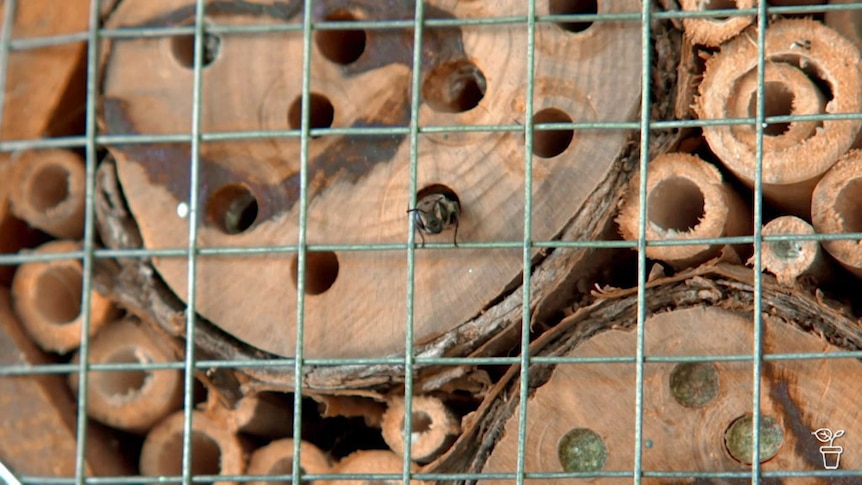
Their structures use as much second-hand materials as possible, and they try to mimic the habitat the bees would seek out in nature. That includes hollow sticks of bamboo and other plants, gum nuts, second-hand timber, and chicken wire.
Now they notice the smaller bees and other species that they hadn’t been aware of. They sell their bee hotels at markets to spread their new-found passion. They admit they’re not experts, but they like to light a fire in people to raise awareness of the native bees in the area.
“All you do is hang them up on an east-facing side of a house under the eaves, so they get the morning sun but are protected from the hot, afternoon sun,” says Greg.
Greg builds the main house structures and then Willem fills them in and adds some paint and colour. Greg finishes them off with some wire or net to hold the pieces in places.
They create a range of shapes and styles to suit different tastes and inspired by the material they’re upcycling at the time. They often stop and pick up discarded pieces of hard rubbish, including an old grandfather clock (that still works), a mirror and other bits of furniture.
And they love it when customers come back and tell us their first bee has moved in.
Filmed on Whadjuk Country | Marangaroo, WA