
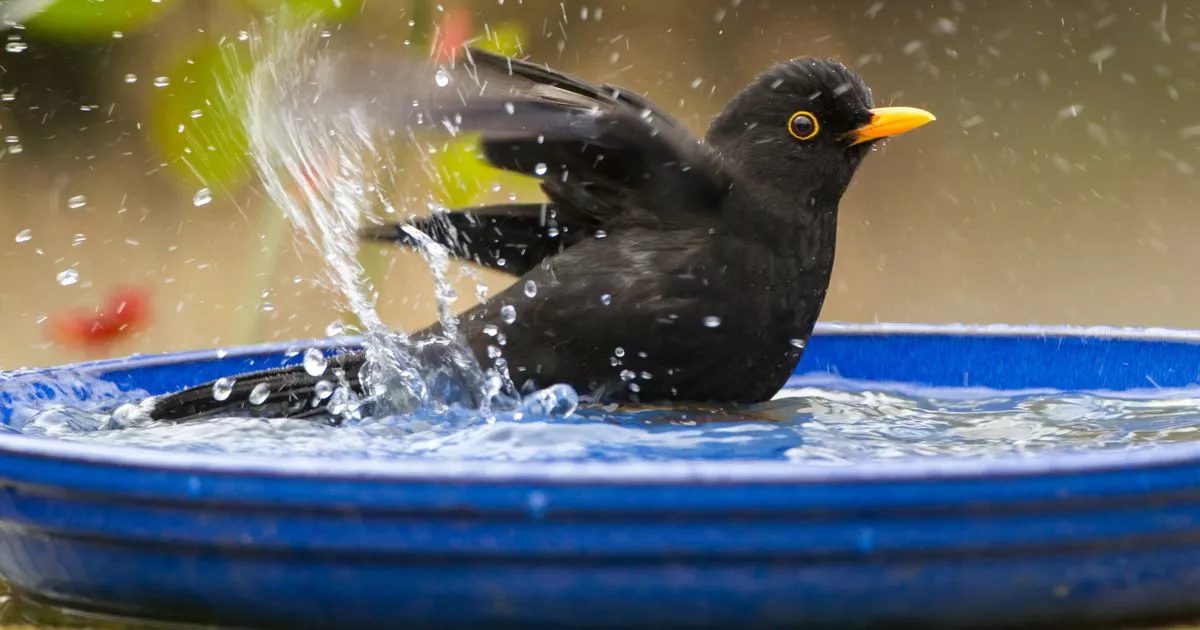
The RSPB is urging people to take action in their gardens ‘once a week’ as the Usutu virus, which is spread by mosquitoes, has killed blackbirds and other wildlife Bird baths can carry deadly diseases if not cleaned correctly(Image: undefined via Getty Images)
UK bird enthusiasts have been issued an urgent plea to take action once a week, as conservation groups respond to the escalating threat of the Usutu virus, which is wreaking havoc on blackbird numbers. Wildlife organisations such as the Royal Society for the Protection of Birds (RSPB) and the Royal Horticultural Society (RHS) are appealing to the public for assistance in combating the spread of this mosquito-transmitted disease.
The RSPB has specifically called for a weekly cleaning routine for bird feeders to help prevent the spread of diseases. Their guidance includes clearing away debris, washing feeders with a mild disinfectant solution, and thoroughly rinsing them with water.
RHS’s senior wildlife expert Helen Bostock and senior ecologist Caitlin McLaughlin advise homeowners to “minimise unnecessary standing water in your garden where mosquitoes could breed”. They offer further advice: “Stand wheelbarrows up when not in use to avoid rainwater collecting, put away any plant saucers when not in use, ensure gutters are kept clear of blockages, and ensure lids are fitted to water butts.”
Wildlife experts are urging the public to clean bird baths regularly and refill them with fresh tap water, as well as disinfect bird feeders weekly to prevent the accumulation of leftover food and droppings. They also advise sweeping the area beneath bird feeders and tables, reports the Express.
The advice comes after the emergence of the Usutu virus in the UK, which follows a decline in greenfinch and chaffinch populations due to trichomonosis, another parasitic disease. The British Trust for Ornithology (BTO) stresses the importance of keeping bird feeding areas clean and hygienic.
Helen Nyul, Group Head of Biodiversity at David Wilson Homes, offers valuable advice on how to attract birds to gardens and the dos and don’ts when installing bird boxes. Nyul advises: “For garden birds, suet balls and other fat-based food bars are excellent, high-energy foods for winter and popular with a wide range of birds. Sunflower seeds are the go-to choice universally alongside mealworms.”
Our ChronicleLive Daily newsletter is free. You can sign up to receive it here. It will keep you up to date with all the latest breaking news and top stories from the North East.
However, she warns against certain snacks that could be harmful: “Make sure to avoid any salted foods and nuts, as these can dehydrate the birds. Also, avoid any loose peanuts and larger food items, as parent birds might take these back to their nests, and their young can choke on them.”
She offers a crucial piece of advice to protect fledglings and nestlings: “They should never be placed facing directly south, as exposing the box to the sun all day can be dangerous for young birds, causing them to overheat and dehydrate.” Helen suggests: “They should also ideally be one to three metres off the ground to protect them from any crafty cats or other predators.
However, some species, like kestrels and owls, prefer boxes to be even higher, sometimes five or more metres. Ideally, they should be fixed to a tree, but the top of a garden fence or garden shed will also suffice as long as predators cannot easily access it.”
On the subject of when to install bird boxes, she notes: “As for timing, sometimes birds already start looking for a place to prepare as early as autumn or winter, but the springtime is not too late to place your bird box. Many small birds can still be on the housing market lookout up till May or even June, so there’s still time to make the necessary preparations.”