
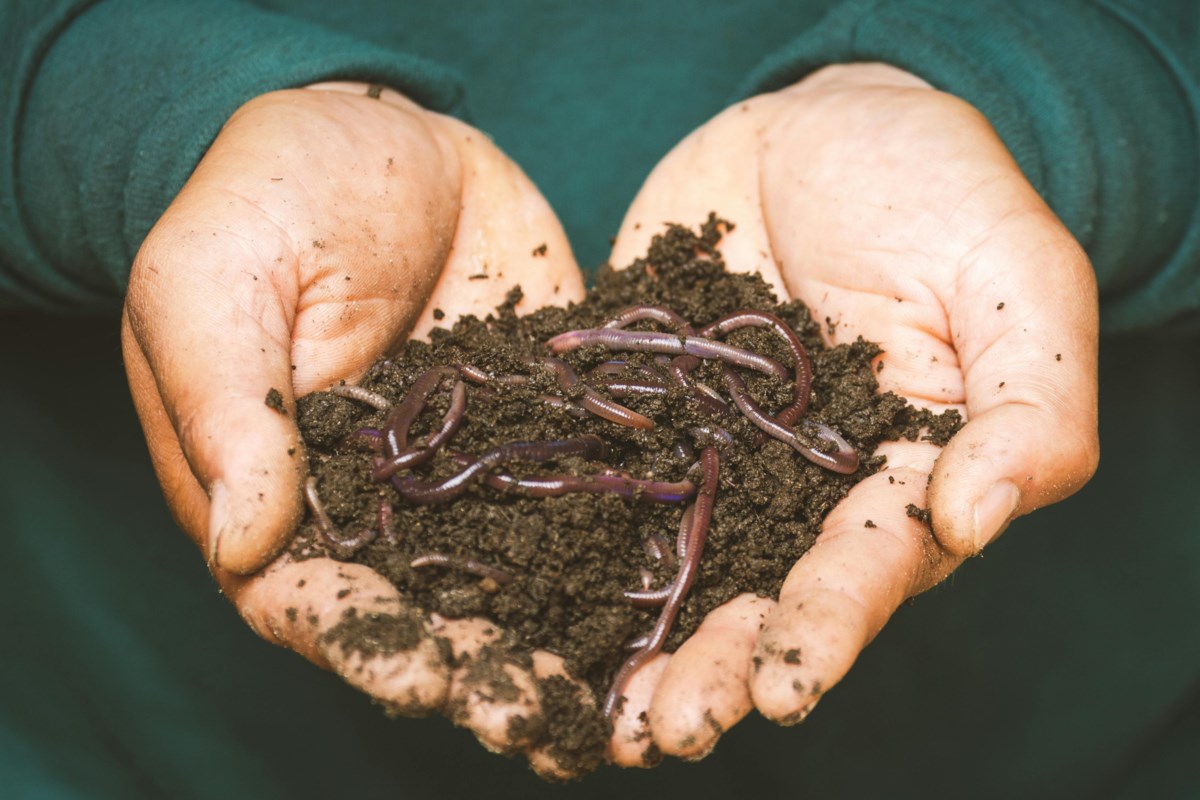
‘Each organism has its own special role to play in creating a fertile and ecologically healthy soil structure,’ says reader
BarrieToday welcomes letters to the editor at [email protected] or via the website. Please include your full name, daytime phone number and address (for verification of authorship, not publication).
When I first moved into a house many years ago, surrounded by a monoculture of sod, I spent countless hours of back-breaking work digging up and then removing the sod.
It would take days and days of digging and raking by the time I had completed a garden bed for my flowers or veggies.
Then, after attending workshops and doing a lot of reading, I learned that all my “grunt” work had been not only unnecessary and counterproductive but detrimental to the ecological health and structure of the soil.
It turns out the soil under our feet is teeming with living organisms including bacteria, fungi, algae, protozoa and a wide variety of larger soil fauna, including spring tails, mites, nematodes, earthworms, ants and insects that spend all or part of their life underground.
And along with larger organisms, such as burrowing rodents, they are all connected working in harmony. All the organisms work together to create networks and a soil structure that enables plants to obtain the nutrients, water and air to survive and thrive.
Each organism has its own special role to play in creating a fertile and ecologically healthy soil structure.
For example, billions of bacteria perform many functions, including helping the plants get much-needed nutrients, such as nitrogen and phosphorus, improve the soil structure, and water recycling.
Bacteria are able to fix nitrogen contained in the air and the protozoa found in the soil and make it available to the plants. Mycorrhizal fungi in the soil play a very important role by accessing much-needed nutrients. The mycologist fungi can reach into tiny cavities where the roots are simply too big to reach.
So it turns out the soil has the ability to self-regulate and create the best ecosystem for plants to survive and thrive, according to Get Busy Gardening 101 from May 2024.
It appears my tireless work of relentlessly pushing a spade deep into the soil and turning over the soil, I had been damaging the soil structure, I had destroyed all the networks created by fungi and bacteria in the soil and I greatly disturbed all the drainage channels created by the bacteria.
I had unintentionally exposed microbes and other life forms to sunlight which can kill them. I had destroyed the natural pores in the soil that allow water, air and roots to move through.
I had released all kinds of carbon into the atmosphere, thus increasing greenhouse gases. As well, my loosening the soil greatly increased opportunities for the soil to be washed or blown away.
Basically, by “turning over the soil” I had thrown the entire ecosystem into disarray. Some experts pointed out digging was akin to bombing a city.
Then I discovered lasagna or no-dig garden and presto — I had a garden ready for planting in a couple of hours. And no sore muscles!
Instead of spending hours of digging, I simply placed cardboard on top of the sod. Then I layered the cardboard with compost, grass clippings, fallen leaves, pine and spruce needles, compost, top soil and cow manure.
I was pleasantly surprised to discover fewer weeds than I remembered in my well-dug gardens. As well, by using lots of compost the fertility of the soil was enhanced. Since, I was no longer exposing the soil to the air thus drying it out, my garden needed less watering.
I made sure that during the growing and winter season, I never allowed the soil to become bare by leaving dead stalks in the soil, covering the bare soil with some kind of mulch like leaves, pine needles, cedar droppings and grass clippings.
I planted native perennials among my veggies to provide food sources for our precious pollinators and birds. As well, the carbon in the roots of the perennials remain intact all year round.
In the autumn, I welcomed leaves from trees to float into my gardens and I would rake leaves from the lawn into the garden to decompose over the winter.
In the spring, I would lightly hoe any unwanted weeds. Then I added compost from various sources, including the city.
In my garden, I like a great variety plant material, including herbs in planters, inter-planting marigolds to deter pests, native perennials to provide food sources for pollinators and birds, scarlet runner beans climbing up tepee trellises, whose scarlet flowers attract hummingbirds, and a variety of easy-to-grow veggies such as kale, peas, green onions and cherry tomatoes.
I like to experiment with various methods to deter pests, increase fertility, and yields by adding crushed eggshells, orange peels and banana peels and epsom salt around the roots.
In the last few years, I have also started to rip plain toilet-paper rolls into tiny pieces and mix it into soil. It turns out earthworms love to nibble on toilet paper rolls.
The benefits of earthworms in your garden cannot be overstated. Not only will their tunnels aerate your soil, but their castings known as “black gold” contain nitrogen, phosphorus and potassium – free fertilizer for your garden, according to Garden Soul in November 2024.
So when you use Mother Nature’s bounties like leaves, grass clippings, coniferous needles, twigs and compost, there is no need for human-made synthetic damaging fertilizers. And you definitely will have no need for toxic herbicides as weeds are repressed or easily removed manually.
There is a saying “less is more.” That is definitely true when it comes to no dig gardens – less “grunt” work, less prep time, less energy expended, less weed pulling, less watering, less carbon released into the atmosphere and more time to enjoy the flowers and pollinators and more veggies to eat.
Gwen Petreman
Barrie