
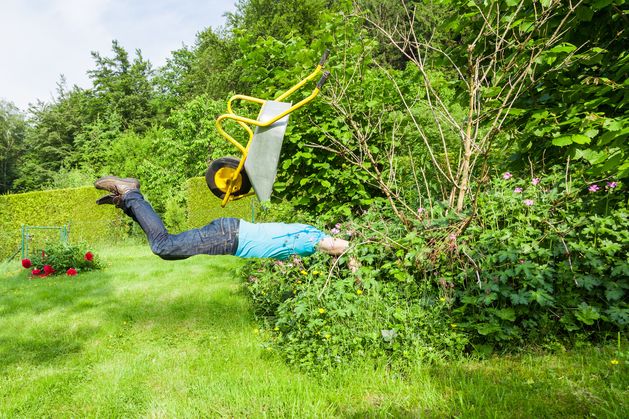
There are three types of Irish garden and only one correct way to tend them – with hard work
In our cultural history, the garden is something that went with the big house. It’s all ladies with parasols strolling gravelled paths between too-perfect rosy flower beds to tell their mothers that they’re marrying the gouty eejit from over the hill because he’s the next Earl of Bastardshire. Secretly, I think we associate gardening with a British, posh weakness. The feminine order of it might have even spooked a nascent nation.
We have never actually recovered from dispossession, so it’s a wonder we give over any patch of land for decoration at all. It must be the case that most Irish gardening evolved out of agriculture, since our version of the hobby is basically farming with accidental cherry blossoms.
The haggard is the much-forgotten origin story of the Irish garden. A patch of land close to the house on the farm, it was used to store hay in a cock, or ricks of turf, firewood, sometimes grain and a place for growing grim local vegetables. As threshing retired and the Kelly’s Foundry of Portlaoise covered the country in vaulted red galvanised haybarns, the haggard fell to other uses – an orchard, perhaps, and eventually a garden.
Nowadays, there are three common types of Irish landscaping.
Protestants must burst into tears when they catch sight of these gardens, driving by in their Volvo station wagons
There’s the colourless driveway garden, a barren, well-tended sweep of green and grey; just endless lawn, a few trees and hedges with puddles of stones in places and absolutely no other colour. The sole purpose appears to be highlighting the tarmac, a model’s runway for the just-washed car.
The second is the manic pixie dream garden, with so much colour and so many figurines and bits that it’s like a junior infants class high on Skittles was charged with designing a graveyard. This garden can be massive or tiny, rammed with metal or faded plastic trinkets, deranged figurines, novelty solar lights, wind chimes, a lump of ancient farm machinery painted in primary colours, maybe moulded fencing, grass patches nibbled to the quick, a water feature that goes with nothing, psychopathically laid out flower beds, all located on a street or road where nobody else for miles has tried the same thing.
It’s horrific to view in one go, but gorgeous in separate parts. Protestants must burst into tears when they catch sight of these gardens, driving by in their Volvo station wagons, I presume, and then locking themselves into their walled gardens to experiment with teardrops on rhubarb.
The last common type of garden is the when-I-get-around-to-it variety, a personal favourite. My Cork granny had one of these. She was always buying plants or cutting slips from public gardens and growing them in old pots, baths, calf-lick buckets, fertiliser bags filled with soil and disused cattle troughs. There was a constant plan to set up an organised bed or a border “when I get around to it”, but she never did in her 79 years of growing everything with seemingly no effort.

Some lads think they’re Robert Duvall in ‘Apocalypse Now’ and take on weeds like they’re the enemy. Photo: Getty
Beds were cut into odd shapes, but loaded with shrubs and perennials that were never meant to go there. Hardly any part of the garden was ever designed, but ended up looking magically created, with plumes of bluebells under golden privet in spring and pops of hesperantha climbing out of grass that looked like dereliction until the flowers surprised the dew in September. Blackberries drooped deliciously out of the hedges on what the Brits call brambles but we call briars, again because of our instinct to weed out the poshness. What the English named foxgloves, are méaracáin na mban sí here – the thimbles of the banshee – perhaps used while sewing her next death shroud.
The joy begins with getting tooled up in places like Toolfix of Dundalk. Here, brand names like True Temper and Draper lift the heart
You can tell when a lad is in charge of a countryside garden. It will have massive lawns, murdered white with over-mowing. The odd boulder is tossed randomly as if to hint that the fella’s done this by hand, casually, while opening a bottle of chilled IPA with his teeth.
It’s generally a tribute to ride-on petrol-fuming machines and knapsack spraying so that a lad can be part Ghostbuster, part Robert Duvall in Apocalypse Now in his head, taking on the weeds like they’re commies.
I lean more towards the fake farming-meets-mock-Monty Don type of gardener. I’m happy to be a bit of a fop, but with some weapons. The joy begins with getting tooled up every spring in places like ToolFix of Dundalk. Here, brand names like True Temper and Draper lift the heart, the sturdy timber and metal accoutrements of the sport. The victory is in wearing out the labels and smoothing the handles with the shine of toil and dirt over time. The fear is that gardening might lack the danger of farming.
However, when you’ve spent a day pulling ivy out of a hedge and suffered the wounds of thorny ditches, you know you’re doing it right.

Verbena
Last week, I suffered a corneal abrasion when mulching a row of shrubs, catching my eyeball on a pruned stalk. The optician would soon announce it would heal itself, but for a few shining hours I was Hemingway of the hydrangeas. Back to the front I went, undeterred, digging trenches for July salvias and August verbena, adding chicken manure pellets. There’s nowt more manly than handling manure.
We’re the last true warriors of the wild, because when you catch your breath for a well-earned lean on the spade, you note in the far-off fields the ferocious rampage that is farming today. Centuries of hedges are ripped out a mile a minute, hawthorn trees cut down and dug out no matter how many pagan fairy warnings have kept them standing for up to 500 years. It’s sad to see, and we can’t blame the redcoats any more. We’re well over the haggard.