
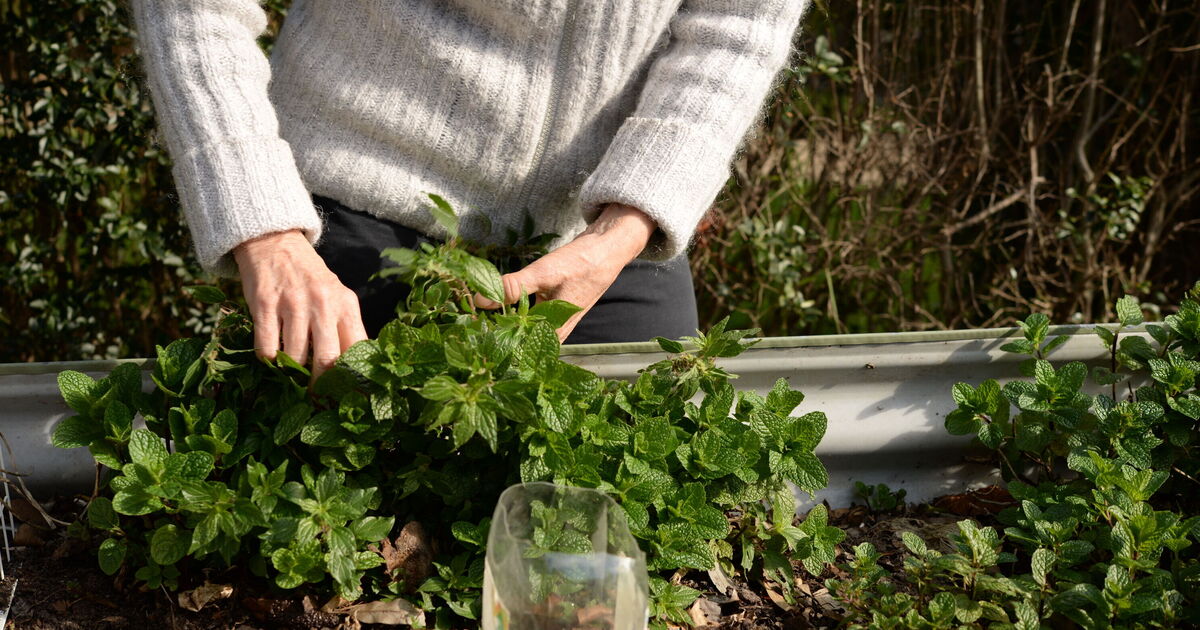
Mint has become a favourite for gardeners to grow in their gardens, a herb that is a staple in many cuisines, adding a refreshing flavour to a wide variety of cocktails and dishes, from salads to sauces to pesto. It is also a popular tea choice. It is even traditionally used for its digestive and calming properties, among other health benefits.
What’s more, its also easy to grow, thriving in various conditions and soil types, including partial shade and full sun and requires minimal maintenance. It can be grown both indoors and outdoors in a variety of different plots, making it a veratile option for any garden setting. However, to ensure that the herb does not take over your entire garden, gardeners are urged to do one thing.
There are many different types of mint, offering an array of exciting and unusual flavours, from traditional spearmint (Mentha spicata) and peppermint to lime, apple of even chocolate mint. However, what they nearly all have in common is the fact that they are vigorous, spreading plants. They usually form large leafy clumps which grow up to 3.3ft tall and wide.
As a result, gardeners are told that they are best grown in large pots of in bottomless buckets sunk into the ground, to keep their roots contained, the RHS website explains.
Another important tip is to ensure that the herb is watered regularly, especially during dry spells, as mint prefers moist conditions. However, it can be susceptible to root rot if the soil is waterlogged. A good guideline is to water when the top inch of soil feels dry to the touch.
Harvest the leaves to encourage bushier growth. Always cut the stems, rather than plucking individual leaves, to promote faster regrowth. Pinching off the top two sets of leaves regularly will promote a bushier herb.
The young leaves and shoot tips of the mint plant can be picked from spring through to autumn. The herb is a herbaceous perennial, so it dies back over winter and then re-sprouts every spring. It can live for many years.
The pretty flowers, usually in fluffy purple, pink or white spires, are rich in nectar, attracting many beneficial pollinating insects like bees, another benefit to having it in your garden.