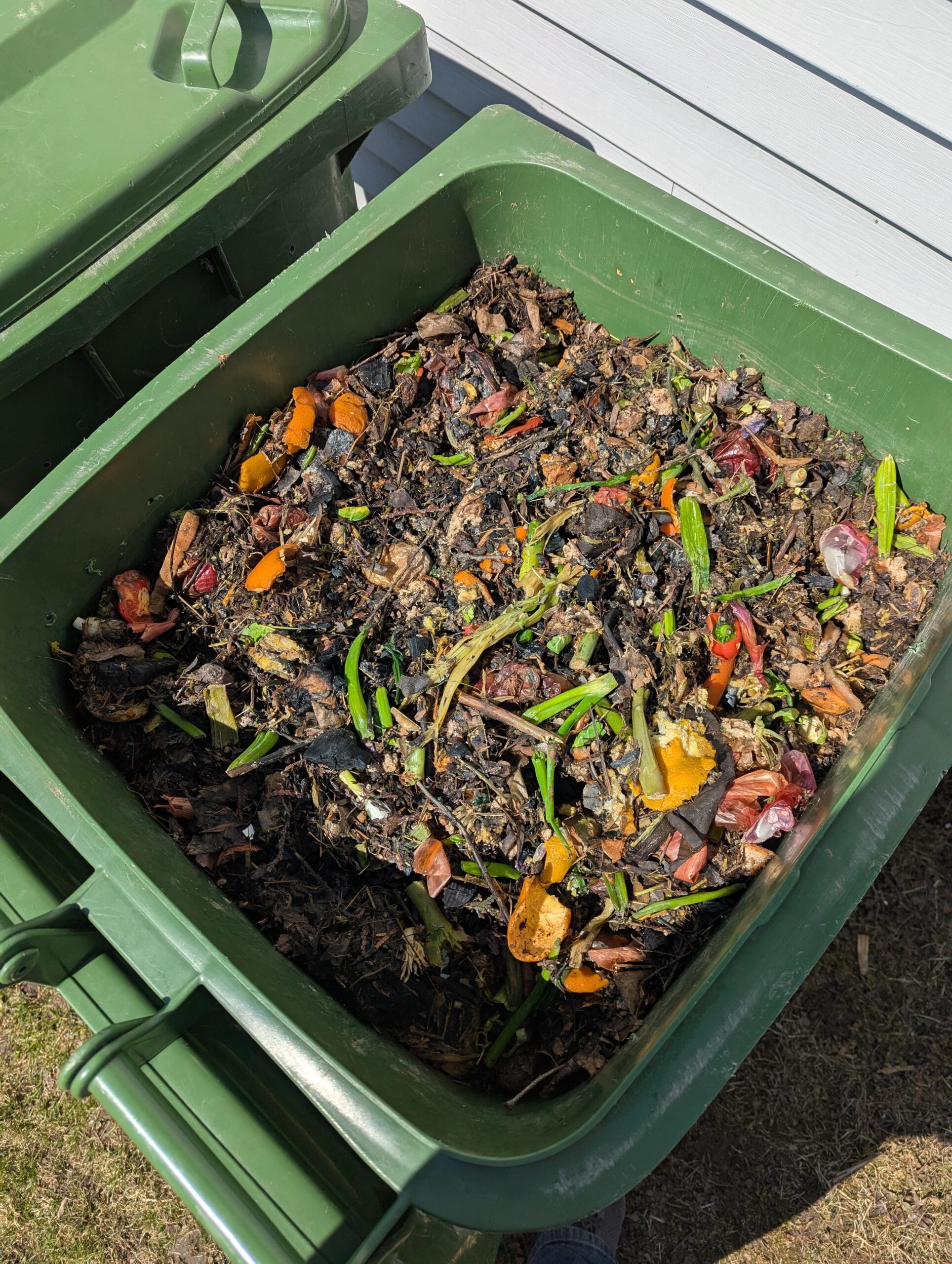
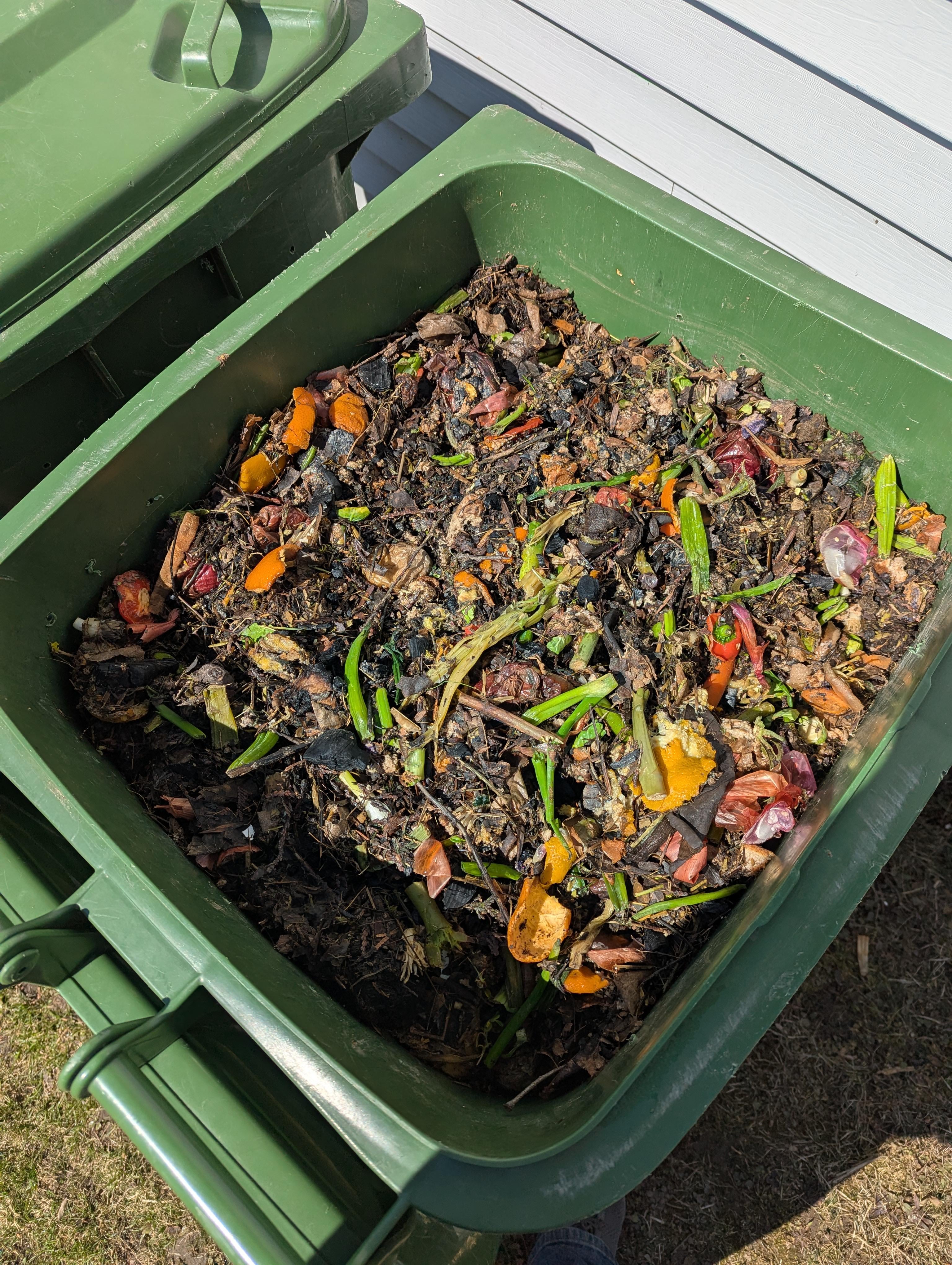
Does it have enough air holes? How will worms and other critters get in?
Also consider getting a “corkscrew” type aerator. I have one of the cheap ones from Rona and it’s great for turning the pile without needing to dump it out.
blUUdfart
More Browns, and pee on it.
Yungswagger_
The bin needs holes in the side to aerate/breath unless you’ll leave it open
theUtherSide
OP, you really haven’t given enough information here. what else is in the bin aside from what we see? what are your plans from here?
Unbearded_Dragon88
Does it have holes for drainage?
SeboniSoaps
To all the people saying it needs to breathe – have you ever seen the Hungry Bin for vermicomposting? It’s literally one of these with a bottom that comes off, and they work great!
redditusername1523
Gotta get some air in. Flip it, often.
YO_JD
I have the same set up and have been using this method of 5+ years. Add more air holes, and cut the bottom for better drainage. Check my post history for reference.
shennr_
We used a drill and put nickel sized holes in the base and pencil sized holes in the sides of our container
rjewell40
If you’re planning to turn this, it will be very difficult. I’m trying to imagine how you’ll get the leverage with a pitchfork or similar to get the bottom to the top…
But if you’re planning on basically a static pile, leveraging time, bingo.
ReturnItToEarth
Echo above. Another layer of browns. Green matter shouldn’t be exposed so there’s no decomposing odor.
BritishBenPhoto
Turn it a lot. Honestly I’d probably not use a trash can
Grayme4
Be conscious of your carbon nitrogen ratio, if you’re unsure what that is Google it. Plus I agree with all the wise composters pee in the compost great source of sterile nitrogen. Beware of neighbours and cameras 😉
kl2467
I’ve been using garbage cans for composting for several years. A few things to know:
1. You need air holes in the sides.
2. Bins are slower than piles. I let mine cook for about 9-12 months, all told. It’s ok. Every fall, I decant them into fallow garden beds. This allows plenty of air complete the process. Then I gradually fill the cans over the winter & spring. Towards late summer, I stop adding material to bins that will be decanted.
3. shredded cardboard is gold. It is light enough, with enough air space within it that it greatly speeds up the process, but if you don’t have time to shred cardboard, no worries. You can throw intact boxes in there and their awkward shape creates air spaces within the bin.
4. I didn’t put drainage holes in the bottom. I put drainage holes partway up the sides, about 3″, to prevent an absolute pond from forming. A lot of people will disagree with me on this, but I didn’t want all the yummy juices being lost into the ground where my cans are stored. In warm weather, the water evaporates up, collects on the inside of the lid and rains down on the topmost material, so it kind of distributes itself. Yes, the very bottom of the can gets a little sludgy. Don’t care. I’m just careful about how much water I add. The first layer in a new cycle is shredded cardboard, to absorb and mediate the moisture levels.
5. when full of compost, these cans are freaking heavy. I have learned not to fill them more than 75% to make them more manageable.
6. woody material like heavy plant stems, sticks and avocado seeds break down very, very slowly in cans. I have a special can for this stuff that is decanted every 2 years at most. I also add greens/browns to this can, but know those sticks are still gonna be sticks for a while, and leave it to cook.
7. newspapers, unless shredded, will simply matt up. I use a few sheets of newsprint to wrap my kitchen scraps in. This prevents matting, and keeps the green/brown ratio more balanced.
8. You can create an aeration tower out of pvc pipe for the center of your can. I have never tried this, but it looks like a very good idea.
9. If you want to use biochar or wood ash in your garden, just mix it in to your compost. This allows the biochar to pre-charge with beneficial bacteria, and it is ready to go when you spread the compost on your beds.

16 Comments
It needs to breathe
Does it have enough air holes? How will worms and other critters get in?
Also consider getting a “corkscrew” type aerator. I have one of the cheap ones from Rona and it’s great for turning the pile without needing to dump it out.
More Browns, and pee on it.
The bin needs holes in the side to aerate/breath unless you’ll leave it open
OP, you really haven’t given enough information here. what else is in the bin aside from what we see? what are your plans from here?
Does it have holes for drainage?
To all the people saying it needs to breathe – have you ever seen the Hungry Bin for vermicomposting? It’s literally one of these with a bottom that comes off, and they work great!
Gotta get some air in. Flip it, often.
I have the same set up and have been using this method of 5+ years. Add more air holes, and cut the bottom for better drainage. Check my post history for reference.
We used a drill and put nickel sized holes in the base and pencil sized holes in the sides of our container
If you’re planning to turn this, it will be very difficult. I’m trying to imagine how you’ll get the leverage with a pitchfork or similar to get the bottom to the top…
But if you’re planning on basically a static pile, leveraging time, bingo.
Echo above. Another layer of browns. Green matter shouldn’t be exposed so there’s no decomposing odor.
Turn it a lot. Honestly I’d probably not use a trash can
Be conscious of your carbon nitrogen ratio, if you’re unsure what that is Google it. Plus I agree with all the wise composters pee in the compost great source of sterile nitrogen. Beware of neighbours and cameras 😉
I’ve been using garbage cans for composting for several years. A few things to know:
1. You need air holes in the sides.
2. Bins are slower than piles. I let mine cook for about 9-12 months, all told. It’s ok. Every fall, I decant them into fallow garden beds. This allows plenty of air complete the process. Then I gradually fill the cans over the winter & spring. Towards late summer, I stop adding material to bins that will be decanted.
3. shredded cardboard is gold. It is light enough, with enough air space within it that it greatly speeds up the process, but if you don’t have time to shred cardboard, no worries. You can throw intact boxes in there and their awkward shape creates air spaces within the bin.
4. I didn’t put drainage holes in the bottom. I put drainage holes partway up the sides, about 3″, to prevent an absolute pond from forming. A lot of people will disagree with me on this, but I didn’t want all the yummy juices being lost into the ground where my cans are stored. In warm weather, the water evaporates up, collects on the inside of the lid and rains down on the topmost material, so it kind of distributes itself. Yes, the very bottom of the can gets a little sludgy. Don’t care. I’m just careful about how much water I add. The first layer in a new cycle is shredded cardboard, to absorb and mediate the moisture levels.
5. when full of compost, these cans are freaking heavy. I have learned not to fill them more than 75% to make them more manageable.
6. woody material like heavy plant stems, sticks and avocado seeds break down very, very slowly in cans. I have a special can for this stuff that is decanted every 2 years at most. I also add greens/browns to this can, but know those sticks are still gonna be sticks for a while, and leave it to cook.
7. newspapers, unless shredded, will simply matt up. I use a few sheets of newsprint to wrap my kitchen scraps in. This prevents matting, and keeps the green/brown ratio more balanced.
8. You can create an aeration tower out of pvc pipe for the center of your can. I have never tried this, but it looks like a very good idea.
9. If you want to use biochar or wood ash in your garden, just mix it in to your compost. This allows the biochar to pre-charge with beneficial bacteria, and it is ready to go when you spread the compost on your beds.
Happy composting!
Looks dry.